As promised, the slight redesign from the week before last was only an interim stopgap; since then I've used a parallel test site to do a complete redesign of the blog. This is an adaptation of the "OrangeLine" template offered for free over at BTemplates. You'll notice the main page has a rotating display of photos from throughout the course of my career; I'll occasionally change these. I've added new pages about me & the blog's history, compiled a reading list of some of my favorite posts from the last nine years, and am in the process of adding labels to the archived posts. In addition I've added social media sharing buttons to the main page & at the bottom of each post. I'm redoing the long-neglected blogroll, so if you have a favorite aviation blog you think I should check out, please tell me. And let me know what you think of the new digs!
Thursday, May 22, 2014


Wednesday, May 21, 2014
First Day of School
April 7, 2014. I was already awake when my cell phone alarm clock started beeping at 6am, and when the automated wakeup call came a few moments later. I lay in the dim dawn light of my hotel room, thinking. I'd been dreaming of this day for 20 years. There wasn't really anything to be nervous about, but my heart was in my throat. I had slept fitfully through the night. It was the first day of class at a major US airline. My new airline.
I got up, showered, and fretted about what tie to wear for a good 10 minutes before picking the one I'd planned on all along. Outside of my room, I ran into Jack P. He and I had been in the same basic indoc class at NewCo, though that was only a one-day event (most of it was done via computerized distance learning). Jack and I ate breakfast in the hotel restaurant, eying a similarly attired group a few booths down who looked like they could be our classmates (they were). After breakfast we found the rest of our suit-and-tie-clad counterparts milling in the lobby, having shown up early for the early van to the training center. On the first day of class, nobody was going to risk being late.
The van dropped us off at the front door of the training center. This is a large brick four-story building that turned out to be a bit of a misnomer, for it only hosts a portion of the airline's training activity; there is a similarly sized annex next door, and several stories of the two operations buildings across the street house flight simulators, briefing rooms, & instructor lounges. Indeed, the pilot new hire classroom was not in the training center itself, but up three floors, down a long hallway, across a footbridge to the annex, and halfway down another long hallway. A line pilot who was early for his recurrent training graciously showed us the way, marveling all the while at the sheer volume of new hire pilots and flight attendants in training (currently 600 FAs, he said!). It's been a while since this airline has seen such a hiring boom.
We were all 45 minutes early for class, leaving plenty of time for chitchat. I noticed, with some dismay, that the class immediately split into its constituent parts. There were ten flow-throughs from my airline, 9 flow-throughs from another carrier, and 5 off-the-street hires from Skywest, ExpressJet, and Pinnacle. All of the flow-throughs had been hired at their respective former airlines around the same time (several, like Jack and I, on the same day), and therefore most of them knew each other already. That said, you can go months or even years without running into someone who is right next to you on the seniority list, and so the only person I really knew well was Richard, my sim partner during JungleBus initial training in 2007. I chatted with acquaintances for a while, then broke off to meet a few new faces. The first person I chatted with, Roger, recognized me as "the Flying columnist," and to my dismay started introducing me as such to our classmates. I wasn't trying to hide the writing - I was certain my new airline was aware of it - but had hoped to stay "under the radar" during basic indoc. That said, I appreciated hearing fellow pilots saying how much they enjoyed my articles. It's about the closest I've ever come to minor celebrity!
The manager of fleet-common programs arrived right on schedule, we took our seats, and he gave us the first of what would be many warm welcomes to the airline throughout the day and week. "We're so glad you're here!" and "You're getting in at a great time!" was sincerely uttered so many times that it became a bit of a running joke by the end of basic indoc. We went around the room and introduced ourselves, our background, and why we chose to come to this airline. I mentioned I had been hired at Horizon on April 7th, 2004, exactly ten years prior, and that Dawn and I had traveled the world on this airline and had been treated very well over the years. I was struck by the fact that at 32 years old and with 10 years of airline flying, I was one of the youngest and least experienced of the 24 new hires. Most of the others were in their upper 30s to lower 50s, with 15+ years at the regionals. Also notable was that only a few had flown in the armed forces, and none had come straight from the military, which would have been unthinkable in a major airline class this size only a few years ago. This is of course a partial consequence of the flow-through programs and may change as the flowups dwindle later this year, but even in the classes before and after ours that had few flowups, pure military hires made up half or less of the off-the-street hires. This is an enormous shift from previous hiring waves. I think the airlines still prefer military pilots, but there just aren't a ton of them leaving the service compared to previous eras.
The first day of indoc, and indeed much of the first week, was comprised of presentations by various managers and heads of departments. I was surprised at how high-ranking many of the presenters were; there were several VPs who took the time to welcome us aboard. My second impression was of the sheer size and complexity of many of the departments involved, several of which would have been handled by a skeleton crew of a few people at most regional airlines. The presenters seemed very aware of this, and several times we heard the refrain: "We are not the regional airlines. We know how some of your previous airlines were run and how they might've treated you, and you have to leave that in your past. We do things differently here." On the third day, we toured the operations center, an enormous room that houses domestic and international dispatch, load planners, maintenance control, crew routing, meteorologists, radio communications specialists, the duty pilot desk, and more. It was an eye-opening and humbling look at what it takes to make one of the world's largest airlines run - and for every person on duty in the operations center itself, there are another five or ten working elsewhere in the operations complex. As part of the tour, each new-hire got to sit with a dispatcher for an hour while they worked their flights. It was one of the highlights of my week, and it made much of what was subsequently discussed in class make a lot more sense.
Lunch was catered the first day of class, and the new-hires started to mingle outside of their earlier groups. I met Nick, a Skywest Brasilia check airman who I'd share a few beers with while getting Windows running on his Mac later that week, and Lindsay from ExpressJet, a friendly gal who seemed to already know everyone in the training department thanks to a Women In Aviation scholarship that had provided a type rating course in the airline's B737 flight simulators. By the end of the day I had talked to most of my classmates and several of the instructors who would be teaching later in the week. My heart was no longer in my throat; my suit felt lighter. Everyone I met made me feel welcome, like I belonged here, regardless of flow-through status. With the anxiety gone, I actually enjoyed myself, recalling how often I had dreamed of this day over the years, and pinching myself at my good fortune to be here now.
Looking back over this blog's archives from late 2008 into 2009, during the merger and recession I had fully expected to have this airline's pilots flow down to NewCo, displacing me onto the street and likely sending me to China to find work! The fact that this never happened, that I enjoyed some great years of good seniority insulated from much of the regional industry's turbulence and have now seamlessly flowed up to my dream job even after NewCo was sold off, can be regarded as nothing more than the product of extremely good luck and perhaps a few nudges from my guardian angel. Likewise my decision to go to NewCo in the first place, when I had been planning to take a leave of absence from Horizon to fly Metroliners for Ameriflight (and nearly blew off the NewCo interview until Dawn talked some sense into me!). I look at the winding path that took me here, and there are so many twists and turns that could have easily gone another way. I'm thrilled that things turned out the way they did, but am under no illusion that my good fortune is the product of my own intelligence or hard work. Yes, I put in my time and made the decisions that seemed to be best at the time, but there are a lot of smarter and harder-working pilots than me who are still stuck at the regionals. The good news is, I don't think they'll be stuck for long. All of the US airlines are hiring, and several (including mine) have already revised their hiring numbers upwards several times this year. I've had friends with zero turbine PIC get hired at major airlines recently.
I'm trying to avoid triumphalism because I'm keenly aware that many 1999 and 2000 hires thought they were set for life, only to wind up on the street a few years later. The airlines have always been boom-or-bust, and have typically careened from one to the other with little warning. The same will likely hold true this time, and nothing in particular says I and my friends won't be caught in the bust whenever it comes. But for now at least, times are very good at the majors, and I want to encourage those who are still toiling away in the lower levels: keep up the good work. There's light at the end of the tunnel. You'll get there, and when you do, it's an absolutely amazing feeling.
I got up, showered, and fretted about what tie to wear for a good 10 minutes before picking the one I'd planned on all along. Outside of my room, I ran into Jack P. He and I had been in the same basic indoc class at NewCo, though that was only a one-day event (most of it was done via computerized distance learning). Jack and I ate breakfast in the hotel restaurant, eying a similarly attired group a few booths down who looked like they could be our classmates (they were). After breakfast we found the rest of our suit-and-tie-clad counterparts milling in the lobby, having shown up early for the early van to the training center. On the first day of class, nobody was going to risk being late.
The van dropped us off at the front door of the training center. This is a large brick four-story building that turned out to be a bit of a misnomer, for it only hosts a portion of the airline's training activity; there is a similarly sized annex next door, and several stories of the two operations buildings across the street house flight simulators, briefing rooms, & instructor lounges. Indeed, the pilot new hire classroom was not in the training center itself, but up three floors, down a long hallway, across a footbridge to the annex, and halfway down another long hallway. A line pilot who was early for his recurrent training graciously showed us the way, marveling all the while at the sheer volume of new hire pilots and flight attendants in training (currently 600 FAs, he said!). It's been a while since this airline has seen such a hiring boom.
We were all 45 minutes early for class, leaving plenty of time for chitchat. I noticed, with some dismay, that the class immediately split into its constituent parts. There were ten flow-throughs from my airline, 9 flow-throughs from another carrier, and 5 off-the-street hires from Skywest, ExpressJet, and Pinnacle. All of the flow-throughs had been hired at their respective former airlines around the same time (several, like Jack and I, on the same day), and therefore most of them knew each other already. That said, you can go months or even years without running into someone who is right next to you on the seniority list, and so the only person I really knew well was Richard, my sim partner during JungleBus initial training in 2007. I chatted with acquaintances for a while, then broke off to meet a few new faces. The first person I chatted with, Roger, recognized me as "the Flying columnist," and to my dismay started introducing me as such to our classmates. I wasn't trying to hide the writing - I was certain my new airline was aware of it - but had hoped to stay "under the radar" during basic indoc. That said, I appreciated hearing fellow pilots saying how much they enjoyed my articles. It's about the closest I've ever come to minor celebrity!
The manager of fleet-common programs arrived right on schedule, we took our seats, and he gave us the first of what would be many warm welcomes to the airline throughout the day and week. "We're so glad you're here!" and "You're getting in at a great time!" was sincerely uttered so many times that it became a bit of a running joke by the end of basic indoc. We went around the room and introduced ourselves, our background, and why we chose to come to this airline. I mentioned I had been hired at Horizon on April 7th, 2004, exactly ten years prior, and that Dawn and I had traveled the world on this airline and had been treated very well over the years. I was struck by the fact that at 32 years old and with 10 years of airline flying, I was one of the youngest and least experienced of the 24 new hires. Most of the others were in their upper 30s to lower 50s, with 15+ years at the regionals. Also notable was that only a few had flown in the armed forces, and none had come straight from the military, which would have been unthinkable in a major airline class this size only a few years ago. This is of course a partial consequence of the flow-through programs and may change as the flowups dwindle later this year, but even in the classes before and after ours that had few flowups, pure military hires made up half or less of the off-the-street hires. This is an enormous shift from previous hiring waves. I think the airlines still prefer military pilots, but there just aren't a ton of them leaving the service compared to previous eras.
The first day of indoc, and indeed much of the first week, was comprised of presentations by various managers and heads of departments. I was surprised at how high-ranking many of the presenters were; there were several VPs who took the time to welcome us aboard. My second impression was of the sheer size and complexity of many of the departments involved, several of which would have been handled by a skeleton crew of a few people at most regional airlines. The presenters seemed very aware of this, and several times we heard the refrain: "We are not the regional airlines. We know how some of your previous airlines were run and how they might've treated you, and you have to leave that in your past. We do things differently here." On the third day, we toured the operations center, an enormous room that houses domestic and international dispatch, load planners, maintenance control, crew routing, meteorologists, radio communications specialists, the duty pilot desk, and more. It was an eye-opening and humbling look at what it takes to make one of the world's largest airlines run - and for every person on duty in the operations center itself, there are another five or ten working elsewhere in the operations complex. As part of the tour, each new-hire got to sit with a dispatcher for an hour while they worked their flights. It was one of the highlights of my week, and it made much of what was subsequently discussed in class make a lot more sense.
Lunch was catered the first day of class, and the new-hires started to mingle outside of their earlier groups. I met Nick, a Skywest Brasilia check airman who I'd share a few beers with while getting Windows running on his Mac later that week, and Lindsay from ExpressJet, a friendly gal who seemed to already know everyone in the training department thanks to a Women In Aviation scholarship that had provided a type rating course in the airline's B737 flight simulators. By the end of the day I had talked to most of my classmates and several of the instructors who would be teaching later in the week. My heart was no longer in my throat; my suit felt lighter. Everyone I met made me feel welcome, like I belonged here, regardless of flow-through status. With the anxiety gone, I actually enjoyed myself, recalling how often I had dreamed of this day over the years, and pinching myself at my good fortune to be here now.
Looking back over this blog's archives from late 2008 into 2009, during the merger and recession I had fully expected to have this airline's pilots flow down to NewCo, displacing me onto the street and likely sending me to China to find work! The fact that this never happened, that I enjoyed some great years of good seniority insulated from much of the regional industry's turbulence and have now seamlessly flowed up to my dream job even after NewCo was sold off, can be regarded as nothing more than the product of extremely good luck and perhaps a few nudges from my guardian angel. Likewise my decision to go to NewCo in the first place, when I had been planning to take a leave of absence from Horizon to fly Metroliners for Ameriflight (and nearly blew off the NewCo interview until Dawn talked some sense into me!). I look at the winding path that took me here, and there are so many twists and turns that could have easily gone another way. I'm thrilled that things turned out the way they did, but am under no illusion that my good fortune is the product of my own intelligence or hard work. Yes, I put in my time and made the decisions that seemed to be best at the time, but there are a lot of smarter and harder-working pilots than me who are still stuck at the regionals. The good news is, I don't think they'll be stuck for long. All of the US airlines are hiring, and several (including mine) have already revised their hiring numbers upwards several times this year. I've had friends with zero turbine PIC get hired at major airlines recently.
I'm trying to avoid triumphalism because I'm keenly aware that many 1999 and 2000 hires thought they were set for life, only to wind up on the street a few years later. The airlines have always been boom-or-bust, and have typically careened from one to the other with little warning. The same will likely hold true this time, and nothing in particular says I and my friends won't be caught in the bust whenever it comes. But for now at least, times are very good at the majors, and I want to encourage those who are still toiling away in the lower levels: keep up the good work. There's light at the end of the tunnel. You'll get there, and when you do, it's an absolutely amazing feeling.
Saturday, May 10, 2014
So Long, "Blogging at FL250!"
I've kept this blog essentially unchanged since I started it in 2005, retaining the same title & format even after my job took me well above FL250 (which came from the maximum certified altitude of the Q400 that I was flying back then). I never really cared for the verb "blogging," though, particularly in the name of a blog. I stuck with it because...well, I didn't really have anything better in mind. But when I started writing the monthly column for Flying, it forced me to brainstorm titles appropriate to the subject matter I anticipated covering, and I ended up really liking Taking Wing. It's an equally appropriate title for what I've written about here and anticipate writing here in the future. I've toyed with the idea of changing the blog's name for years, and now, while I'm starting a new chapter in my flying career, seemed like the right time to take the plunge.
I'll also be experimenting with layout and formatting over the next few weeks. Bear with me as I do, I have little experience with blogger template design & tweaking. I anticipate this current layout being an interim stopgap until I find something I like better. Meanwhile I'll likely revamp the blogroll (which hasn't been touched in years) and organize the archives better. Any suggestions are quite welcome.
Finally, it's worth noting that with my change in jobs will come a certain change in content. I've been able to express some pretty strongly felt opinions over the years without the slightest pushback from my employers. I know that many fellow pilots, other employees, flight ops management, and even a few senior managers at my last two companies visited this blog. I've generally been careful about not naming my employers while at those companies (though their identity has been pretty easy to guess for anyone with industry knowledge), and I've made it clear that my opinions are solely my own. I've also become more careful about how I post operational details over the years. So far, I've been able to stay out of hot water. I suspect it's partially because my work record has been otherwise very good and partially because most regional airlines have limited resources and much bigger fish to fry than a blogging pilot.
My new employer is different. They are a huge airline that is very sensitive about their corporate image. They have a well-defined social media policy that, among other things, prohibits public criticism of the company or fellow employees. They have a social media department whose job it is to know exactly what is being said about the company online, by both the public and employees. They have a history of firing employees who strayed from their social media guidelines. They have a very large and active legal department. Their flight operations department takes their new-hire pilots' probationary periods seriously. And frankly, I have a lot more to lose now. This is my dream job. My Flying Magazine gig meets the requirements of their media policy, but likely raises my profile a bit at a time I'd rather be under the radar. So I'm naturally going to be careful in what I write, while still trying to be honest and relevant.
The first change is that I'm going to stop using even a cute pseudo-name for my employer. The one I've been using makes it a bit too obvious who it is. From now on, they're just "my company" or "my airline." I'll continue to refer to my plane as the "Mad Dog," since it's an unofficial nickname common to several US airlines. There will likely be fewer posts about my current flying, and you're not going to find much opinion in them about our procedures or the people I fly with unless it's fairly positive (the good news: so far I've only found positive things to say, anyways). I'll be largely focused on the airline industry as a whole, recounting past flying I've done, and giving advice to other pilots on their way up through the ranks. And as always I'll throw in the occasional travel, motorcycling, and GA flying posts to mix it up a bit.
That said, I'm going to try to post here more often (he said for the hundredth time!), include more photo content like I used to, link to my columns at flyingmag.com, and be quicker about responding to comments. I'll keep the "FL250" web address as a homage to the blog's beginnings. I hope you like the new "Taking Wing" blog, and welcome your comments and suggestions!
I'll also be experimenting with layout and formatting over the next few weeks. Bear with me as I do, I have little experience with blogger template design & tweaking. I anticipate this current layout being an interim stopgap until I find something I like better. Meanwhile I'll likely revamp the blogroll (which hasn't been touched in years) and organize the archives better. Any suggestions are quite welcome.
Finally, it's worth noting that with my change in jobs will come a certain change in content. I've been able to express some pretty strongly felt opinions over the years without the slightest pushback from my employers. I know that many fellow pilots, other employees, flight ops management, and even a few senior managers at my last two companies visited this blog. I've generally been careful about not naming my employers while at those companies (though their identity has been pretty easy to guess for anyone with industry knowledge), and I've made it clear that my opinions are solely my own. I've also become more careful about how I post operational details over the years. So far, I've been able to stay out of hot water. I suspect it's partially because my work record has been otherwise very good and partially because most regional airlines have limited resources and much bigger fish to fry than a blogging pilot.
My new employer is different. They are a huge airline that is very sensitive about their corporate image. They have a well-defined social media policy that, among other things, prohibits public criticism of the company or fellow employees. They have a social media department whose job it is to know exactly what is being said about the company online, by both the public and employees. They have a history of firing employees who strayed from their social media guidelines. They have a very large and active legal department. Their flight operations department takes their new-hire pilots' probationary periods seriously. And frankly, I have a lot more to lose now. This is my dream job. My Flying Magazine gig meets the requirements of their media policy, but likely raises my profile a bit at a time I'd rather be under the radar. So I'm naturally going to be careful in what I write, while still trying to be honest and relevant.
The first change is that I'm going to stop using even a cute pseudo-name for my employer. The one I've been using makes it a bit too obvious who it is. From now on, they're just "my company" or "my airline." I'll continue to refer to my plane as the "Mad Dog," since it's an unofficial nickname common to several US airlines. There will likely be fewer posts about my current flying, and you're not going to find much opinion in them about our procedures or the people I fly with unless it's fairly positive (the good news: so far I've only found positive things to say, anyways). I'll be largely focused on the airline industry as a whole, recounting past flying I've done, and giving advice to other pilots on their way up through the ranks. And as always I'll throw in the occasional travel, motorcycling, and GA flying posts to mix it up a bit.
That said, I'm going to try to post here more often (he said for the hundredth time!), include more photo content like I used to, link to my columns at flyingmag.com, and be quicker about responding to comments. I'll keep the "FL250" web address as a homage to the blog's beginnings. I hope you like the new "Taking Wing" blog, and welcome your comments and suggestions!
(Photos deleted) Above: My last flight at my last airline, March 27th 2014. (Photos deleted)
Sunday, April 20, 2014
Ode to JungleBus
The
first time I saw JungleBus, I was a Q400 FO at Horizon, who had recently lost
their Frontier JetExpress flying only three years into a supposed 12-year
contract. As our CRJ-700s came back from Frontier they were being put on
inefficient routes like Portland-Seattle, and so the factors that would
eventually lead me to leave Horizon were already evident. In Spokane, I saw a
Republic JB in Frontier colors taxiing into the gate, and my initial reaction
was profound dislike. It looked like a child's pudgy plastic toy airplane to
me, and the fuzzy baby animal on the tail added to the impression. My critique
of the airplane's aesthetics never entirely changed even after I was flying it.
But that first impression was likely tinged by jealousy and frustration over my
stalled career at Horizon. Six months later I was in class at NewCo, learning
to fly that pudgy toy plane.
The
training began with a home self-study CD-ROM, which seemed awfully slim on
in-depth systems knowledge. I figured the classroom systems lectures would go
into greater detail, but when I got to Montreal the ground instructors seemed
to know even less about the plane than we did. Alarmingly, the same was true of
our simulator instructors. The checkride examiners asked plenty about each
control and button's function and system logic, but very little about the
underlying systems themselves. I entered OE feeling like I knew less about this
airplane than any I'd ever flown before - and despite that, got through in only
25 hours feeling pretty comfortable with line operations. And that wasn't me
being superpilot; everyone was
getting through with 25 hours of OE. I realized then that the lack of systems
instruction wasn't a byproduct of a new airline or a relatively new type, it
was an integral feature of a design meant to remove pilots and their pesky
human failings from its operation to the greatest degree possible.
The
JungleBus is in fact a fairly complex airplane, but from the flight deck it is
simplicity itself. The overhead panel features a few rows of large,
rarely-touched "dusty buttons" which select the systems to
"Auto" or "Off." When everything is selected to its normal
(auto) position, the switchlights are dark. The ram's horn yokes are
beautifully ergonomic and nicely balanced, which they well should be since
they're not connected to much of anything - it's all computer-augmented fly by
wire with the exception of the ailerons, which actually have control cables
running to their hydraulic actuators. The FADEC-controlling thrust levers glide
smoothly from idle to the rating detent, which you seldom feel since the
autothrottles are generally engaged before you ever get close to it. The
secondary controls - Flaps, Spoilers - are big and unmistakable, and protect
themselves by refusing to deploy when they shouldn't. The real heart of the
cockpit, the Flight Guidance Panel, has quite a few easy to understand and use
modes for lateral and vertical guidance - the most commonly used of which are
the FMS-derived LNAV and VNAV. When everything is working, it's a rather easy
airplane to fly.
But
what about when things break, you ask - what then? Again, the airplane makes it
as simple for the pilot as possible. Most major systems go through extensive
self-tests, transparent to the pilot, on aircraft power-up. If they fail their
self-test, they display an error message and you call maintenance. The only systems
the pilot tests himself are the fire protection, annunciator lights, and trim
switches. After startup and proceeding through the flight, the EICAS system
inhibits many faults, discreetly sending minor ones directly to the
airline and displaying others after landing or shutdown. Only outright failures
are shown on the EICAS display in real-time or close to it (most are inhibited
between 80 knots and V1), and then the system prioritizes the order of their
display so that malfunctions most likely to be the root cause of secondary
faults are addressed first. You just pick the highest priority message and run
the associated QRH checklist. Nine times out of ten, the checklist tells you to
select the system off, wait sixty seconds, and turn it back to auto, and nine
times out of ten this resolves the fault – the aeronautical equivalent of
Ctrl-Alt-Del. If the QRH leaves any room for confusion, you can bring up the
appropriate system schematic on the Multi-Function Display (MFD), and the
status and relationship of every component in the system is displayed. If our
instructors never placed much emphasis on knowing exactly what is powered by
each hydraulic system, for example, their laxity makes a little more sense when
you realize that the hydraulic synoptic page shows exactly what is being
powered at any given time, no rote memorization required. My colleagues and I
have often theorized that this airplane was designed to be flown in challenging
third-world conditions by inexperienced, occasionally fatigued crews, and most
of the time it will keep even this “lowest common denominator” crew out of
serious trouble.
Of
course, JungleBus’ front-end simplicity is achieved through a great deal of
back-end complexity of the electronic variety, and this means it is still prone
to human error – but these errors can lay hidden within layers of code or
imbedded on circuit boards for months or even years before surfacing in unexpected
ways. In six years I’ve seen this airplane do some truly mind-boggling things,
like spontaneously change a pilot-entered VNAV descent angle from a reasonable
3.5 degrees to an untenable 6 degrees, or abruptly turning 20 degrees off
course upon crossing an intermediate fix where the airway didn’t bend. A good
friend had a baffling situation where the pneumatic synoptic page showed that
both pack valves had closed themselves and the cabin altitude was rapidly
increasing. He quite reasonably made an emergency descent and subsequently
diverted to our maintenance base in Louisville, where subsequent investigation
showed that it was an indication error – both packs were working correctly and
cabin altitude had actually remained steady at 8000 feet! I personally
experienced a current surge event in one of the Secondary Power Distribution
Assemblies (SPDA) that fried multiple circuit boards in one fell swoop,
creating a puzzling array of seemingly unrelated faults; this fortunately
happened on the ground, during the Power-On Self Test.
These
type of events are not a slight against the JungleBus’ basic design; they
happen in every modern airplane, and I dare say more often in many than in the
JungleBus today (early on it had many more bugs to work through). I would say
they are notable in the JungleBus primarily because most of the time the
airplane does work so well that it lulls crew into less
active monitoring than they might practice in a less reliable design. This
complacency is the easiest way to get into trouble in a JungleBus, and usually
not because of some insidious bug hidden deep in the software. Most of the time
JungleBus crews screw up, they do it to themselves with bad input, and
subsequently fail to catch the error through lax monitoring. Too often when the
error is finally discovered, they attempt to fix the automation in a hurried,
panicked manner rather than simply flying the airplane and having the other
pilot fix the automation when time allows it to be done methodically. And this
problem, I would argue, is a direct
result of JungleBus’ design philosophy and the resulting way we have trained
her crews. If you take so much of an aircraft’s operation out of a pilot’s
hands, encourage him to continually use full automation, and keep him in the
dark as to much of what his aircraft is doing, you cannot reasonably expect him
to remain alert and engaged in the aircraft’s operation over countless
uneventful hours, and you cannot expect him to become instantly attuned when
something does go amiss. It goes against human nature. The FAA and the airlines
have become quite aware of this and the pendulum is finally swinging the other
way across the airlines and across fleets, toward a greater emphasis on manual
flight skills and automation shedding when appropriate.
Fortunately,
many of us who’ve been flying JungleBus for a while recognized her potential
for creating automation dependency early on, and took our own steps to ward it
off. We hand flew whenever appropriate, and occasionally turned off the
autothrottles and flight director too. We backed up the VNAV with good old
3-to-1 ratio mental math (which saved my bacon on that spontaneous path angle
change incident). We talked amongst ourselves and learned some of the more
insidious “bad input, bad output” scenarios, like accidentally hitting PREV
twice and setting ourselves up for an offside-localizer capture and subsequent
reversion to ROLL HOLD mode. We talked to our mechanics and learned the nuts
and bolts behind the Auto mode buttons. We opened the QRH in cruise with
synoptic pages displayed on the MFD, unraveling the reasoning behind the
procedures. We followed our progress across the country and played the “if
everything goes blank now, where do I
go?” game.
Fortunately,
none of us ever had those “everything goes blank” scenarios actually happen. Everything
generally worked very well. When JungleBus did throw us a curve, we usually
caught it early on. When I made dumb inputs, my FOs almost always caught them
before agreeing to “Activate.” Once in a while the autopilot and/or
autothrottles would do something funky and I’d turn them off, and I’d
appreciate all over what a wonderfully honest, smooth-flying airplane it is
when you just fly the damn thing – a big Cherokee, really. JungleBus never did
anything to put me or my ticket in danger, as long as I just paid attention. I finished my stint at the regionals with a
clean record and about 7000 accident-free, violation-free, and mostly
uneventful airline hours. I have useful training & prior experience, great
coworkers, and two very different but ultimately very good airplanes to thank
for that. Goodbye, JungleBus. I’ll miss you.
Sunday, March 23, 2014
One Last Trip
Tomorrow I start the last four-day trip of my career at NewCo, and what is hopefully the last hurrah of my career at the regional airlines. I have an April 7 class date at [nameless major airline] and it appears that NewCo is going to let me go without exacting their last few drops of blood in the first days of April. That's just as well; I have a few loose ends to wrap up before I disappear down to Atlanta for a few months of training, and Dawn and I are also taking a quick trip to the Netherlands and Belgium for her Spring Break next weekend.
It's actually fairly uncommon for Captains of my seniority level to bid for 4-day trips - especially those of us who live in base. I do occasionally bid the more conventionally desirable 2-day trips and daytrips, especially in summer, but for most of the year I really don't mind 4-days. They get me out of Minnesota - a real bonus this brutal winter - and give Dawn time to catch up on the endless test correcting and lesson planning associated with her teaching job. And truth told, I enjoy going out with and getting to know my crew over the course of a 4-day trip. I've made some very good friends over 4-days. With a 2-day or daytrip, you barely get to know a person.
My flight attendants for this last 4-day are, quite coincidentally, old friends whom I've flown with quite a bit and have had some great layovers with. I've never flown with the FO but am told he's a good guy, so maybe there's one more friend to be made before I move on. Perhaps I am looking at my ten years at the regionals with rose-colored glasses now that they're almost over, but I think I will always look back at them as some of the very best years of my life. I've made so many great friends, seen so many neat parts of this country and our world, and enjoyed many quiet moments of sublime beauty in the sky that has become my second home. Sure, the career stagnation has been bothersome at times; I certainly never saw myself spending a decade at the regionals. But I've flown with many good pilots who suffered far more turbulent careers than my own, yet are able to go to work eager to see what the new day has in store. I share the cockpit with these guys and gals for four days at a time, with little to do for much of it but talk of life and our loved ones and our mutual passion for flight, and then talk yet more over a beer or two at the layover, and by the time we part I'm utterly shameful of any thoughts of self-pity I've been harboring over my own circumstances.
I'm growing quite excited to find what the future holds at [future airline] as my class date approaches, though the prospect of such drastic change after a time of prolonged stasis is also a bit nerve-wracking. There's a lot to learn right off the bat, an entirely different culture to adjust to and a new way of doing things to adapt to. I can adjust and adapt, I'm confident of that - I've done it plenty before, in the hungry early days of my career. I just haven't had to do much of it lately. The prospect of a fresh challenge, the first in a while at least where flying is concerned, stirs up the nervous pacing excitement of a fighter before a match.
But first, one last trip to be savored. I'll miss flying the JungleBus quite a lot, and I'll write about that in a separate post. I'll miss being in the left seat for a while. I'll miss being based out of MSP for a while. I'll miss NewCo's interesting, diverse route structure. I'll miss the easy camaraderie that comes from flying with a lot of the same people over the years at a small airline. But for the next four days, I needn't miss any of that - only appreciate it, one last time.
It's actually fairly uncommon for Captains of my seniority level to bid for 4-day trips - especially those of us who live in base. I do occasionally bid the more conventionally desirable 2-day trips and daytrips, especially in summer, but for most of the year I really don't mind 4-days. They get me out of Minnesota - a real bonus this brutal winter - and give Dawn time to catch up on the endless test correcting and lesson planning associated with her teaching job. And truth told, I enjoy going out with and getting to know my crew over the course of a 4-day trip. I've made some very good friends over 4-days. With a 2-day or daytrip, you barely get to know a person.
My flight attendants for this last 4-day are, quite coincidentally, old friends whom I've flown with quite a bit and have had some great layovers with. I've never flown with the FO but am told he's a good guy, so maybe there's one more friend to be made before I move on. Perhaps I am looking at my ten years at the regionals with rose-colored glasses now that they're almost over, but I think I will always look back at them as some of the very best years of my life. I've made so many great friends, seen so many neat parts of this country and our world, and enjoyed many quiet moments of sublime beauty in the sky that has become my second home. Sure, the career stagnation has been bothersome at times; I certainly never saw myself spending a decade at the regionals. But I've flown with many good pilots who suffered far more turbulent careers than my own, yet are able to go to work eager to see what the new day has in store. I share the cockpit with these guys and gals for four days at a time, with little to do for much of it but talk of life and our loved ones and our mutual passion for flight, and then talk yet more over a beer or two at the layover, and by the time we part I'm utterly shameful of any thoughts of self-pity I've been harboring over my own circumstances.
I'm growing quite excited to find what the future holds at [future airline] as my class date approaches, though the prospect of such drastic change after a time of prolonged stasis is also a bit nerve-wracking. There's a lot to learn right off the bat, an entirely different culture to adjust to and a new way of doing things to adapt to. I can adjust and adapt, I'm confident of that - I've done it plenty before, in the hungry early days of my career. I just haven't had to do much of it lately. The prospect of a fresh challenge, the first in a while at least where flying is concerned, stirs up the nervous pacing excitement of a fighter before a match.
But first, one last trip to be savored. I'll miss flying the JungleBus quite a lot, and I'll write about that in a separate post. I'll miss being in the left seat for a while. I'll miss being based out of MSP for a while. I'll miss NewCo's interesting, diverse route structure. I'll miss the easy camaraderie that comes from flying with a lot of the same people over the years at a small airline. But for the next four days, I needn't miss any of that - only appreciate it, one last time.
Tuesday, February 18, 2014
FNG
Last week I had the unusual (for me, anyways) privilege of flying with a brand new First Officer. I don't mean new to me - I mean brand spanking new to the company and the JungleBus, on his very first trip after Initial Operating Experience (IOE). I shouldn't be so surprised, because there are a ton of new faces on the line given all the hiring NewCo has been doing to replace those of us flowing up or moving on to other majors. But I've been bidding around 14% (from the top) in the MSP Captain category for over three years, and have become accustomed to flying with the same 20 or so senior First Officers. Many of them could hold a junior Captain position on reserve or in our new LAX crew base, but choose to stay in the right seat for the weekends & holidays off, efficient trips, and 18-day-off monthly lines that their seniority provides. All are extremely comfortable with the JungleBus and our system, and their knowledge often surpasses my own. Flying with excellent First Officers who you know makes the left seat a pretty easy gig on most days.
Joe joined the trip in Salt Lake City, replacing the reserve First Officer from Detroit who had flown the first two legs. I'm not sure what happened to the FO who originally bid the trip; I'm guessing he was sick or was able to drop the trip into open time. My first thought when I met Joe was how shockingly young he looked, much like myself when I was hired at Horizon ten years ago. Indeed, he turned out to be nine years my junior, at age 23. Born in 1990, Joe was 10 years old when I started instructing. It makes me feel suddenly old! Incredibly, this isn't Joe's first airline; he spent over a year at Great Lakes, and his experience is fairly instructive of how the pilot shortage has been shaping up so far. He struggled through a year of poverty-level First Officer pay (less than $15,000/yr) and upgraded in the Beech 1900D as soon as he turned 23. By then, Lakes was losing so many First Officers that he ended up flying in the right seat even after upgrading, which at least gave him captain pay but no turbine PIC flight time. When NewCo started hiring, it wasn't a hard decision to jump ship; even our paltry first year FO pay is as much as Great Lakes' captain pay! Six of the ten pilots in Joe's NewCo class were ex-Lakers, and they also made up the majority of the classes before and behind his.
All of Joe's IOE took place in our east coast system, flying in and out of LaGuardia. He had never been to our trip's airports of Salt Lake City, San Francisco, or San Antonio; he had flown in and out of LAX as a Laker, but not from WidgetCo's terminal. I passed along some of the finer points of flying in and out of these cities, though few of these tips actually involve flying. The Jeppesen plates do a pretty good job of presenting all the data needed to navigate one's way to a busy airport; it is mostly on the ground that some tribal knowledge comes in handy. This includes typical taxi routes, which ground and ramp controllers to contact and where, whether operations will respond to your on-the-ground call, which services are available - even something as simple as "The ground power at gate 48 isn't reliable, so leave the APU running." In Salt Lake City, I noted the semi-permanent winter inversion layer and cautioned Joe about the sudden thick fogs that often defy forecasters, suggesting the occasional need for a precautionary alternate. Approaching San Francisco, I explained the Tipp Toe, Quiet Bridge, and new FMS Bridge visual procedures, reviewing the techniques needed to comply with altitude and speed restrictions and still get stabilized by 1000' and sharing tips on avoiding TCAS Resolution Advisories (RAs) when paired up with another aircraft on the parallel approach.
Mostly, though, the trip was notable for just how little instruction was needed. If Joe hadn't told me he was fresh off IOE, I never would have guessed it. His aircraft control was smooth and precise, his procedural knowledge flawless, his automation management confident and fluid. It's worth noting that this is Joe's first time flying a glass, FMS-equipped airplane. I suspect such a transition is much easier for his tech-raised generation than going from a technically advanced aircraft to an old-school steam-gauge bird like the B1900. Our procedures required that I make the landings and takeoffs in San Francisco since it is a special qualifications airport and Joe is "green," but I would have been perfectly comfortable letting him fly at SFO or anywhere else. About the only clue that Joe was new to the airplane was the fact that he started slowing down for approaches a few miles earlier than I would have. This is a smart technique when new to any aircraft, but especially when coming out of the B1900. Its lighter weight and massive drag with props at fine pitch make carrying 250 knots to the outer marker standard procedure. The JungleBus is actually draggier than many jets and its large flight spoilers and high gear and flap speeds making getting down and slowing down relatively easy, but it's certainly no B1900, and it behooves one to play it conservative until intimately familiar with its drag characteristics. Even then, you have to be careful not to leave yourself hot and high, as I discovered with a Fed on my jumpseat four years ago.
Flying with Joe was a heartening reminder of how well most airline training programs prepare their pilots for flying the line from Day One, even when it's a big change from their previous aircraft. I myself have a similarly stark transition in my near future, going from the well-designed, modern, highly-automated JungleBus to the decidedly quirky, semi-automated hodgepodge of workaround design from several eras that is the "Mad Dog." It's a little intimidating to think about, but then I remember flying freight in decrepit Navajos single pilot in hard IFR sans autopilot. If I could do that then, I can certainly make it through MadDog school with one of the world's largest airlines' notably thorough training program. Sometime later this year, I'll have the privilege of introducing myself to my first post-IOE captain as the "FNG." Let's hope that I fly as well on my first trip as Joe did!

Joe joined the trip in Salt Lake City, replacing the reserve First Officer from Detroit who had flown the first two legs. I'm not sure what happened to the FO who originally bid the trip; I'm guessing he was sick or was able to drop the trip into open time. My first thought when I met Joe was how shockingly young he looked, much like myself when I was hired at Horizon ten years ago. Indeed, he turned out to be nine years my junior, at age 23. Born in 1990, Joe was 10 years old when I started instructing. It makes me feel suddenly old! Incredibly, this isn't Joe's first airline; he spent over a year at Great Lakes, and his experience is fairly instructive of how the pilot shortage has been shaping up so far. He struggled through a year of poverty-level First Officer pay (less than $15,000/yr) and upgraded in the Beech 1900D as soon as he turned 23. By then, Lakes was losing so many First Officers that he ended up flying in the right seat even after upgrading, which at least gave him captain pay but no turbine PIC flight time. When NewCo started hiring, it wasn't a hard decision to jump ship; even our paltry first year FO pay is as much as Great Lakes' captain pay! Six of the ten pilots in Joe's NewCo class were ex-Lakers, and they also made up the majority of the classes before and behind his.
All of Joe's IOE took place in our east coast system, flying in and out of LaGuardia. He had never been to our trip's airports of Salt Lake City, San Francisco, or San Antonio; he had flown in and out of LAX as a Laker, but not from WidgetCo's terminal. I passed along some of the finer points of flying in and out of these cities, though few of these tips actually involve flying. The Jeppesen plates do a pretty good job of presenting all the data needed to navigate one's way to a busy airport; it is mostly on the ground that some tribal knowledge comes in handy. This includes typical taxi routes, which ground and ramp controllers to contact and where, whether operations will respond to your on-the-ground call, which services are available - even something as simple as "The ground power at gate 48 isn't reliable, so leave the APU running." In Salt Lake City, I noted the semi-permanent winter inversion layer and cautioned Joe about the sudden thick fogs that often defy forecasters, suggesting the occasional need for a precautionary alternate. Approaching San Francisco, I explained the Tipp Toe, Quiet Bridge, and new FMS Bridge visual procedures, reviewing the techniques needed to comply with altitude and speed restrictions and still get stabilized by 1000' and sharing tips on avoiding TCAS Resolution Advisories (RAs) when paired up with another aircraft on the parallel approach.
Mostly, though, the trip was notable for just how little instruction was needed. If Joe hadn't told me he was fresh off IOE, I never would have guessed it. His aircraft control was smooth and precise, his procedural knowledge flawless, his automation management confident and fluid. It's worth noting that this is Joe's first time flying a glass, FMS-equipped airplane. I suspect such a transition is much easier for his tech-raised generation than going from a technically advanced aircraft to an old-school steam-gauge bird like the B1900. Our procedures required that I make the landings and takeoffs in San Francisco since it is a special qualifications airport and Joe is "green," but I would have been perfectly comfortable letting him fly at SFO or anywhere else. About the only clue that Joe was new to the airplane was the fact that he started slowing down for approaches a few miles earlier than I would have. This is a smart technique when new to any aircraft, but especially when coming out of the B1900. Its lighter weight and massive drag with props at fine pitch make carrying 250 knots to the outer marker standard procedure. The JungleBus is actually draggier than many jets and its large flight spoilers and high gear and flap speeds making getting down and slowing down relatively easy, but it's certainly no B1900, and it behooves one to play it conservative until intimately familiar with its drag characteristics. Even then, you have to be careful not to leave yourself hot and high, as I discovered with a Fed on my jumpseat four years ago.
Flying with Joe was a heartening reminder of how well most airline training programs prepare their pilots for flying the line from Day One, even when it's a big change from their previous aircraft. I myself have a similarly stark transition in my near future, going from the well-designed, modern, highly-automated JungleBus to the decidedly quirky, semi-automated hodgepodge of workaround design from several eras that is the "Mad Dog." It's a little intimidating to think about, but then I remember flying freight in decrepit Navajos single pilot in hard IFR sans autopilot. If I could do that then, I can certainly make it through MadDog school with one of the world's largest airlines' notably thorough training program. Sometime later this year, I'll have the privilege of introducing myself to my first post-IOE captain as the "FNG." Let's hope that I fly as well on my first trip as Joe did!
Friday, February 14, 2014
The End of the Beginning
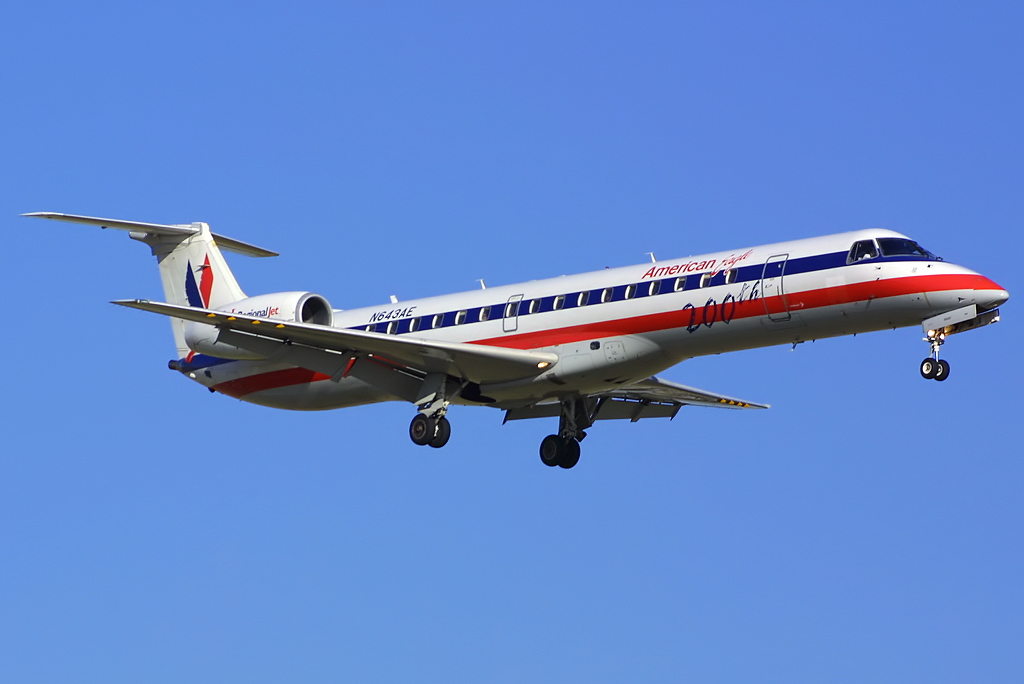
A few nights ago, on a vote of 5-4, the Master Executive Council of American Eagle's pilot union voted to reject the concessions-for-jets deal that American Airlines Group had been pursuing with the union under the threat of closing Eagle down if concessions were not approved. In rejecting the concessions, the majority cited industry conditions and forces very similar to those I laid out in my essay on the topic immediately below this post. Before the vote, the MEC had been expected to approve sending the Tentative Agreement to the wider pilot group for member ratification. Those opposed to concessions were able to convince one representative to switch his vote.
This development comes several weeks after the pilot membership at ExpressJet Airlines voted against a similar concessionary contract by an overwhelming 83%. Other recent events that may have swayed the MEC include Great Lakes Airlines shutting down their Minneapolis hub for lack of pilots, United announcing that they will close their CLE hub to alleviate staffing shortages at their regional partners, and Republic Airways' statement that they will be prematurely ending 50-seat contracts at their Chautauqua branch in order to by able to staff Embraer 175s currently coming on line for American flying. On the heels of the AE vote against concessions, Republic today announced that they have come to a tentative agreement for a new contract with their pilots after seven years (!) of negotiations. The details are not yet known but Republic stated the contract contains increased pay to help attract new pilots.
All these events are the direct result of a "pilot shortage" that is really only in its infancy - which is to say that for now, there are still plenty of qualified pilots, just not enough who are willing to work for pauper's pay. It's going to be very interesting to see how things progress. I think airline pilots and especially regional pilots will have some great opportunities along the way, and it seems like many are just awakening to this fact. I have no doubt that AAG will attempt to make good on their threat to shut Eagle down - and the Eagle MEC has said they'll try - but I think they're going to have a very hard time shifting that flying anywhere but mainline and finding pilots to fly it. Kudos to the Eagle pilots for recognizing which way the leverage is swinging.
This development comes several weeks after the pilot membership at ExpressJet Airlines voted against a similar concessionary contract by an overwhelming 83%. Other recent events that may have swayed the MEC include Great Lakes Airlines shutting down their Minneapolis hub for lack of pilots, United announcing that they will close their CLE hub to alleviate staffing shortages at their regional partners, and Republic Airways' statement that they will be prematurely ending 50-seat contracts at their Chautauqua branch in order to by able to staff Embraer 175s currently coming on line for American flying. On the heels of the AE vote against concessions, Republic today announced that they have come to a tentative agreement for a new contract with their pilots after seven years (!) of negotiations. The details are not yet known but Republic stated the contract contains increased pay to help attract new pilots.
All these events are the direct result of a "pilot shortage" that is really only in its infancy - which is to say that for now, there are still plenty of qualified pilots, just not enough who are willing to work for pauper's pay. It's going to be very interesting to see how things progress. I think airline pilots and especially regional pilots will have some great opportunities along the way, and it seems like many are just awakening to this fact. I have no doubt that AAG will attempt to make good on their threat to shut Eagle down - and the Eagle MEC has said they'll try - but I think they're going to have a very hard time shifting that flying anywhere but mainline and finding pilots to fly it. Kudos to the Eagle pilots for recognizing which way the leverage is swinging.
Subscribe to:
Posts (Atom)


