
Avatrix's Five Years post set off a (rather predictable) torrent of debate in her comments section over fear in the post-9/11 world. One side was lamenting how irrational fears are allowing Bush/Blair/Howard to get away with things they otherwise wouldn't, and the other side was arguing that the sources of fear are real and it's unwise to ignore them. I was going to respond in Aviatrix's comments but it got a little long. I'd suggest you read the original post and comments before my response.
Many who oppose Bush and Blair's anti-terrorism and foreign policy initiatives have seized upon this meme that said politicians and their ilk have created a culture of fear in order to get their way. It is certainly true that much of what Bush has done would've been utterly impossible before 9/11. The administration realizes that and has been quite vocal in expressing what they believe to be different about the post-9/11 era. Critics charge that this is fearmongering used as a means of control.
Fear, of course, is not always irrational. Fear might keep a pilot from attempting to scud run in mountainous terrain, and that would be wise. When there is a real danger, fear is an excellent motivator to save ourselves from bodily harm. On the other hand, fears can be imagined. As critics point out, the average American has far greater chance of dying from a car crash or cancer than an act of terrorism. Unless you regularly walk the streets of Baghdad, terrorism simply is not a significant threat to your life.
The thing is, I think this sort of irrational fear is a straw man. I sincerely doubt that the citizens of Kansas are cowering in fear of planes being flown into their grain elevators. I do think that many people are concerned about terrorism in general and Islamic fanaticism specifically, but moreso for the future of the nation and Western civilization as a whole than their personal wellbeing. Up to a point, these fears are not irrational; they represent questions that have been ignored for too long, and we in the West need to openly discuss these questions.
Several of Aviatrix's commenters charged that fear is not misplaced when radical Islam constitutes a threat to the very survival of the West. One expressed fear of his granddaughter being brought up under Shar'ia (Islamic) law. This is an overstatement of the threat in the United States and Canada, I think. Our numbers of muslim immigrants are relatively small and reasonably well integrated; the native populations are demographically sound. There is a threat that alienated members of the Islamic community will turn to extremism, but there's no possibility of an Islamic States of America anytime soon.
Europe is, perhaps, another matter. Many countries there have relatively large populations of unassimilated Muslim immigrants increasingly prone to radicalism. These immigrants have birth rates several times that of the native populations, which are actually shrinking and aging. A recent survey within Great Britain showed that a majority of Muslims there wanted Shar'ia law; in some urban areas, they make up a majority of voters. If current trends continue, some European countries could have Muslim majorities within 100 years. That said, it is quite possible that these population's birth rates will decrease, the average age will increase, and radicalism lose it's appeal. Europe will no doubt become more Islamic but I don't think it'll turn into the Middle East soon.
If radical Islam does not constitute an existential threat to our civilization, it still has the very real ability to do significant damage economically. The several thousand deaths on 9/11, while tragic, were a blip on the overall mortality rates in the US. The effect on the economy was much more pronounced; a more severe terrorist attack could be crippling. Our dependance on middle eastern oil is also a major weakness and a potential point of economic attack. Simply the threat of Iran closing the straight of Hormuz would cause oil prices to skyrocket.
Basically, I think that the heightened concern over terrorism & Islamic fanaticism isn't a bad thing. The threat was there long before 9/11, with counter-terrorism experts perenially lamenting the lack of public consciousness. That said, it's important to be realistic about what exactly the threat is, define it, and look at the best options for dealing with it. Overhyping the threat does a disservice, as does denying that the threat exists.
Thursday, September 14, 2006


Wednesday, September 13, 2006
Ridden Hard & Put Away Wet
I didn't mean to let 11 September go by without writing something. I can't believe five years have gone by already, and I have a lot of thoughts about how we as a nation remember that day and what's come after it. But I got to my hotel room on Monday and couldn't get past the first few lines. I was completely brain dead, toasted.
It's been a long time since I've flown a trip like this one. All last bid I had nice cushy SMF-BOI-RNO trips with four or less legs per day and lots of carefree California Dreamin'. No frantic turns, no Montana thunderstorms or wildfire smoke, no Seattle stress. Man, it made me go soft!
This trip really isn't that bad compared to what our MiniWhacker pilots do every day. But it's tough for a MegaWhacker trip. The first day had only four legs, but they were in four different airplanes! That's a personal record. It certainly makes a day seem much longer. I'm not sure what the aircraft routers were thinking. If I asked, they'd no doubt mumble something about the Big Picture. The second and third days had six and seven legs respectively, with seven hours of flying each. Today we finally catch a break: two legs and we're home. Hopefully the plane will be running on time.
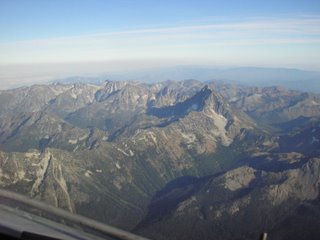
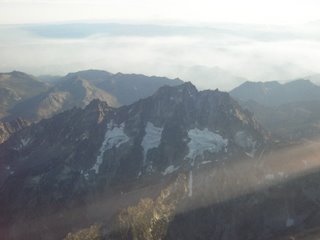
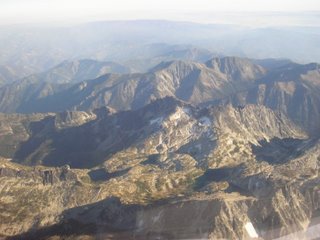
Yesterday's first five legs were running the Seattle-Spokane shuttle. I actually like this flight a lot. It usually lasts around 35-45 minutes, so you stay busy without being frantic, and the Spokane rampers are great, and the scenery over the Cascades is beautiful on a nice day. This is often the route on which I do scenic tours, and I was able to do it twice yesterday for the first time in a while. I regret that I didn't get up to the Alpine Lakes Wilderness once this year, although hiking in Switzerland definately made up for it.
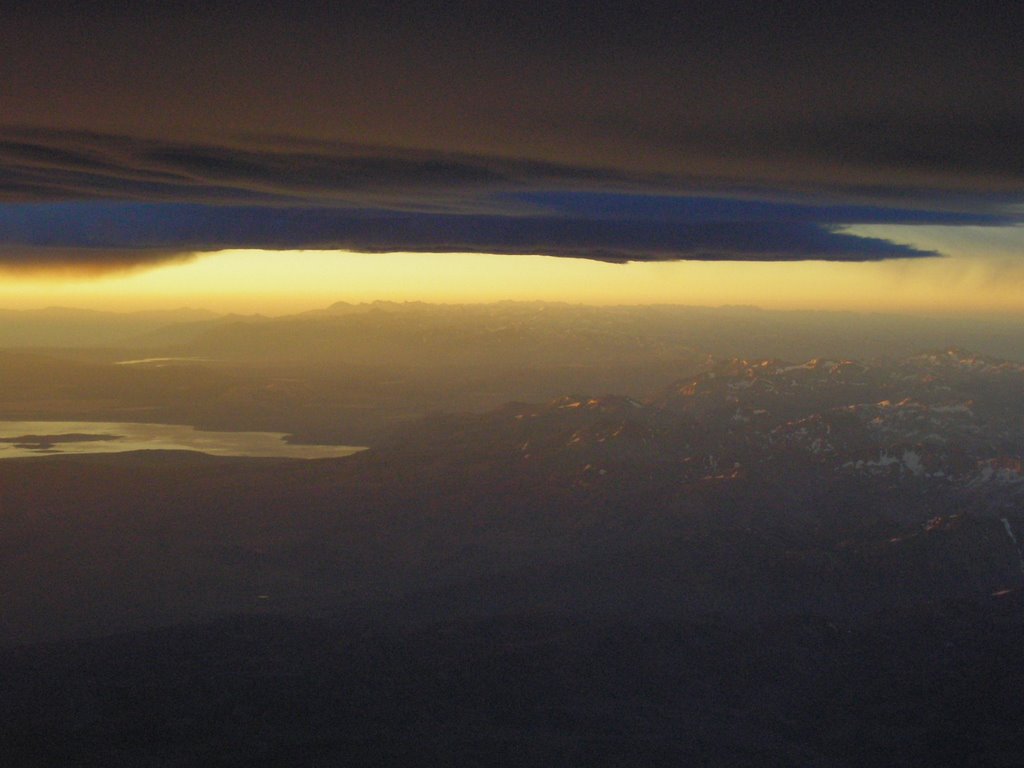
Here are some pictures I snapped yesterday:

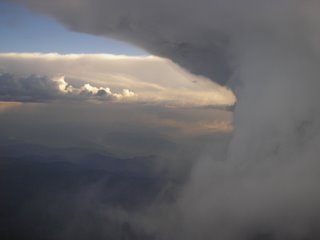
These were actually last week but kinda cool:

It's been a long time since I've flown a trip like this one. All last bid I had nice cushy SMF-BOI-RNO trips with four or less legs per day and lots of carefree California Dreamin'. No frantic turns, no Montana thunderstorms or wildfire smoke, no Seattle stress. Man, it made me go soft!
This trip really isn't that bad compared to what our MiniWhacker pilots do every day. But it's tough for a MegaWhacker trip. The first day had only four legs, but they were in four different airplanes! That's a personal record. It certainly makes a day seem much longer. I'm not sure what the aircraft routers were thinking. If I asked, they'd no doubt mumble something about the Big Picture. The second and third days had six and seven legs respectively, with seven hours of flying each. Today we finally catch a break: two legs and we're home. Hopefully the plane will be running on time.
Yesterday's first five legs were running the Seattle-Spokane shuttle. I actually like this flight a lot. It usually lasts around 35-45 minutes, so you stay busy without being frantic, and the Spokane rampers are great, and the scenery over the Cascades is beautiful on a nice day. This is often the route on which I do scenic tours, and I was able to do it twice yesterday for the first time in a while. I regret that I didn't get up to the Alpine Lakes Wilderness once this year, although hiking in Switzerland definately made up for it.
Here are some pictures I snapped yesterday:


These were actually last week but kinda cool:


Monday, September 11, 2006
I'm still here...
Work and travel and sickness and recovery have prevented me from blogging over the last week. I'll get back on it soon, though! In the meantime a lot of you have sent emails & left comments, so I'll get caught up on those. Also, my blogroll is in serious need of updating. I'll probably add some blogs to it, but I'm not sure which ones. If you all would be so kind as to comment on which of your favorite aviation blogs aren't on my blogroll, I'd appreciate it!
Monday, September 04, 2006
Happy Labor Day, NATCA....
Somebody at the FAA has a rather finely honed sense of irony. They decided that Labor Day was a good occasion to put the screws on Air Traffic Controllers and their union, NATCA, by unilaterally imposing a contract that contains significant wage and work rule concessions (see AvWeb's story and NATCA's press release). The FAA has said for some time that they would do this after declaring an impasse in contract negotiations last April, but the timing and exact terms were uncertain. In fact, the cuts are deeper than what the FAA told Congress that they'd impose.
The most noteworthy changes to the work rules concern controller fatigue. Until now, controllers have been required to take a break once every two hours of duty time; this has long been recognized as a major factor in keeping controllers sharp over long duty periods at busy facilities, but the FAA deleted this provision. Another huge safety concern is that controllers can no longer declare themselves too fatigued to work. Pilots' unions have long recognized that fatigue is more dangerous than sickness and have fought to extend sick leave policy to fatigue. At my airline, a fatigue call makes you lose pay (you can't use sick time) but at least you're not subject to discipline. I dare say that many pilot unions would strike over fatigue policy because it's such a safety issue.
But NATCA can't strike, because they're federal employees. Recall that when PATCO struck in 1981, Reagan fired them all. So they have no leverage to force the FAA to bargain in good faith, and when the agency decides there's an impasse, NATCA has to accept whatever terms the FAA imposes. It seems to render the union completely moot. This should concern everyone who flies as a pilot or passenger, however they feel about unions, because NATCA has been an important watchdog where aviation safety is concerned. Do you think the FAA will always act in the interest of safety if not forced to? Consider that they had the gumption to impose work rules that increase the risk of controllers working fatigued at the very time that the press is raising questions about the role that controller fatigue may have played in the Lexington crash!
At this point the controllers have very few options. One is CHAOS - to work in such a way that multiple delays are introduced at various points in the system, compounding each other and creating massive gridlock in the air traffic system. If controllers simply started using six or seven miles of separation in situations where they only need three, you'd see massive ground hold delays for "rush hour" arrivals into the nation's busiest airports. While this wouldn't be good for the airlines, it'd at least force the public to look at what the FAA is doing.
Perhaps the most asinine rule change is the new dress code. Controllers have an infamously relaxed wardrobe, which makes perfect sense when your only connection with your "customers" is your voice across the radio. It's much like how many work-from-home entrepreneurs conduct business in their pajamas. The FAA is now requiring controllers to wear a collared shirt & dress slacks. I suspect many controllers will seize on this opportunity to demonstrate their contempt for the new rules foisted upon them. I know a few controllers read this blog - feel free to send pics of the new fashions you see in the cabs & behind the scopes! I'm personally hoping to see at least one pink leotard & feather boa....
Sunday, September 03, 2006
Saturday, September 02, 2006
RNP is here!
Exciting news this morning: My airline has become only the 2nd airline in the US (behind Big Sister) to receive FAA approval to conduct RNP approaches. RNP stands for Required Navigational Performance; to get approval for RNP approaches, you need to demonstrate the ability to remain with .3 miles of the final approach course & missed approach course under the worst possible conditions - including GPS sensor failure on the approach. The UNS1E flight management system on the MegaWhacker uses DME triangulation and inertial data as backup in case of loss of GPS signal.
From an operational standpoint, an RNP approach is very similar to a GPS approach - we use virtually the same procedures for planning and executing the approach. One major difference is that you can fly curved courses with RNP, even inside the final approach course or on missed approach. This, plus the redundancy that RNP guarantees, allows for much lower minimums than GPS (or other non-precision) approaches to airports with significant terrain. At Palm Springs, for example, the current approach gets us down to 1823 feet above airport elevation and requires 3 miles visibility; the RNP 31L approach will get us to 304 feet with 1 mile visibility.
My airline says it has been working on RNP for around nine years, with very intensive testing and certification work over the last two years. This is a pretty big milestone, then - one with the potential to revolutionize our operations at airports with challenging terrain, like Sun Valley, Palm Springs, or Mammoth Lakes. Oh wait, did I let that last one slip? Heh, it's wishful thinking but feel free to start a rumor...
Friday, September 01, 2006
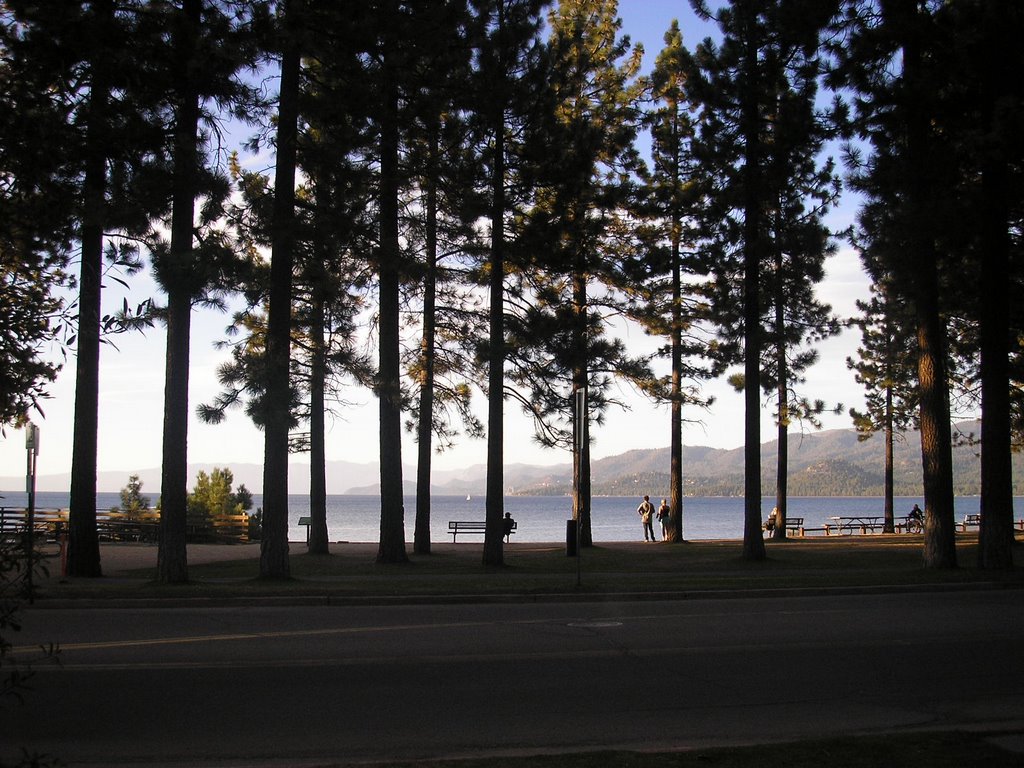
RNO Layover...in Tahoe
I've said it before and I'll say it again: Reno's one saving grace is that it's a 30 minute drive to Tahoe.

Subscribe to:
Posts (Atom)


