
Sunday, September 03, 2006


Saturday, September 02, 2006
RNP is here!
Exciting news this morning: My airline has become only the 2nd airline in the US (behind Big Sister) to receive FAA approval to conduct RNP approaches. RNP stands for Required Navigational Performance; to get approval for RNP approaches, you need to demonstrate the ability to remain with .3 miles of the final approach course & missed approach course under the worst possible conditions - including GPS sensor failure on the approach. The UNS1E flight management system on the MegaWhacker uses DME triangulation and inertial data as backup in case of loss of GPS signal.
From an operational standpoint, an RNP approach is very similar to a GPS approach - we use virtually the same procedures for planning and executing the approach. One major difference is that you can fly curved courses with RNP, even inside the final approach course or on missed approach. This, plus the redundancy that RNP guarantees, allows for much lower minimums than GPS (or other non-precision) approaches to airports with significant terrain. At Palm Springs, for example, the current approach gets us down to 1823 feet above airport elevation and requires 3 miles visibility; the RNP 31L approach will get us to 304 feet with 1 mile visibility.
My airline says it has been working on RNP for around nine years, with very intensive testing and certification work over the last two years. This is a pretty big milestone, then - one with the potential to revolutionize our operations at airports with challenging terrain, like Sun Valley, Palm Springs, or Mammoth Lakes. Oh wait, did I let that last one slip? Heh, it's wishful thinking but feel free to start a rumor...
From an operational standpoint, an RNP approach is very similar to a GPS approach - we use virtually the same procedures for planning and executing the approach. One major difference is that you can fly curved courses with RNP, even inside the final approach course or on missed approach. This, plus the redundancy that RNP guarantees, allows for much lower minimums than GPS (or other non-precision) approaches to airports with significant terrain. At Palm Springs, for example, the current approach gets us down to 1823 feet above airport elevation and requires 3 miles visibility; the RNP 31L approach will get us to 304 feet with 1 mile visibility.
My airline says it has been working on RNP for around nine years, with very intensive testing and certification work over the last two years. This is a pretty big milestone, then - one with the potential to revolutionize our operations at airports with challenging terrain, like Sun Valley, Palm Springs, or Mammoth Lakes. Oh wait, did I let that last one slip? Heh, it's wishful thinking but feel free to start a rumor...
Friday, September 01, 2006
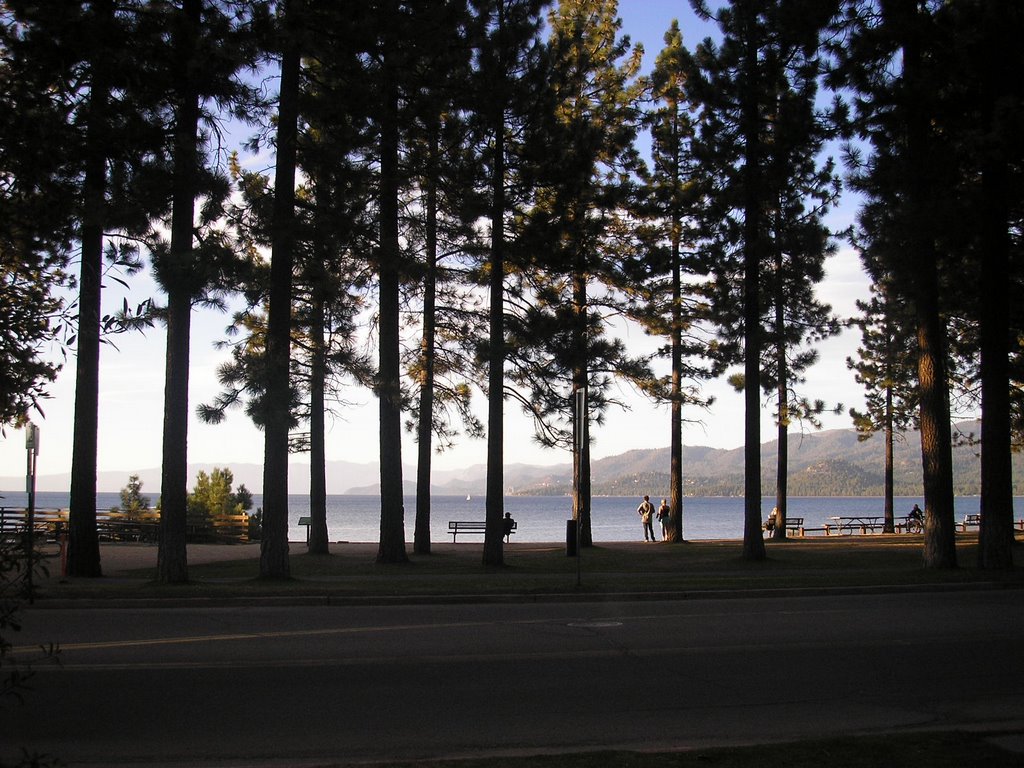
RNO Layover...in Tahoe
I've said it before and I'll say it again: Reno's one saving grace is that it's a 30 minute drive to Tahoe.

Thursday, August 31, 2006
Taking Care of Bidness
It's that time of month again! For the past week, crewmembers at my airline have been seen poring over thick packets of paper, armed with pens, pencils, and seven colors of marker, mumbling unprintables about Crew Planning under their breath. Yes, it's Bid Week.
Schedules for flight crewmembers at my airline are divided into 35 day "bid periods." Your schedule during that particular bid is determined in advance through a seniority-bases system known as "bidding." Because it happens only once every 5 weeks and there are rather limited opportunities to change your schedule later on, many crewmembers put significant time and energy into bidding.
About 20 days before the start of each bid, the company publishes and distributes bid packets to all the crewmembers. There is one bid packet for each pilot seat and domicile ("PDX Megawhacker FO," "DEN BarbieJet Captain," etc), plus one packet per domicile for flight attendants which covers all equipment types based at that domicile. The bid packets contain coded descriptions of every schedule and the trips they consist of. The number of schedules (or "lines") is roughly equal to the number of persons covered by that trip packet.
An example of a single line ("Line 710") is shown below. The numbers on the first row are dates (10 Sept - 14 Oct); the second row gives the corresponding day of the week. If any day has an asterisk under it, that is a day off. If it has letters under it, it's a working day, with each three letter indentifier signifying the layover. The number above the first layover of each trip is the trip number, which is used to look up that trip's schedule later in the bid packet. On 12 Sept, for example, this line has Trip 605, which is a four day trip with layovers in GEG (Spokane), FCA (Kalispell), and HLN (Helena). The last day says PDX because this trip is flown by Portland based pilots.

Line 710 is an example of a regular line, which makes up 2/3 to 3/4 of the lines. With regular lines, you know your exact schedule in advance. Regular lines have between 14 and 18 days off per bid. There are also a number of reserve lines, such as Line 770 shown below. This shows days off and reserve days. Reserve lines will have AM or PM airport reserve, AM or PM home reserve, or some combination thereof. Line 770 is 100% AM home reserve ("RA"), which means that the reserve pilot must be contactible and within 90 minutes of the airport from 4:30am to 6:30pm on each RA day. All reserve lines have 12 days off per bid.

The rest of the available lines are composite. The number of composite lines varies every bid, and may contain assigned trips, reserve days, or both. The thing is, you don't know what it will be when you bid for it. It's built for you after it is awarded, so it's a bit of a crapshoot. Still, if the alternative is a reserve line or a crappy regular line, composite lines can be worth a shot. I don't have anywhere near the seniority required to hold a weekends off regular line, but I've had weekends off with a composite line.
Once you've perused the lines and decided which ones you like, you bid for them online during Bid Week. You do this by listing the lines you want in order of preference. When Bid Week closes, the crew planners go down the list of crewmembers in order of seniority and award them the first line on their list that's not already taken. Obviously, by the time they get to the most junior crewmembers, there's not much left - typically the weekday-off reserve lines and undesirable regular lines. The final schedule is published about a week before that bid opens.
I'm currently only about a third of the way up the PDX MegaWhacker FO list, so I'm pretty limited in what I can get. My usual technique is to find the lines I like and list them in order of preference. After that, I'll either bid composite or bid the remaining regular lines in sequential order. I only bid composite if it appears that I'll be in the most senior 1/3 of composite line holders - otherwise, I'm usually better off taking a junior regular line.
Different crewmembers look for different things when bidding. Many look for weekends off; others focus on getting specific days off for family events, etc. If specific days don't matter, some people bid for lines with the most time off. Commuters usually bid around trips that have convenient show and release times for commuting. A few people bid for trips that have layovers they like. A few senior people even intentionally bid reserve so they can have more time to work on projects at home.
So what do I bid for? It depends. My wife is a schoolteacher so she has a pretty set M-F schedule, but getting weekends off is difficult at my seniority. If I can get even partial weekends off with a regular line I'll try for that, otherwise I might bid composite. If I'm REALLY desperate I'll just bite the bullet and bid a senior reserve line. During summertime Dawn doesn't work, so weekends are meaningless. During ski season, it's nice to have weekdays off - the resorts are less crowded and the skiing is cheaper. A few times, I've bid for otherwise crappy lines because they had quite a few days off in a row. That's how I took two short trips to the Netherlands earlier this year.
The biggest mistake you can make is forgetting to bid. If that happens, you automatically go to the bottom of the list and get whatever is left over. Many a senior pilot has spend a painful month back on reserve after they forgot to bid. I almost forgot to bid last month - I was in Europe - and remembered with just enough time to enter all lines sequentially without looking at them. I got lucky and got a rather decent line with Th/Fr/Sa off. This month I was awarded a composite line for the first time in several bids, but I won't know exactly what's on it until final schedules come out this weekend.
Schedules for flight crewmembers at my airline are divided into 35 day "bid periods." Your schedule during that particular bid is determined in advance through a seniority-bases system known as "bidding." Because it happens only once every 5 weeks and there are rather limited opportunities to change your schedule later on, many crewmembers put significant time and energy into bidding.
About 20 days before the start of each bid, the company publishes and distributes bid packets to all the crewmembers. There is one bid packet for each pilot seat and domicile ("PDX Megawhacker FO," "DEN BarbieJet Captain," etc), plus one packet per domicile for flight attendants which covers all equipment types based at that domicile. The bid packets contain coded descriptions of every schedule and the trips they consist of. The number of schedules (or "lines") is roughly equal to the number of persons covered by that trip packet.
An example of a single line ("Line 710") is shown below. The numbers on the first row are dates (10 Sept - 14 Oct); the second row gives the corresponding day of the week. If any day has an asterisk under it, that is a day off. If it has letters under it, it's a working day, with each three letter indentifier signifying the layover. The number above the first layover of each trip is the trip number, which is used to look up that trip's schedule later in the bid packet. On 12 Sept, for example, this line has Trip 605, which is a four day trip with layovers in GEG (Spokane), FCA (Kalispell), and HLN (Helena). The last day says PDX because this trip is flown by Portland based pilots.

Line 710 is an example of a regular line, which makes up 2/3 to 3/4 of the lines. With regular lines, you know your exact schedule in advance. Regular lines have between 14 and 18 days off per bid. There are also a number of reserve lines, such as Line 770 shown below. This shows days off and reserve days. Reserve lines will have AM or PM airport reserve, AM or PM home reserve, or some combination thereof. Line 770 is 100% AM home reserve ("RA"), which means that the reserve pilot must be contactible and within 90 minutes of the airport from 4:30am to 6:30pm on each RA day. All reserve lines have 12 days off per bid.

The rest of the available lines are composite. The number of composite lines varies every bid, and may contain assigned trips, reserve days, or both. The thing is, you don't know what it will be when you bid for it. It's built for you after it is awarded, so it's a bit of a crapshoot. Still, if the alternative is a reserve line or a crappy regular line, composite lines can be worth a shot. I don't have anywhere near the seniority required to hold a weekends off regular line, but I've had weekends off with a composite line.
Once you've perused the lines and decided which ones you like, you bid for them online during Bid Week. You do this by listing the lines you want in order of preference. When Bid Week closes, the crew planners go down the list of crewmembers in order of seniority and award them the first line on their list that's not already taken. Obviously, by the time they get to the most junior crewmembers, there's not much left - typically the weekday-off reserve lines and undesirable regular lines. The final schedule is published about a week before that bid opens.
I'm currently only about a third of the way up the PDX MegaWhacker FO list, so I'm pretty limited in what I can get. My usual technique is to find the lines I like and list them in order of preference. After that, I'll either bid composite or bid the remaining regular lines in sequential order. I only bid composite if it appears that I'll be in the most senior 1/3 of composite line holders - otherwise, I'm usually better off taking a junior regular line.
Different crewmembers look for different things when bidding. Many look for weekends off; others focus on getting specific days off for family events, etc. If specific days don't matter, some people bid for lines with the most time off. Commuters usually bid around trips that have convenient show and release times for commuting. A few people bid for trips that have layovers they like. A few senior people even intentionally bid reserve so they can have more time to work on projects at home.
So what do I bid for? It depends. My wife is a schoolteacher so she has a pretty set M-F schedule, but getting weekends off is difficult at my seniority. If I can get even partial weekends off with a regular line I'll try for that, otherwise I might bid composite. If I'm REALLY desperate I'll just bite the bullet and bid a senior reserve line. During summertime Dawn doesn't work, so weekends are meaningless. During ski season, it's nice to have weekdays off - the resorts are less crowded and the skiing is cheaper. A few times, I've bid for otherwise crappy lines because they had quite a few days off in a row. That's how I took two short trips to the Netherlands earlier this year.
The biggest mistake you can make is forgetting to bid. If that happens, you automatically go to the bottom of the list and get whatever is left over. Many a senior pilot has spend a painful month back on reserve after they forgot to bid. I almost forgot to bid last month - I was in Europe - and remembered with just enough time to enter all lines sequentially without looking at them. I got lucky and got a rather decent line with Th/Fr/Sa off. This month I was awarded a composite line for the first time in several bids, but I won't know exactly what's on it until final schedules come out this weekend.
Monday, August 28, 2006
SoCal Airport Eats
The other day I was talking to Puneet, the Indian proprieter of the new aviation blog aggregator, Blogging Pilots. He did his training in Southern California, near where I instructed and freight dogged, so we've flown to many of the same airports. It was fun to reminisce, particularly about some of the great airport cafés and restaurants in Southern California. Some of my favorite memories of SoCal flying are the many $100 Hamburger runs I made with students.
I called Brackett Field home for several years. Norm's Hangar was a favorite hangout for flight instructors and students at Brackett. While the food was greasy, the cleanliness suspect, and the wait staff sometimes surly, Norm's had a covered patio that was perfect for airplane watching while conducting ground school over burgers and fries.
On foggy June Gloom mornings, Brackett might go below landing minimums while Ontario and Chino had better weather. When this was the case, my instrument students and I would go shoot practice approaches at Chino for a while and then stop for breakfast at Flo's Airport Cafe. This particular joint is no less than a SoCal Institution, having been around since shortly after World War II ended. It was the original prototype for the Airport Greasy Spoon. If the artery-cloggingly wonderful breakfast doesn't attract you, the history and timeless ambiance of the place should. I spent many wonderful mornings here hangar flying with students while waiting for Brackett's weather to come back up.
When the occasion called for a little more formality than Flo's, Typhoon Restaurant at Santa Monica was an excellent choice. Located in the airport administration building on the south side of the field, Typhoon features pan-Asian cuisine and is a popular upscale-casual eatery with the locals. I sometimes felt a little embarrassed to be seen here in grubby CFI gear, but the food was so good I could never turn down a student's invitation no matter what stains my khakis had acquired that day. They also have a rooftop sushi bar called The Hump. If sushi isn't exotic enough for you, Typhoon actually serves fried ants and several other insect dishes.
My favorite route for instrument cross countries was to take V27 up the coast to San Luis Obispo. The coastal scenery was always breathtaking and it was enjoyable to get out of the LA Basin for a while. No trip to SBP was complete without visiting Spirit of San Luis near the base of the ATC tower. This is another airport restaurant that's upscale enough to be a popular night out for the locals, but they treat scruffy CFIs pretty well. I always meant to sample more of their menu but could never get past the clam chowder. It's really that good.
Aircraft checkouts at my flight school included a mandatory trip to Big Bear Airport, elevation 6750 feet. Inevitably the checkouts would be scheduled for hot late afternoons, when the Warriors would be lucky to see 200 fpm on climbout from Big Bear. After staggering around the pattern once or twice, I'd often suggest that we stop and wait for the air to cool a bit. In the meantime, there just happened to be good Chinese food on the field! Mandarin Garden offers huge portions of good food for cheap...looking back, I think the post-dinner climb rates were even more abysmal!
For my first few months of freight doggery, I had a Lance route that took me down to Mongomery Field in San Diego several times a day. On the last roundtrip, I'd usually have about an hour between when I landed and when my first couriers showed up, so I'd often grab a bite to eat at Casa Machado, the Mexican restaurant on the second floor of the terminal. It's San Diego, so you know the Mexican cuisine is authentic. Pity I never got to sample their Margaritas, everybody said they were excellent.
Of course, the last word when it comes to $100 Hamburger runs in Southern California is the infamous Elephant Bar at Santa Barbara. Sure, it's a chain restaurant. Yes, Signature charges you $10 to park. No, there isn't any view of the runway. Who cares - it's a fun, hip place with good food, Santa Barbara is beautiful, and the flight doesn't take too long while still getting you out of LA. The night after I proposed to Dawn, we rented an Archer and flew to Santa Barbara to celebrate at Elephant Bar. A strong November cold front was sweeping through at the time. We took off into a low overcast at Brackett, flew bumpy IMC the entire way, shot the ILS 7 approach at SBA to minimums in moderate turbulence and a howling crosswind, and parked at Signature in a driving rain. The staff took one look at us as we drippily slogged into the FBO and announced that as the first arrival in 5 hours, they were waiving our parking fee. The fact that Dawn actually enjoyed this flight reassured me that proposing was the smartest thing I'd done in a while.
So...what's your favorite $100 Hamburger story?
Update: Ron Rapp posted his own favorite SoCal airport eateries, touching on several excellent ones I didn't include in my post. And IFRPilot wrote about his own favorite haunts back east.
I called Brackett Field home for several years. Norm's Hangar was a favorite hangout for flight instructors and students at Brackett. While the food was greasy, the cleanliness suspect, and the wait staff sometimes surly, Norm's had a covered patio that was perfect for airplane watching while conducting ground school over burgers and fries.
On foggy June Gloom mornings, Brackett might go below landing minimums while Ontario and Chino had better weather. When this was the case, my instrument students and I would go shoot practice approaches at Chino for a while and then stop for breakfast at Flo's Airport Cafe. This particular joint is no less than a SoCal Institution, having been around since shortly after World War II ended. It was the original prototype for the Airport Greasy Spoon. If the artery-cloggingly wonderful breakfast doesn't attract you, the history and timeless ambiance of the place should. I spent many wonderful mornings here hangar flying with students while waiting for Brackett's weather to come back up.
When the occasion called for a little more formality than Flo's, Typhoon Restaurant at Santa Monica was an excellent choice. Located in the airport administration building on the south side of the field, Typhoon features pan-Asian cuisine and is a popular upscale-casual eatery with the locals. I sometimes felt a little embarrassed to be seen here in grubby CFI gear, but the food was so good I could never turn down a student's invitation no matter what stains my khakis had acquired that day. They also have a rooftop sushi bar called The Hump. If sushi isn't exotic enough for you, Typhoon actually serves fried ants and several other insect dishes.
My favorite route for instrument cross countries was to take V27 up the coast to San Luis Obispo. The coastal scenery was always breathtaking and it was enjoyable to get out of the LA Basin for a while. No trip to SBP was complete without visiting Spirit of San Luis near the base of the ATC tower. This is another airport restaurant that's upscale enough to be a popular night out for the locals, but they treat scruffy CFIs pretty well. I always meant to sample more of their menu but could never get past the clam chowder. It's really that good.
Aircraft checkouts at my flight school included a mandatory trip to Big Bear Airport, elevation 6750 feet. Inevitably the checkouts would be scheduled for hot late afternoons, when the Warriors would be lucky to see 200 fpm on climbout from Big Bear. After staggering around the pattern once or twice, I'd often suggest that we stop and wait for the air to cool a bit. In the meantime, there just happened to be good Chinese food on the field! Mandarin Garden offers huge portions of good food for cheap...looking back, I think the post-dinner climb rates were even more abysmal!
For my first few months of freight doggery, I had a Lance route that took me down to Mongomery Field in San Diego several times a day. On the last roundtrip, I'd usually have about an hour between when I landed and when my first couriers showed up, so I'd often grab a bite to eat at Casa Machado, the Mexican restaurant on the second floor of the terminal. It's San Diego, so you know the Mexican cuisine is authentic. Pity I never got to sample their Margaritas, everybody said they were excellent.
Of course, the last word when it comes to $100 Hamburger runs in Southern California is the infamous Elephant Bar at Santa Barbara. Sure, it's a chain restaurant. Yes, Signature charges you $10 to park. No, there isn't any view of the runway. Who cares - it's a fun, hip place with good food, Santa Barbara is beautiful, and the flight doesn't take too long while still getting you out of LA. The night after I proposed to Dawn, we rented an Archer and flew to Santa Barbara to celebrate at Elephant Bar. A strong November cold front was sweeping through at the time. We took off into a low overcast at Brackett, flew bumpy IMC the entire way, shot the ILS 7 approach at SBA to minimums in moderate turbulence and a howling crosswind, and parked at Signature in a driving rain. The staff took one look at us as we drippily slogged into the FBO and announced that as the first arrival in 5 hours, they were waiving our parking fee. The fact that Dawn actually enjoyed this flight reassured me that proposing was the smartest thing I'd done in a while.
So...what's your favorite $100 Hamburger story?
Update: Ron Rapp posted his own favorite SoCal airport eateries, touching on several excellent ones I didn't include in my post. And IFRPilot wrote about his own favorite haunts back east.
Sunday, August 27, 2006
Comair 5191
My sadness over the crash and disappointment that the safest period in US airline history has ended is exceeded only by my anger at some of the things the media breathlessly reported in the first hours after the crash before finally deciding that the CRJ apparently departed a 3500' runway. While that seems pretty plausible given the airport configuration and where the wreckage lies, the media habitually broadcasts so much speculation and unconfirmed rumors where aviation is concerned that I don't know when to believe them - on any subject!
The NTSB will investigate and then we'll know exactly what went wrong on Comair 5191, and we'll learn what we can do to prevent it from happening again. In the meantime, we can all consider this a reminder to remain vigilent and not allow complacency to creep in.
The NTSB will investigate and then we'll know exactly what went wrong on Comair 5191, and we'll learn what we can do to prevent it from happening again. In the meantime, we can all consider this a reminder to remain vigilent and not allow complacency to creep in.
Saturday, August 26, 2006
The Broke First Officer's Guide to Sleeping in Airports
Anybody who travels much, and non-rev'ers in particular, will eventually find themselves stranded at an airport late at night, with many hours before their flight the next morning. Most people, when faced with this situation, will try to find a cheap hotel near the airport. If you're a businessman on an expense account, traveling with family, or able to split the cost with a friend, this is probably your best option. If, however, you are a broke regional airline first officer who is traveling because 1) it's free and 2) free onboard meals, there is only one option: sleeping in the terminal.
Over the years I've slept in airports a number of times. Most recent was this Thursday night. I was in Seattle for a screening and release party for BT's new album/DVD, This Binary Universe (it's very good, btw - highly recommended). After the club closed at 2am, some guys I met dropped me off at the airport, where I slept until my 7am flight to Portland. This got me thinking about past experiences, and I realized that sleeping well in airports requires some specialized knowledge...which I am more than happy to pass onto you, the Broke Regional First Officer.
Two enemies of sleep are ever abundant in airport terminals: light and sound. Many airports are rather brightly lit so as to avoid burned out road warriors becoming depressed and killing themselves (that's my theory, at least). A few energy-savvy airports turn the lights down low at night, but many do not. Another ubiquitous feature of modern airports is the presense of loudspeakers that regularly blast security announcements. I think sleeping in airports would be a very efficient way to train TSA agents; they would learn the list of prohibited items by osmosis. If you're sleeping near an entrance, you'll also become intimately aquainted with what exactly the white and red zones are for. Unless you're a heavy sleeper, I would suggest packing a sleep mask and earplugs on any trip where you may end up sleeping in an airport.
Airport terminals tend to be on the chilly side, so bedding is a good thing to have. I think you'd have to be pretty pessemistic to tote a sleeping bag along on every trip! However, on your inbound flight you'll probably have a good idea whether you might spend the night in the terminal, and you can grab an onboard pillow and a blanket or two. That's assuming you're not traveling on an airline that has eliminated them as a cost saving measure. In a pinch, a jacket or extra clothing can help keep you warm in a icy terminal.
When looking for a spot to sleep, inside security is preferable. It's usually easier to find areas without excessive light or sound around the gates, there are typically more seats to use, and you and your belongings are safer there. Unfortunately many airports close the gate areas after 1 or 2AM. If you can make yourself inconspicuous, you may avoid eviction. Bedding down behind gate counters works well for escaping notice, although I'd suggest you move on before the gate agents arrive for work in the morning. If you're approached by a security guard, pretend to be fast asleep. Snore, mumble as though dreaming, and maybe even drool a bit. There's a good chance they'll leave you alone!
If you don't wish to sleep on the floor, you may be able to find a bench or row of chairs without armrests. These can be hard to find and often get taken early in the night. Back in the "good ole days," seasoned airport sleepers would carry a screwdriver along to take armrests off of chairs! Of course, all such tools are strictly verboten these days. However, you may be able to move around the furniture a bit to form a passable bed. A few airports have started providing cots and even some bedding to stranded travelers. This is more common during massive disruptions such as snowstorms, strikes, terrorism-related groundings, etc.
When you sleep in an airport, you accept that you may not catch much actual sleep. I've found that it's easier to keep myself awake for a while by reading, blogging, playing cards, etc, until I'm really getting tired, and then I'll lay down and get two or three hours of good, uninterrupted sleep. In the morning I'm more rested than if I fitfully tried to sleep all night long. I just plan on catching additional sleep on my next flight.
You'll sleep better if you're sure that you'll wake up before your flight. Unless you're a heavy sleeper, all the activity in the terminal after 5am will wake you up. A travel alarm clock or wristwatch alarm can provide extra peace of mind, though.
Keeping your belongings safe is always a consideration, particularly if you're sleeping outside of security. I'll often use my backpack as a pillow. If I don't have a blanket, I'll take my wallet out of my back pocket & sleep on it. Sleeping with your bags under your bench or between you and a wall should discourage would-be thieves. Those traveling alone, particularly women, will be safer sleeping near other travelers.
If you have a military ID card, many airports have USO lounges with couches or even bunk beds as well as complimentary snacks and beverages. If I had this option I'd never pay money for a hotel room again!
The most experienced airport sleepers have their favorite nooks and crannies at the various major airports. You can read many of their tips at www.sleepinginairports.net.
One last tip. If you're stuck in the western US and you can jumpseat, consider taking a redeye rather than sleeping in an airport. For example, if you're trying to get to Nashville and you get to Denver after all the BNA flights have left, you might be better off taking a redeye flight to New York or DC and then catching a flight back to BNA. Depending on the flight loads, you might get better sleep than if you slept in the terminal, and you'd probably get to BNA at about the same time as if you'd taken the first flight out of DEN. Plus you might get free breakfast on the morning flight!
Over the years I've slept in airports a number of times. Most recent was this Thursday night. I was in Seattle for a screening and release party for BT's new album/DVD, This Binary Universe (it's very good, btw - highly recommended). After the club closed at 2am, some guys I met dropped me off at the airport, where I slept until my 7am flight to Portland. This got me thinking about past experiences, and I realized that sleeping well in airports requires some specialized knowledge...which I am more than happy to pass onto you, the Broke Regional First Officer.
Two enemies of sleep are ever abundant in airport terminals: light and sound. Many airports are rather brightly lit so as to avoid burned out road warriors becoming depressed and killing themselves (that's my theory, at least). A few energy-savvy airports turn the lights down low at night, but many do not. Another ubiquitous feature of modern airports is the presense of loudspeakers that regularly blast security announcements. I think sleeping in airports would be a very efficient way to train TSA agents; they would learn the list of prohibited items by osmosis. If you're sleeping near an entrance, you'll also become intimately aquainted with what exactly the white and red zones are for. Unless you're a heavy sleeper, I would suggest packing a sleep mask and earplugs on any trip where you may end up sleeping in an airport.
Airport terminals tend to be on the chilly side, so bedding is a good thing to have. I think you'd have to be pretty pessemistic to tote a sleeping bag along on every trip! However, on your inbound flight you'll probably have a good idea whether you might spend the night in the terminal, and you can grab an onboard pillow and a blanket or two. That's assuming you're not traveling on an airline that has eliminated them as a cost saving measure. In a pinch, a jacket or extra clothing can help keep you warm in a icy terminal.
When looking for a spot to sleep, inside security is preferable. It's usually easier to find areas without excessive light or sound around the gates, there are typically more seats to use, and you and your belongings are safer there. Unfortunately many airports close the gate areas after 1 or 2AM. If you can make yourself inconspicuous, you may avoid eviction. Bedding down behind gate counters works well for escaping notice, although I'd suggest you move on before the gate agents arrive for work in the morning. If you're approached by a security guard, pretend to be fast asleep. Snore, mumble as though dreaming, and maybe even drool a bit. There's a good chance they'll leave you alone!
If you don't wish to sleep on the floor, you may be able to find a bench or row of chairs without armrests. These can be hard to find and often get taken early in the night. Back in the "good ole days," seasoned airport sleepers would carry a screwdriver along to take armrests off of chairs! Of course, all such tools are strictly verboten these days. However, you may be able to move around the furniture a bit to form a passable bed. A few airports have started providing cots and even some bedding to stranded travelers. This is more common during massive disruptions such as snowstorms, strikes, terrorism-related groundings, etc.
When you sleep in an airport, you accept that you may not catch much actual sleep. I've found that it's easier to keep myself awake for a while by reading, blogging, playing cards, etc, until I'm really getting tired, and then I'll lay down and get two or three hours of good, uninterrupted sleep. In the morning I'm more rested than if I fitfully tried to sleep all night long. I just plan on catching additional sleep on my next flight.
You'll sleep better if you're sure that you'll wake up before your flight. Unless you're a heavy sleeper, all the activity in the terminal after 5am will wake you up. A travel alarm clock or wristwatch alarm can provide extra peace of mind, though.
Keeping your belongings safe is always a consideration, particularly if you're sleeping outside of security. I'll often use my backpack as a pillow. If I don't have a blanket, I'll take my wallet out of my back pocket & sleep on it. Sleeping with your bags under your bench or between you and a wall should discourage would-be thieves. Those traveling alone, particularly women, will be safer sleeping near other travelers.
If you have a military ID card, many airports have USO lounges with couches or even bunk beds as well as complimentary snacks and beverages. If I had this option I'd never pay money for a hotel room again!
The most experienced airport sleepers have their favorite nooks and crannies at the various major airports. You can read many of their tips at www.sleepinginairports.net.
One last tip. If you're stuck in the western US and you can jumpseat, consider taking a redeye rather than sleeping in an airport. For example, if you're trying to get to Nashville and you get to Denver after all the BNA flights have left, you might be better off taking a redeye flight to New York or DC and then catching a flight back to BNA. Depending on the flight loads, you might get better sleep than if you slept in the terminal, and you'd probably get to BNA at about the same time as if you'd taken the first flight out of DEN. Plus you might get free breakfast on the morning flight!
Subscribe to:
Posts (Atom)


