
I can't take credit for this one, but it's pretty freakin' brilliant. The cop/porter thing is hilarious, as I have indeed been mistaken for both, among other things.
Showing posts with label Regional Airlines. Show all posts
Showing posts with label Regional Airlines. Show all posts
Tuesday, March 17, 2015
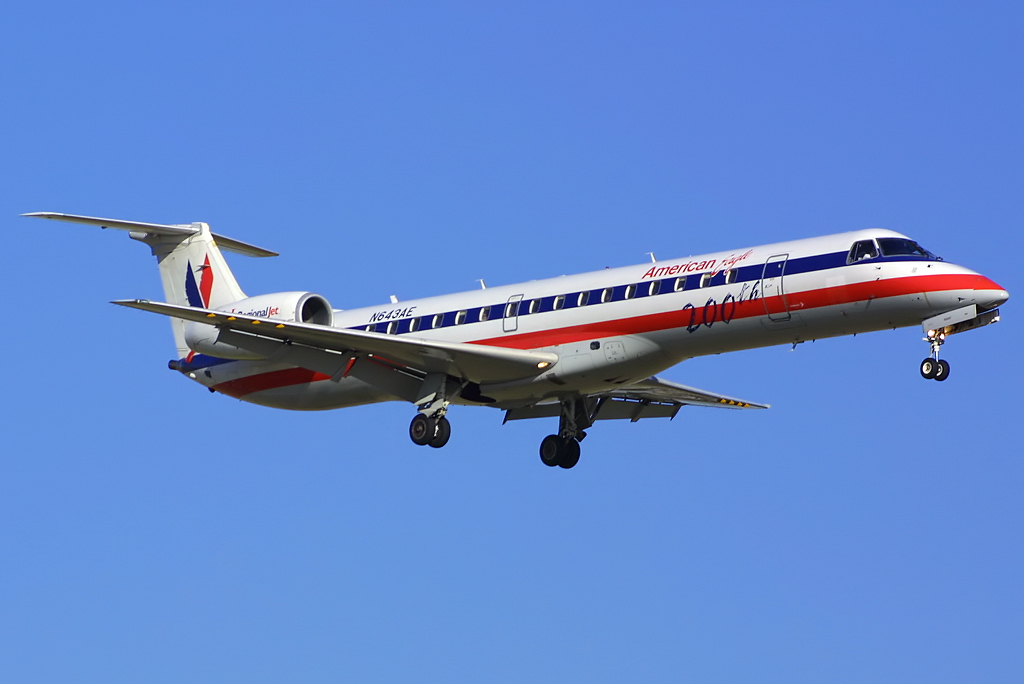
Living the Dream!
I can't take credit for this one, but it's pretty freakin' brilliant. The cop/porter thing is hilarious, as I have indeed been mistaken for both, among other things.


Sunday, April 20, 2014
Ode to JungleBus
The
first time I saw JungleBus, I was a Q400 FO at Horizon, who had recently lost
their Frontier JetExpress flying only three years into a supposed 12-year
contract. As our CRJ-700s came back from Frontier they were being put on
inefficient routes like Portland-Seattle, and so the factors that would
eventually lead me to leave Horizon were already evident. In Spokane, I saw a
Republic JB in Frontier colors taxiing into the gate, and my initial reaction
was profound dislike. It looked like a child's pudgy plastic toy airplane to
me, and the fuzzy baby animal on the tail added to the impression. My critique
of the airplane's aesthetics never entirely changed even after I was flying it.
But that first impression was likely tinged by jealousy and frustration over my
stalled career at Horizon. Six months later I was in class at NewCo, learning
to fly that pudgy toy plane.
The
training began with a home self-study CD-ROM, which seemed awfully slim on
in-depth systems knowledge. I figured the classroom systems lectures would go
into greater detail, but when I got to Montreal the ground instructors seemed
to know even less about the plane than we did. Alarmingly, the same was true of
our simulator instructors. The checkride examiners asked plenty about each
control and button's function and system logic, but very little about the
underlying systems themselves. I entered OE feeling like I knew less about this
airplane than any I'd ever flown before - and despite that, got through in only
25 hours feeling pretty comfortable with line operations. And that wasn't me
being superpilot; everyone was
getting through with 25 hours of OE. I realized then that the lack of systems
instruction wasn't a byproduct of a new airline or a relatively new type, it
was an integral feature of a design meant to remove pilots and their pesky
human failings from its operation to the greatest degree possible.
The
JungleBus is in fact a fairly complex airplane, but from the flight deck it is
simplicity itself. The overhead panel features a few rows of large,
rarely-touched "dusty buttons" which select the systems to
"Auto" or "Off." When everything is selected to its normal
(auto) position, the switchlights are dark. The ram's horn yokes are
beautifully ergonomic and nicely balanced, which they well should be since
they're not connected to much of anything - it's all computer-augmented fly by
wire with the exception of the ailerons, which actually have control cables
running to their hydraulic actuators. The FADEC-controlling thrust levers glide
smoothly from idle to the rating detent, which you seldom feel since the
autothrottles are generally engaged before you ever get close to it. The
secondary controls - Flaps, Spoilers - are big and unmistakable, and protect
themselves by refusing to deploy when they shouldn't. The real heart of the
cockpit, the Flight Guidance Panel, has quite a few easy to understand and use
modes for lateral and vertical guidance - the most commonly used of which are
the FMS-derived LNAV and VNAV. When everything is working, it's a rather easy
airplane to fly.
But
what about when things break, you ask - what then? Again, the airplane makes it
as simple for the pilot as possible. Most major systems go through extensive
self-tests, transparent to the pilot, on aircraft power-up. If they fail their
self-test, they display an error message and you call maintenance. The only systems
the pilot tests himself are the fire protection, annunciator lights, and trim
switches. After startup and proceeding through the flight, the EICAS system
inhibits many faults, discreetly sending minor ones directly to the
airline and displaying others after landing or shutdown. Only outright failures
are shown on the EICAS display in real-time or close to it (most are inhibited
between 80 knots and V1), and then the system prioritizes the order of their
display so that malfunctions most likely to be the root cause of secondary
faults are addressed first. You just pick the highest priority message and run
the associated QRH checklist. Nine times out of ten, the checklist tells you to
select the system off, wait sixty seconds, and turn it back to auto, and nine
times out of ten this resolves the fault – the aeronautical equivalent of
Ctrl-Alt-Del. If the QRH leaves any room for confusion, you can bring up the
appropriate system schematic on the Multi-Function Display (MFD), and the
status and relationship of every component in the system is displayed. If our
instructors never placed much emphasis on knowing exactly what is powered by
each hydraulic system, for example, their laxity makes a little more sense when
you realize that the hydraulic synoptic page shows exactly what is being
powered at any given time, no rote memorization required. My colleagues and I
have often theorized that this airplane was designed to be flown in challenging
third-world conditions by inexperienced, occasionally fatigued crews, and most
of the time it will keep even this “lowest common denominator” crew out of
serious trouble.
Of
course, JungleBus’ front-end simplicity is achieved through a great deal of
back-end complexity of the electronic variety, and this means it is still prone
to human error – but these errors can lay hidden within layers of code or
imbedded on circuit boards for months or even years before surfacing in unexpected
ways. In six years I’ve seen this airplane do some truly mind-boggling things,
like spontaneously change a pilot-entered VNAV descent angle from a reasonable
3.5 degrees to an untenable 6 degrees, or abruptly turning 20 degrees off
course upon crossing an intermediate fix where the airway didn’t bend. A good
friend had a baffling situation where the pneumatic synoptic page showed that
both pack valves had closed themselves and the cabin altitude was rapidly
increasing. He quite reasonably made an emergency descent and subsequently
diverted to our maintenance base in Louisville, where subsequent investigation
showed that it was an indication error – both packs were working correctly and
cabin altitude had actually remained steady at 8000 feet! I personally
experienced a current surge event in one of the Secondary Power Distribution
Assemblies (SPDA) that fried multiple circuit boards in one fell swoop,
creating a puzzling array of seemingly unrelated faults; this fortunately
happened on the ground, during the Power-On Self Test.
These
type of events are not a slight against the JungleBus’ basic design; they
happen in every modern airplane, and I dare say more often in many than in the
JungleBus today (early on it had many more bugs to work through). I would say
they are notable in the JungleBus primarily because most of the time the
airplane does work so well that it lulls crew into less
active monitoring than they might practice in a less reliable design. This
complacency is the easiest way to get into trouble in a JungleBus, and usually
not because of some insidious bug hidden deep in the software. Most of the time
JungleBus crews screw up, they do it to themselves with bad input, and
subsequently fail to catch the error through lax monitoring. Too often when the
error is finally discovered, they attempt to fix the automation in a hurried,
panicked manner rather than simply flying the airplane and having the other
pilot fix the automation when time allows it to be done methodically. And this
problem, I would argue, is a direct
result of JungleBus’ design philosophy and the resulting way we have trained
her crews. If you take so much of an aircraft’s operation out of a pilot’s
hands, encourage him to continually use full automation, and keep him in the
dark as to much of what his aircraft is doing, you cannot reasonably expect him
to remain alert and engaged in the aircraft’s operation over countless
uneventful hours, and you cannot expect him to become instantly attuned when
something does go amiss. It goes against human nature. The FAA and the airlines
have become quite aware of this and the pendulum is finally swinging the other
way across the airlines and across fleets, toward a greater emphasis on manual
flight skills and automation shedding when appropriate.
Fortunately,
many of us who’ve been flying JungleBus for a while recognized her potential
for creating automation dependency early on, and took our own steps to ward it
off. We hand flew whenever appropriate, and occasionally turned off the
autothrottles and flight director too. We backed up the VNAV with good old
3-to-1 ratio mental math (which saved my bacon on that spontaneous path angle
change incident). We talked amongst ourselves and learned some of the more
insidious “bad input, bad output” scenarios, like accidentally hitting PREV
twice and setting ourselves up for an offside-localizer capture and subsequent
reversion to ROLL HOLD mode. We talked to our mechanics and learned the nuts
and bolts behind the Auto mode buttons. We opened the QRH in cruise with
synoptic pages displayed on the MFD, unraveling the reasoning behind the
procedures. We followed our progress across the country and played the “if
everything goes blank now, where do I
go?” game.
Fortunately,
none of us ever had those “everything goes blank” scenarios actually happen. Everything
generally worked very well. When JungleBus did throw us a curve, we usually
caught it early on. When I made dumb inputs, my FOs almost always caught them
before agreeing to “Activate.” Once in a while the autopilot and/or
autothrottles would do something funky and I’d turn them off, and I’d
appreciate all over what a wonderfully honest, smooth-flying airplane it is
when you just fly the damn thing – a big Cherokee, really. JungleBus never did
anything to put me or my ticket in danger, as long as I just paid attention. I finished my stint at the regionals with a
clean record and about 7000 accident-free, violation-free, and mostly
uneventful airline hours. I have useful training & prior experience, great
coworkers, and two very different but ultimately very good airplanes to thank
for that. Goodbye, JungleBus. I’ll miss you.
Sunday, March 23, 2014
One Last Trip
Tomorrow I start the last four-day trip of my career at NewCo, and what is hopefully the last hurrah of my career at the regional airlines. I have an April 7 class date at [nameless major airline] and it appears that NewCo is going to let me go without exacting their last few drops of blood in the first days of April. That's just as well; I have a few loose ends to wrap up before I disappear down to Atlanta for a few months of training, and Dawn and I are also taking a quick trip to the Netherlands and Belgium for her Spring Break next weekend.
It's actually fairly uncommon for Captains of my seniority level to bid for 4-day trips - especially those of us who live in base. I do occasionally bid the more conventionally desirable 2-day trips and daytrips, especially in summer, but for most of the year I really don't mind 4-days. They get me out of Minnesota - a real bonus this brutal winter - and give Dawn time to catch up on the endless test correcting and lesson planning associated with her teaching job. And truth told, I enjoy going out with and getting to know my crew over the course of a 4-day trip. I've made some very good friends over 4-days. With a 2-day or daytrip, you barely get to know a person.
My flight attendants for this last 4-day are, quite coincidentally, old friends whom I've flown with quite a bit and have had some great layovers with. I've never flown with the FO but am told he's a good guy, so maybe there's one more friend to be made before I move on. Perhaps I am looking at my ten years at the regionals with rose-colored glasses now that they're almost over, but I think I will always look back at them as some of the very best years of my life. I've made so many great friends, seen so many neat parts of this country and our world, and enjoyed many quiet moments of sublime beauty in the sky that has become my second home. Sure, the career stagnation has been bothersome at times; I certainly never saw myself spending a decade at the regionals. But I've flown with many good pilots who suffered far more turbulent careers than my own, yet are able to go to work eager to see what the new day has in store. I share the cockpit with these guys and gals for four days at a time, with little to do for much of it but talk of life and our loved ones and our mutual passion for flight, and then talk yet more over a beer or two at the layover, and by the time we part I'm utterly shameful of any thoughts of self-pity I've been harboring over my own circumstances.
I'm growing quite excited to find what the future holds at [future airline] as my class date approaches, though the prospect of such drastic change after a time of prolonged stasis is also a bit nerve-wracking. There's a lot to learn right off the bat, an entirely different culture to adjust to and a new way of doing things to adapt to. I can adjust and adapt, I'm confident of that - I've done it plenty before, in the hungry early days of my career. I just haven't had to do much of it lately. The prospect of a fresh challenge, the first in a while at least where flying is concerned, stirs up the nervous pacing excitement of a fighter before a match.
But first, one last trip to be savored. I'll miss flying the JungleBus quite a lot, and I'll write about that in a separate post. I'll miss being in the left seat for a while. I'll miss being based out of MSP for a while. I'll miss NewCo's interesting, diverse route structure. I'll miss the easy camaraderie that comes from flying with a lot of the same people over the years at a small airline. But for the next four days, I needn't miss any of that - only appreciate it, one last time.
Friday, February 14, 2014
The End of the Beginning
A few nights ago, on a vote of 5-4, the Master Executive Council of American Eagle's pilot union voted to reject the concessions-for-jets deal that American Airlines Group had been pursuing with the union under the threat of closing Eagle down if concessions were not approved. In rejecting the concessions, the majority cited industry conditions and forces very similar to those I laid out in my essay on the topic immediately below this post. Before the vote, the MEC had been expected to approve sending the Tentative Agreement to the wider pilot group for member ratification. Those opposed to concessions were able to convince one representative to switch his vote.
This development comes several weeks after the pilot membership at ExpressJet Airlines voted against a similar concessionary contract by an overwhelming 83%. Other recent events that may have swayed the MEC include Great Lakes Airlines shutting down their Minneapolis hub for lack of pilots, United announcing that they will close their CLE hub to alleviate staffing shortages at their regional partners, and Republic Airways' statement that they will be prematurely ending 50-seat contracts at their Chautauqua branch in order to by able to staff Embraer 175s currently coming on line for American flying. On the heels of the AE vote against concessions, Republic today announced that they have come to a tentative agreement for a new contract with their pilots after seven years (!) of negotiations. The details are not yet known but Republic stated the contract contains increased pay to help attract new pilots.
All these events are the direct result of a "pilot shortage" that is really only in its infancy - which is to say that for now, there are still plenty of qualified pilots, just not enough who are willing to work for pauper's pay. It's going to be very interesting to see how things progress. I think airline pilots and especially regional pilots will have some great opportunities along the way, and it seems like many are just awakening to this fact. I have no doubt that AAG will attempt to make good on their threat to shut Eagle down - and the Eagle MEC has said they'll try - but I think they're going to have a very hard time shifting that flying anywhere but mainline and finding pilots to fly it. Kudos to the Eagle pilots for recognizing which way the leverage is swinging.
This development comes several weeks after the pilot membership at ExpressJet Airlines voted against a similar concessionary contract by an overwhelming 83%. Other recent events that may have swayed the MEC include Great Lakes Airlines shutting down their Minneapolis hub for lack of pilots, United announcing that they will close their CLE hub to alleviate staffing shortages at their regional partners, and Republic Airways' statement that they will be prematurely ending 50-seat contracts at their Chautauqua branch in order to by able to staff Embraer 175s currently coming on line for American flying. On the heels of the AE vote against concessions, Republic today announced that they have come to a tentative agreement for a new contract with their pilots after seven years (!) of negotiations. The details are not yet known but Republic stated the contract contains increased pay to help attract new pilots.
All these events are the direct result of a "pilot shortage" that is really only in its infancy - which is to say that for now, there are still plenty of qualified pilots, just not enough who are willing to work for pauper's pay. It's going to be very interesting to see how things progress. I think airline pilots and especially regional pilots will have some great opportunities along the way, and it seems like many are just awakening to this fact. I have no doubt that AAG will attempt to make good on their threat to shut Eagle down - and the Eagle MEC has said they'll try - but I think they're going to have a very hard time shifting that flying anywhere but mainline and finding pilots to fly it. Kudos to the Eagle pilots for recognizing which way the leverage is swinging.
Sunday, February 09, 2014
The Insanity of Concessions in 2014
My next Taking Wing column is coming out in a few days in Flying's March 2014 issue, and takes on the much-discussed (and sometimes disputed) pilot shortage. It was sparked by a string of articles in major newspapers over the past year, cockpit conversations I've had on the subject, and the sudden, inexplicable concessionary environment that has emerged at the regionals. As usual, the column is written mostly for a non-airline, general aviation audience. Therefore I wrote another essay, somewhat on the same subject but written more for an airline pilot audience and addressing the concessions more directly. I posted it to the Airline Pilot Central forums, where it received quite a bit of attention, and it went a bit viral after that, being reposted on various forums and email lists. This essay is copied below. If you like it, check out the March issue of Flying when it comes out. In a few days I'll also write a post containing the retirement and new commercial pilot statistics & analysis used in writing both articles.
The Insanity of Concessions in 2014
It’s just about all that pilots are talking about these days: in classrooms, at flight schools, in cockpits of airplanes big and small, the pilot shortage is on everyone’s mind and everyone’s lips. Mind you, not everyone is a true believer: many of us have been hearing about the pilot shortage our entire careers, even as we were furloughed, stuck on stagnant seniority lists, and forced to start over at poverty-level wages. Much of the loudest hype comes from the flight training industry and others with something to gain. Every time the shortage seems to be gaining steam, something unforeseen comes along and pushes it back another five years. It’s not surprising that so many pilots – regional pilots especially – are so cynical about the current shortage talk.
And yet, the numbers are incontrovertible. The three remaining legacy megacarriers (Delta, United, & American) will see a huge pilot retirement spike in the coming years, peaking in 2023 and not really easing until another decade after that. In the next five years alone, they will lose 5098 pilots to mandatory retirement. By 2023, that number increases to 15,235; by 2027, the number is 23,850, or 64% of the current seniority lists. Add in FedEx and UPS, and the 14-year total is 28,450. The national and non-legacy majors add thousands more.
Now, there is still a lot of flight training infrastructure in this country, and we certainly have the capability to train 30,000 new pilots in the next 14 years. The problem is that historically low numbers of people are investing $80,000 or more in training for a career and industry whose troubles have been widely publicized in the general media. The FAA issued fewer commercial certificates in the last three years than any other period since the early 1980s, and a large portion of these were issued to foreign nationals who plan to return home to fly for their national carriers. Even if the pilot shortage publicity sparks a renewed wave of flight training, there will be a 3-4 year lag before these new entrants are qualified to fly for an airline, by which time the effects of the shortage will be very deeply felt and rapidly multiplying.
Of course, these effects will not be felt equally by all sectors of the industry. The three airlines retiring the most pilots will be almost entirely unaffected. They know that their pay and benefits will attract enough pilots from the military, corporate world, lower-paid national carriers, and regional airlines to easily replace their retirees. In fact, the regionals alone have over 21,000 pilots, most qualified to fly for the major airlines and many planning to do exactly that. It is who will replace these regional pilots that is the real problem – especially since the modern regionals represent such a large share of the major airlines’ domestic networks. Already, with the shortage barely underway, the lowest-paid regionals like Great Lakes have been absolutely crippled by a dearth of qualified pilots willing to work for them, and more established regionals like American Eagle are already offering signing bonuses of $5000 or more to meet their rather modest demand for pilots. In the very early stages of major airline hiring, airlines like Endeavor are already losing many more pilots than they can entice to show up for class. If you look at the retirement numbers discussed above, it becomes clear that the later effects of the shortage will be far, far more pronounced.
Any first-year Econ student could tell you that in this situation, with a shortage of qualified labor, one can expect wages to rise. And yet, here we have a peculiar example of an entire industry defying the laws of economics, for the very opposite is presently true: there is strong downward pressure on regional pilot wages. This is because the newly emboldened mega-legacies are treating their erstwhile regional partners much like Walmart treats its suppliers: smaller, vulnerable targets to be bullied into submission and forced to slash costs, even to their own detriment, because the alternative is annihilation. Regional management has grown increasingly desperate, having seen their peers unsuccessfully attempt branded flying (ACA, ExpressJet), merging with other carriers (Pinnacle, ASA), or diversifying their partnerships (Mesa, Republic) in an effort to survive the storm. They are now willing to slash costs no matter the consequence, even if it eventually robs them of pilots to fly the airplanes, so long as it lets them live to fight another day. To do this, they are preying on their pilots’ insecurities about their careers, forged in the turmoil of the post-9/11 era and not yet attuned to the opportunities of a labor shortage.
Pinnacle was the first to do this, with Delta pulling the strings and assisted by a bankruptcy court. They were able to convince their pilots that rejecting concessions would result in an even worse contract being imposed by the court, Delta slashing capacity at the airline, and the loss of many jobs. This was the stick; the carrot was a promise of future mainline jobs. Together it was enough to lure the pilots into massive concessions only a year after securing a very hard-won contact that took years to negotiate. PSA was next. Outside of bankruptcy, they were able to convince their pilots that their 50-seat exposure spelled eventual doom, and only voluntary concessions to secure 76-seat flying could save them. And now American Eagle, the second-largest regional airline in the nation, is telling its pilots that they must endure a second round of draconian concessions only 18 months after approving the first round – or be shut down as Comair was. This, even while they offer $5000 signing bonuses to attract new pilots! The sheer nerve of it is breathtaking.
The problem here is that the turmoil and stagnation of the last 13 years, coupled with a seniority system that traditionally ties a pilot’s career to the health of his airline, has made it very easy to convince pilots that the death of one’s employer means the death of one’s career. In the context of the regionals and the pilot shortage from 2014 forward, it’s simply not true. First off, the major airlines are not looking to reduce system capacity. Their yields are consistently high, they are making record profits, and they have begun ordering airplanes. While they will continue to shift capacity from the regionals to mainline, they will not cut overall capacity. Coupled with the massive retirements at the majors, this means ample job opportunities for regional pilots regardless of how long individual regional airlines survive. Secondly, any shutdown of a regional airline – due to lack of concessions, or more likely, due to other industry conditions – will necessarily be long and drawn out, as Comair was. Delta taking possession of Pinnacle in bankruptcy rather than risk a shutdown, at a time Delta was actively trying to get rid of 50-seaters, shows that they could not afford to cut or shift that capacity suddenly. If Eagle is shut down – with or without concessions – I expect it will be drawn down at roughly the rate of pilot attrition, not with massive furloughs sending starving FOs to the unemployment dole. Thirdly, it’s not clear where capacity could be shifted to, if not mainline; few regionals can easily staff their present flying, to say nothing of growth.
The reality is that concessions will not save the regional airline industry; they will only prolong its demise. The regional business model of the past 20 years is essentially dead. It was always based on cheap fuel, a cheap and plentiful labor supply, low employee longevity, new airplanes with inexpensive maintenance, expensive and unproductive mainline pilot contracts, and nearly endless growth. None of these conditions apply anymore. The pilot shortage is the final nail in the coffin. Going forward, the industry will slowly return to its roots of the 80s and early 90s: a niche player in small markets where high yields can justify high costs. It benefits none of us to prolong this process, keeping more of us at the regionals longer. It benefits none of us to put downward pressure on wages of airplanes that will likely end up at mainline in the long run. It benefits none of us to accept smaller paychecks at a time that our skills are becoming increasingly valuable.
Finally, regional pilots of all people ought to recognize the moral repugnance of freezing pay for newhires who will work for the regionals after we’re gone, consigning future pilots to even worse wages than the ones we’ve spent so much time lamenting. How many times have we decried major airline pilots selling scope and creating a C-scale? And yet there are many of us prepared to do essentially the same thing to those who follow in our footsteps! It’s utterly shameful, and given current industry conditions, more than a little insane. The only thing that can prompt us to do something so illogical – the only tool in management’s toolbox these days – is fear. The pilots of ExpressJet are to be commended for taking a clearheaded look around the industry, realizing that there is nothing to fear but fear itself, and making a stand for their chosen profession. It is my sincere hope that the pilots of American Eagle will heed their example, reject the poisonous whispers of the fearmongers, and make us proud.
Saturday, December 14, 2013
While I Was Out....
Anybody looking at this year’s blogging content could be excused for assuming I had retired from aviation blogging. I haven’t – it’s just been a jam-packed year, one of my busiest ever, with lots of travel and adventure and new writing opportunities. My year in review:
Merger Mania Continues Apace
United & Continental and Southwest & AirTran are putting the final touches on their respective tie-ups. American & USAirways have made significant progress, especially in reaching a fairly favorable settlement with the DOJ and states’ attorneys general who had sued to stop the merger, and in getting the various unions on board with agreements that will significantly improve their current bankruptcy contracts. There is now widespread speculation as to the future of current niche carriers like jetBlue, Hawaiian, and Alaska, with many believing they will be gobbled up by one of the four remaining megacarriers. I suspect the DOJ’s lawsuit against American & USAirways was mostly intended to signal that the current administration thinks merger mania has gone quite far enough.
The Major Airlines are Making Money!
The global economy continues to teeter along, but don’t tell it to the likes of Delta and United – they’re making money hand over fist, especially Delta, who recently notched up a $1.37 Billion-with-a-B quarterly profit (they're expecting $2.6B for the year). All of the U.S. airlines have done an admirable job of capacity control, which was the whole point of the mergers to begin with, and so airfares have remained at sustainable levels with few fare-wars-for-market-share breaking out. Meanwhile extra baggage and service fees are sticking and are contributing handsomely to the airlines’ bottom line, and the new megacarriers are increasingly comfortable throwing their weight around, Walmart-style, in squeezing their vendors for additional savings.
The Legacy Airines are Hiring!
Mandatory retirements have resumed after the five year hiatus brought about by raising the retirement age from 60 to 65, new rest rules will require slightly increased staffing at most carriers, and the major airlines are very cautiously adding capacity and shifting existing capacity from regional carriers to mainline. As a result, all the legacy airlines have begun hiring in significant numbers for the first time since 2001 (a few of them did a little hiring in 2007 and 2010). Short of economic meltdown or another 9/11-type event, heavy hiring is expected to continue for the next decade. Of course, in this industry nothing ever goes as expected, but for now the outlook looks quite good. On a related note, in October I got a letter from WidgetCo informing me that I can expect to flow up as early as January. I’ve been running the numbers and it looks like I will probably end up with a hire date of February, and a class date in March or April once NewCo exercises their holdback rights. This is obviously hugely exciting news: getting hired by one of the largest, most stable, most successful legacy carriers, and one that has a significant presence in my hometown, is a dream come true. But I’m trying hard not to count any pre-hatched chickens until my butt is actually sitting in class…and then I have to pass training! Possible aircraft include the B717 and MD88; if it’s the latter, I’m going to have to revert to my freight-dogging steam gauge skills after 10 years of getting spoiled by glass cockpit airliners.
Regional Airlines Continue to Struggle
Thank God that major airline hiring is providing some light at the end of the tunnel, because the regionals are not a good place to be these days. Most of the trends that I’ve written about in the past few years have continued to play out. The consolidation of legacy airlines, permanently elevated fuel prices, maturing regional labor costs, and aging aircraft with high CASM have all made the regional airline model increasingly obsolete, particularly in the 50-seat segment. The major airlines have been aggressively retiring their 50-seat feed earlier than planned, replacing it with a smaller number of 70-76 seaters. Meanwhile, the majors have been increasingly ruthless with their erstwhile partners, forcing lower profit margins and increased risk-sharing on them if they are to get any new flying to replace their dying CRJ-200s and EMB-145s.
The case of Pinnacle is instructive. In an effort to hedge against their high exposure to the 50 seat market, Pinnacle purchased Mesaba and Colgan in 2010 to gain more access to the 76-seat jet and 70-seat turboprop markets, respectively. When they bought Mesaba from Delta, Pinnacle renegotiated their air service agreement with Delta on terms that were reportedly less favorable than their previous contract. Pinnacle bungled the merger, which came as no great surprise to anybody familiar with Pinnacle management, and began hemorrhaging money. When Pinnacle filed for bankruptcy, Delta swooped in and bought them on the cheap, which must have been horribly familiar to their ex-Mesaba employees; NWA did the exact same thing in 2007. Delta then forced already low-paid Pinnacle employees to take huge concessions (this while they made billions and paid their own employees handsome profit-sharing checks) and changed their name to Endeavor.
This, frankly, is about the best outcome that many regional airlines can hope for. Having been built up so quickly by their mainline partners in the late 1990s-2000s, having been awarded flying on the basis of low costs that could only be sustained through continued growth, the regionals have nowhere left to grow and can only get smaller, further raising their costs, making them even less attractive to the majors. It’s a vicious cycle and the case of Pinnacle shows that the ongoing regional consolidation is not really a viable solution.
Big Regulatory Changes are Ongoing
2013 was a year of sea change in the airlines’ regulatory environment. In August, the ATP rule took effect. It requires all pilots – both Captains and First Officers – at Part 121 carriers to have an ATP, while at the same creating a reduced-minimums “restricted ATP” for military- and college-trained first officers. The change was mandated by Congress, largely prompted by the Colgan crash and by many regionals hiring pilots with the bare legal minimums in 2006-08. I think 1500 hours is probably slight overkill and I would have preferred more rigorous testing rather than creating cutouts for the Riddle and UND kiddies, but the law is preferable to the ridiculous hiring practices of the last shortage. The airlines really brought this one on themselves.
Likewise the new Part 117 flight time / duty time regulations revealed this year and set to take effect on January 4. New rest regulations to combat pilot fatigue have been among the NTSB’s “most wanted” items for over 20 years; until now the industry has successfully defeated efforts to update the current outdated rules. Had the industry willingly refrained from scheduling its pilots to FAR minimums, they likely could have continued to escape the hassle and expense of completely new regulations. With freshly gutted bankruptcy contracts at the majors and increasingly desperate economic circumstances at the regionals, too many players in the industry adopted the idiotic notion that “if it’s legal, it’s safe,” and Congress called them on it. Unfortunately I think the new regs are going to cut down on pilot productivity and therefore quality of life, but at least the usual suspects will not be able to fall back on flying their pilots ragged to cut costs.
The Pilot Shortage is Nigh! Sort of….
There’s been a huge rash of articles on the impending pilot shortage this year, and I can’t help but speculate on the extent to which the A4A & RAA lobbies are behind them as they push back against the ATP and rest rules. Of course, it is absolutely true that there is a big increase in retirements coming in the latter part of this decade, and that historically low numbers of new commercial pilots are entering the US job market. That said, the shortage will be confined to rather predictable segments of the industry. The major airlines will never have a shortage of qualified applicants; the fact that the regional airlines account for about 30% of all airline pilots makes sure of that. The regional airlines, however, will have trouble replacing all the pilots that move onto the majors (or better-paid regionals), with a few carriers already feeling the effects.
Great Lakes Airlines, in particular, is cancelling a huge portions of their flights due not being able to hire enough pilots, has lost several EAS routes for the same reason, and looks increasingly likely to go out of business. Great Lakes, however, is in that position because it has refused to consider raising starting pay from its current $15,000/year. Over time, the shortage will likely creep up the food chain until it eventually impacts most regionals. I think starting pay will come up a bit at the regionals, but the long term solution will likely involve major airlines working with their regional partners to create more defined career progression. Eventually, I could see major airlines screening and hiring new commercial pilots contingent on them flying for a regional partner for a defined period. Pilots would be much more willing to sink money into training and put up with regional pay if there is a guaranteed light at the end of the tunnel. I'd personally prefer to see the regionals disappear altogether with the major airlines recapturing that flying, but there's too much money at stake for too many players for that to happen; I rather expect them to head off the shortage with solutions similar to the one I outlined above.
Another Year, another Automation Crash
The NTSB just held a public hearing on the Asiana 214 crash, but nothing groundshaking was revealed outside of the Captain’s own doubts about his ability to fly a visual approach on a clear and calm day. The meat of the case is already well known, and quite in line with the string of automation accidents in the last five years: crew finds themselves in a situation that precludes full use of automation, crew gets confused as they’re more used to flying with everything on, flying pilot bungles the transition to manual flight, gets distracted from basic stick-and-rudder skills until it’s too late, and crashes. That’s been the basic narrative for Colgan 3407, Air France 447, Turkish 1951, and now Asiana 214. The only really notable thing about this crash is just how little it took to throw this crew off their game: a glideslope being out of service on an otherwise perfect day. Increasingly, crews around the world are getting used to flying nothing but straight-in ILSes with autopilot & autothrottles coupled. Many airlines are making things worse by prohibiting manual flying under normal conditions. It makes flying easier for the 250-hour wonders, but does crews a terrible disservice when the automation fails or does things they’re not expecting. The FAA has woken up to this problem and is increasingly encourage US airlines to train and test manual flying skills in their pilots. Perhaps with this crash, the rest of the world will start to rediscover the need for stick-and-rudder skills and practice to ward off automation dependency.
The Gulf Carriers Keep on Growing
Emirates, Ethiad, Qatar, and flydubai made headlines at the recent Dubai Airshow with their blockbuster $192B, 393 airframe order of Airbus and Boeing products. If all these orders hold firm – and that’s usually a fairly big if – it will roughly double the Persian Gulf carriers’ already-large capacity, and they’ll be looking for a lot of new markets to put it in. There’s widespread speculation, verging on barely-restrained panic, that they’ll be invading US airspace in a big way, destroying all the yields of the US carriers’ oh-so-carefully-managed capacity restraint. The rhetoric has become increasingly sharp including charges and counter-charges of unfair government subsidies, and has pitting Boeing against US airlines and their labor groups.
A few points are in order. First, these carriers are doubling their capacity in the length of a few short years, at great expense, without any apparently concrete plans for where they will fly these planes other than vague noises that currently closed markets "will have to open up." Plenty of other airlines in the last 30 years have fallen victim to their own hubris, expanding without regard for economic sanity, trusting that the expansion itself will keep costs low enough to offset plummeting yields and hoping they put enough other airlines out of business to bring yields up as costs mature. Three major Gulf carriers with already-mature route networks doubling their capacity with expensive new airplanes in a matter of years smacks of "bubble" to my ears. I could be wrong: Emirates in particular has doubled in size in less time several times over, and retained profitability. But there has to be a point of diminishing returns, and I think they are approaching it.
Secondly, I think the European carriers have far more to lose here than North American carriers. The Gulf carriers' main strength is their geographic centrality between Europe, Asia, and Africa. Connections through Dubai take scarcely little more time than direct flights from Europe to Asia or Europe to south & east Africa (FRA-HKG is 17% longer distance than direct, FRA-JNB 29% greater). The Gulf hubs are too far east to be of use for flights from the US to Europe (JFK-FRA is 155% longer via DXB). Africa is fair game only insofar as the US airlines have few direct flights to Africa, preferring to route passengers through Europe. Here, JFK-DXB-JNB is only 17% longer than JFK-FRA-JNB. But where direct routings do exist, as in Delta's ATL-JNB, it is 37% shorter than connecting through DXB. And the absolute best-case scenario for most Asian destinations, JFK-HKG, is 31% longer through DXB. From the west coast, LAX-HKG is 65% longer through Dubai, LA to Shanghai 90% longer. These are all distinct cost and revenue advantages in US markets for the US carriers. The only major markets where the Gulf carriers are really well positioned are India and the Middle East itself.
Which isn't to say the Gulf Carriers can't make money in US markets. They already do - Emirates, for example, already flies to eight US destinations and seems to have no trouble filling airplanes. But I sincerely doubt they can add a great deal of additional capacity flying only to Dubai without severely impacting yields. In order to add a lot of capacity to US markets, in my opinion they would have to do one of the following:
My last point regarding the Gulf carriers is that they are not significantly cheaper than US or European carriers; the times that I've checked their prices, they've been fairly expensive. Rather, the Gulf carriers are competing on service, which they are reknown for; the European carriers and especially US carriers, not so much. If the newly revitalized US carriers are concerned about surviving the oncoming onslaught of shiny new Boeings and Airbuses from the Gulf, they would do well to take some of those record profits and reinvest them in their product - and their people.
- In January Dawn and I spent a long weekend in Homer, Alaska.
- In February my friend Brad and I spent two weeks dirt-biking down Baja California.
- In March I spent an additional week dirt-biking from Loreto to Cabo San Lucas.
- In April I returned to the line after 3 months of medical leave and flew back to Cabo to prep and sell my DRZ-400 motorbike.
- In May I purchased two motorcycles on the east coast and Dawn and I spent 4 days riding the mountains of NC & TN; a few weekends later, my dad and I went back out for more riding.
- In June my first article in Flying came out, Dawn and I rode the length of the Blue Ridge Parkway with friends Brad & Amber, and we spent 10 days in Ireland with Dawn’s extended family.
- In July and August we spent a month traveling through South Africa, Botswana, and Zimbabwe.
- In September my second article in Flying came out, and I spent 8 days in Southern California taking advanced sailing courses.
- In October we spent 9 days sailing in the British Virgin Islands at the Interline Regatta with a team composed of crewmembers from Horizon, NewCo, and several other airlines.
- In November, Flying began running my new monthly column, “Taking Wing.”
Merger Mania Continues Apace
United & Continental and Southwest & AirTran are putting the final touches on their respective tie-ups. American & USAirways have made significant progress, especially in reaching a fairly favorable settlement with the DOJ and states’ attorneys general who had sued to stop the merger, and in getting the various unions on board with agreements that will significantly improve their current bankruptcy contracts. There is now widespread speculation as to the future of current niche carriers like jetBlue, Hawaiian, and Alaska, with many believing they will be gobbled up by one of the four remaining megacarriers. I suspect the DOJ’s lawsuit against American & USAirways was mostly intended to signal that the current administration thinks merger mania has gone quite far enough.
The Major Airlines are Making Money!
The global economy continues to teeter along, but don’t tell it to the likes of Delta and United – they’re making money hand over fist, especially Delta, who recently notched up a $1.37 Billion-with-a-B quarterly profit (they're expecting $2.6B for the year). All of the U.S. airlines have done an admirable job of capacity control, which was the whole point of the mergers to begin with, and so airfares have remained at sustainable levels with few fare-wars-for-market-share breaking out. Meanwhile extra baggage and service fees are sticking and are contributing handsomely to the airlines’ bottom line, and the new megacarriers are increasingly comfortable throwing their weight around, Walmart-style, in squeezing their vendors for additional savings.
The Legacy Airines are Hiring!
Mandatory retirements have resumed after the five year hiatus brought about by raising the retirement age from 60 to 65, new rest rules will require slightly increased staffing at most carriers, and the major airlines are very cautiously adding capacity and shifting existing capacity from regional carriers to mainline. As a result, all the legacy airlines have begun hiring in significant numbers for the first time since 2001 (a few of them did a little hiring in 2007 and 2010). Short of economic meltdown or another 9/11-type event, heavy hiring is expected to continue for the next decade. Of course, in this industry nothing ever goes as expected, but for now the outlook looks quite good. On a related note, in October I got a letter from WidgetCo informing me that I can expect to flow up as early as January. I’ve been running the numbers and it looks like I will probably end up with a hire date of February, and a class date in March or April once NewCo exercises their holdback rights. This is obviously hugely exciting news: getting hired by one of the largest, most stable, most successful legacy carriers, and one that has a significant presence in my hometown, is a dream come true. But I’m trying hard not to count any pre-hatched chickens until my butt is actually sitting in class…and then I have to pass training! Possible aircraft include the B717 and MD88; if it’s the latter, I’m going to have to revert to my freight-dogging steam gauge skills after 10 years of getting spoiled by glass cockpit airliners.
Regional Airlines Continue to Struggle
Thank God that major airline hiring is providing some light at the end of the tunnel, because the regionals are not a good place to be these days. Most of the trends that I’ve written about in the past few years have continued to play out. The consolidation of legacy airlines, permanently elevated fuel prices, maturing regional labor costs, and aging aircraft with high CASM have all made the regional airline model increasingly obsolete, particularly in the 50-seat segment. The major airlines have been aggressively retiring their 50-seat feed earlier than planned, replacing it with a smaller number of 70-76 seaters. Meanwhile, the majors have been increasingly ruthless with their erstwhile partners, forcing lower profit margins and increased risk-sharing on them if they are to get any new flying to replace their dying CRJ-200s and EMB-145s.
The case of Pinnacle is instructive. In an effort to hedge against their high exposure to the 50 seat market, Pinnacle purchased Mesaba and Colgan in 2010 to gain more access to the 76-seat jet and 70-seat turboprop markets, respectively. When they bought Mesaba from Delta, Pinnacle renegotiated their air service agreement with Delta on terms that were reportedly less favorable than their previous contract. Pinnacle bungled the merger, which came as no great surprise to anybody familiar with Pinnacle management, and began hemorrhaging money. When Pinnacle filed for bankruptcy, Delta swooped in and bought them on the cheap, which must have been horribly familiar to their ex-Mesaba employees; NWA did the exact same thing in 2007. Delta then forced already low-paid Pinnacle employees to take huge concessions (this while they made billions and paid their own employees handsome profit-sharing checks) and changed their name to Endeavor.
This, frankly, is about the best outcome that many regional airlines can hope for. Having been built up so quickly by their mainline partners in the late 1990s-2000s, having been awarded flying on the basis of low costs that could only be sustained through continued growth, the regionals have nowhere left to grow and can only get smaller, further raising their costs, making them even less attractive to the majors. It’s a vicious cycle and the case of Pinnacle shows that the ongoing regional consolidation is not really a viable solution.
Big Regulatory Changes are Ongoing
2013 was a year of sea change in the airlines’ regulatory environment. In August, the ATP rule took effect. It requires all pilots – both Captains and First Officers – at Part 121 carriers to have an ATP, while at the same creating a reduced-minimums “restricted ATP” for military- and college-trained first officers. The change was mandated by Congress, largely prompted by the Colgan crash and by many regionals hiring pilots with the bare legal minimums in 2006-08. I think 1500 hours is probably slight overkill and I would have preferred more rigorous testing rather than creating cutouts for the Riddle and UND kiddies, but the law is preferable to the ridiculous hiring practices of the last shortage. The airlines really brought this one on themselves.
Likewise the new Part 117 flight time / duty time regulations revealed this year and set to take effect on January 4. New rest regulations to combat pilot fatigue have been among the NTSB’s “most wanted” items for over 20 years; until now the industry has successfully defeated efforts to update the current outdated rules. Had the industry willingly refrained from scheduling its pilots to FAR minimums, they likely could have continued to escape the hassle and expense of completely new regulations. With freshly gutted bankruptcy contracts at the majors and increasingly desperate economic circumstances at the regionals, too many players in the industry adopted the idiotic notion that “if it’s legal, it’s safe,” and Congress called them on it. Unfortunately I think the new regs are going to cut down on pilot productivity and therefore quality of life, but at least the usual suspects will not be able to fall back on flying their pilots ragged to cut costs.
The Pilot Shortage is Nigh! Sort of….
There’s been a huge rash of articles on the impending pilot shortage this year, and I can’t help but speculate on the extent to which the A4A & RAA lobbies are behind them as they push back against the ATP and rest rules. Of course, it is absolutely true that there is a big increase in retirements coming in the latter part of this decade, and that historically low numbers of new commercial pilots are entering the US job market. That said, the shortage will be confined to rather predictable segments of the industry. The major airlines will never have a shortage of qualified applicants; the fact that the regional airlines account for about 30% of all airline pilots makes sure of that. The regional airlines, however, will have trouble replacing all the pilots that move onto the majors (or better-paid regionals), with a few carriers already feeling the effects.
Great Lakes Airlines, in particular, is cancelling a huge portions of their flights due not being able to hire enough pilots, has lost several EAS routes for the same reason, and looks increasingly likely to go out of business. Great Lakes, however, is in that position because it has refused to consider raising starting pay from its current $15,000/year. Over time, the shortage will likely creep up the food chain until it eventually impacts most regionals. I think starting pay will come up a bit at the regionals, but the long term solution will likely involve major airlines working with their regional partners to create more defined career progression. Eventually, I could see major airlines screening and hiring new commercial pilots contingent on them flying for a regional partner for a defined period. Pilots would be much more willing to sink money into training and put up with regional pay if there is a guaranteed light at the end of the tunnel. I'd personally prefer to see the regionals disappear altogether with the major airlines recapturing that flying, but there's too much money at stake for too many players for that to happen; I rather expect them to head off the shortage with solutions similar to the one I outlined above.
Another Year, another Automation Crash
The NTSB just held a public hearing on the Asiana 214 crash, but nothing groundshaking was revealed outside of the Captain’s own doubts about his ability to fly a visual approach on a clear and calm day. The meat of the case is already well known, and quite in line with the string of automation accidents in the last five years: crew finds themselves in a situation that precludes full use of automation, crew gets confused as they’re more used to flying with everything on, flying pilot bungles the transition to manual flight, gets distracted from basic stick-and-rudder skills until it’s too late, and crashes. That’s been the basic narrative for Colgan 3407, Air France 447, Turkish 1951, and now Asiana 214. The only really notable thing about this crash is just how little it took to throw this crew off their game: a glideslope being out of service on an otherwise perfect day. Increasingly, crews around the world are getting used to flying nothing but straight-in ILSes with autopilot & autothrottles coupled. Many airlines are making things worse by prohibiting manual flying under normal conditions. It makes flying easier for the 250-hour wonders, but does crews a terrible disservice when the automation fails or does things they’re not expecting. The FAA has woken up to this problem and is increasingly encourage US airlines to train and test manual flying skills in their pilots. Perhaps with this crash, the rest of the world will start to rediscover the need for stick-and-rudder skills and practice to ward off automation dependency.
The Gulf Carriers Keep on Growing
Emirates, Ethiad, Qatar, and flydubai made headlines at the recent Dubai Airshow with their blockbuster $192B, 393 airframe order of Airbus and Boeing products. If all these orders hold firm – and that’s usually a fairly big if – it will roughly double the Persian Gulf carriers’ already-large capacity, and they’ll be looking for a lot of new markets to put it in. There’s widespread speculation, verging on barely-restrained panic, that they’ll be invading US airspace in a big way, destroying all the yields of the US carriers’ oh-so-carefully-managed capacity restraint. The rhetoric has become increasingly sharp including charges and counter-charges of unfair government subsidies, and has pitting Boeing against US airlines and their labor groups.
A few points are in order. First, these carriers are doubling their capacity in the length of a few short years, at great expense, without any apparently concrete plans for where they will fly these planes other than vague noises that currently closed markets "will have to open up." Plenty of other airlines in the last 30 years have fallen victim to their own hubris, expanding without regard for economic sanity, trusting that the expansion itself will keep costs low enough to offset plummeting yields and hoping they put enough other airlines out of business to bring yields up as costs mature. Three major Gulf carriers with already-mature route networks doubling their capacity with expensive new airplanes in a matter of years smacks of "bubble" to my ears. I could be wrong: Emirates in particular has doubled in size in less time several times over, and retained profitability. But there has to be a point of diminishing returns, and I think they are approaching it.
Secondly, I think the European carriers have far more to lose here than North American carriers. The Gulf carriers' main strength is their geographic centrality between Europe, Asia, and Africa. Connections through Dubai take scarcely little more time than direct flights from Europe to Asia or Europe to south & east Africa (FRA-HKG is 17% longer distance than direct, FRA-JNB 29% greater). The Gulf hubs are too far east to be of use for flights from the US to Europe (JFK-FRA is 155% longer via DXB). Africa is fair game only insofar as the US airlines have few direct flights to Africa, preferring to route passengers through Europe. Here, JFK-DXB-JNB is only 17% longer than JFK-FRA-JNB. But where direct routings do exist, as in Delta's ATL-JNB, it is 37% shorter than connecting through DXB. And the absolute best-case scenario for most Asian destinations, JFK-HKG, is 31% longer through DXB. From the west coast, LAX-HKG is 65% longer through Dubai, LA to Shanghai 90% longer. These are all distinct cost and revenue advantages in US markets for the US carriers. The only major markets where the Gulf carriers are really well positioned are India and the Middle East itself.
Which isn't to say the Gulf Carriers can't make money in US markets. They already do - Emirates, for example, already flies to eight US destinations and seems to have no trouble filling airplanes. But I sincerely doubt they can add a great deal of additional capacity flying only to Dubai without severely impacting yields. In order to add a lot of capacity to US markets, in my opinion they would have to do one of the following:
- Offer flights that originate in the US and stop in major European markets before continuing on to the middle east hubs, as in JFK-FRA-DXB, or simply between the US and other countries (JFK-FCO) This will require negotiating fifth/seventh freedom rights with both the Americans and EU or other countries involved.
- Offer service on major markets within the US, either standalone (LAX-JFK) or continuing on to the middle east (LAX-JFK-DXB). This would require negotiating eighth/ninth freedom rights with the US government.
- Obtain greater feed from minor US markets through codeshares with smaller US airlines, perhaps even desperate regional airlines that have lost their US contracts. I could easily see one of Skywest, Inc's airlines becoming Emirates Connection, feeding Emirates heavies at IAD and JFK from destinations up and down the east coast. On the west coast, we've already seen the potential start of this scenario, as Alaska Airlines has risked provoking its codeshare parners Delta and American by inking a fairly extensive partnership with Emirates at LAX, SFO, and SEA. Suddenly the erstwhile Delta-Alaska partnership is looking rather on the rocks as Delta is adding lots of their own flights on top of Alaska routes from LA and Seattle, and Alaska has just announced plans to follow suit in Salt Lake City.
My last point regarding the Gulf carriers is that they are not significantly cheaper than US or European carriers; the times that I've checked their prices, they've been fairly expensive. Rather, the Gulf carriers are competing on service, which they are reknown for; the European carriers and especially US carriers, not so much. If the newly revitalized US carriers are concerned about surviving the oncoming onslaught of shiny new Boeings and Airbuses from the Gulf, they would do well to take some of those record profits and reinvest them in their product - and their people.
Tuesday, June 18, 2013
Just What Are We Doing Up There, Anyways!?
Since
my piece
in Flying came out, I've heard a lot of feedback - from friends, coworkers,
Flying's readership, and those of you following this blog - and the vast
majority has been gratifyingly positive. That said, eight years of running a
blog with open comments has taught me to expect some haters - and endowed me
with a thicker skin to them - and indeed a few did come out of the woodwork.
The source was a little surprising: fellow regional pilots, albeit of the
anonymous forum variety. I guess I shouldn't be too surprised, as the regional
forums had a lot of hate for Captain Sully, the most high-profile, eloquent,
and truthful spokesman our profession has ever known. So I was prepared to
ignore the haters, until I realized that their gripes contained a kernel of truth.
A
few of my fellow regional pilots took exception to the second half of the
sentence, "The autopilot and autothrottles keep the airplane right on course,
flying more smoothly than I am able." The general public already thinks
we're overpaid and underworked, the argument goes; I just gave them ammunition
by claiming the automation is a better pilot than I am.
I'll
admit that sentence was overblown. It's not even particularly accurate: I would
like to think my flying is smoother
than the autopilot most days, for the 10-15 minutes per flight I fly manually.
But it was part of a paragraph describing the high level of automation in the
JungleBus, which does result in very
low workload in good-weather cruise flight. This was the second beef my fellow
regional pilots had with the article: I depicted a low-workload day, thus
tempting the general public to think that all we ever do is sit, eat, chat, and
stare out the window.
I
considered writing up a "day from hell." I actually started on it.
But the reality is that such an article, besides being boringly boastful, would
have been less truthful than the one I wrote. Maybe I have extraordinarily good
luck, but I would guess that I have a "day from hell" less than 10%
of the time. Conversely, at least half of my flights pass with nothing out of
the ordinary happening. I chose to use such an ordinary day - and uneventful
cruise flight - as a framing device for talking about the regional industry and
regional pilots as a whole. I thought it was more truthful, more interesting,
and it was what I really wanted to write about.
But
the criticism isn't entirely unwarranted. Several non-flying friends &
family, upon reading the article, remarked on their surprise that I do so
little at my job. Furthermore, Bob Collins, who writes the News Cut blog for
Minnesota Public Radio and frequently comments on this blog, had
the same takeaway. And he's a pilot! So while the ennui of uneventful
cruise flight is a major part of the modern pilot's life, perhaps I should have
been less glib in writing about that aspect for the uninitiated. Even on an
uneventful day, there actually is a lot of work that goes on, more than I
really think about. Yesterday was a great example - on the same routing as
depicted in the article, no less.
Yesterday
morning began with a soaking thunderstorm in Dallas. Dawn had come on the
overnight with me, and we braved water-clogged freeways to have breakfast
downtown with two good friends. The storm had moved to the east by the time we
showed up at the airport, but it had delayed many inbound flights. I put Dawn
on a delayed Minneapolis flight and waited for our aircraft to LaGuardia. It
pulled up to the gate only 20 minutes before scheduled departure time of 12:20.
To make the turn go faster, I read through the release at the gate, pulled up
the radar to confirm that our dispatcher's routing up the backside of the storm
and through a gap in mid-Arkansas was doable, and ran my own fuel calculations
to see how much holding fuel we would have if the storms starting to pop up
west of LaGuardia shut down the airport. As soon as the last of the inbound
passengers deplaned, my crew dragged our bags down the jetbridge, greeted the
inbound crew, and began our preflight checks. For me, this consists of scanning
the logbook for errors, recent service checks, and recurring writeups, checking
emergency equipment, "making my nest" with my flight bag, headset,
and jepp binders, performing my flow items, and programming our flight plan and
performance perimeters into the FMS. That complete, my FO Eliot and I briefed
the weather, our ATC clearance, expected payload, takeoff performance,
engine-out procedures, abort items, departure procedure, and our programmed
route. Eliot then read the Preflight Checklist. By now passenger loading was
complete, so I made a welcome aboard PA, the ramp lead brought our load
manifest, Dottie the "B" flight attendant brought the passenger
count, and Eliot programmed these all into the FMS and sent a Weight &
Balance ACARS request. Our takeoff performance data came back a few minutes
later, and Eliot entered the thrust and flap settings and Vspeeds into the FMS
while I reviewed the data. Inga our "A" flight attendant announced
that the cabin was secure and shut the cockpit door. I ran through my before
start flow and called for the checklist, which Eliot read before calling ramp
control for pushback. When we got our clearance, I released the parking brake.
Then and only then did Eliot and I start getting paid. All the above was a
freebie for the company, even though it is hugely important to the safe outcome
of the flight.
We
were moderately heavy at 82,000 lbs - too heavy for single-engine taxi - so I had
Eliot start both engines as we were being pushed back. After wave-off I asked
him to set our planned takeoff flap setting, Flaps 1 - relatively rare, used in
this case to aid engine-out climb performance in the scorching Dallas heat. We
ran the before taxi checklist, and Eliot called ramp and then ground control for
taxi clearance. The route - "Taxi 17R via Kilo, Echo Golf" - was
straightforward, but we reviewed it on the airport diagram before beginning our
taxi. Six minutes later, we were cleared for takeoff, and I pushed the thrust
levers up to the rating detent as we began rolling down the 13,000 foot runway,
scanning the engine instruments for any abnormalities. When Eliot called
"rotate," I was careful not to pull back on the yoke too hard. It's
fairly easy to strike the tail on Flaps 1 takeoffs, and because we use average
passenger weights, it's not uncommon to have imperfect weight & balance
that results in a mistrimmed aircraft.
At
400 feet I called for "NAV" and began following the FMS-generated
guidance for the AKUNA2 RNAV departure. At 1000 feet I called for "VNAV,
Speed FMS," but kept the airplane pitched a bit higher than the flight
director guidance, as we had a relatively steep crossing restriction to make
despite the hot air and heavy airplane. I hand flew through 13,000 feet, and
then asked Eliot to turn on the autopilot. We had climb checks at 10,000 and
18,000 feet, and then at cruise altitude we asked ATC for ride reports and
turned off the seat belt sign for a while, until we reached the line of weather
we had to pick our way through. This was less eventful than I feared, for although
we were in restricted visibility due to blow-off from the storms, we were able
to use the radar to find a pretty wide gap that let us pass unmolested. Even
after the line, we deviated six or seven times for cumulonimbus popping up
along the route, although it was all scattered enough that we never had to turn
more than 10 or 15 degrees. Midway through the flight, I ACARSed our dispatcher
inquiring about the storms west of LaGuardia, and he replied a few minutes
later saying there were multiple cells popping up. I kept refreshing the
LaGuardia D-ATIS every half-hour, but good weather prevailed at the airport.
Over
central Pennsylvania, we were given a new clearance changing our arrival from
the Milton 4 to the HAARP 2. Soon we began hearing LGA-bound aircraft on the
Milton 4 being issued holding instructions, and I remarked on our luck to
escape this. No sooner had the words escaped my lips than we were cleared back
direct to Milton, hold as published, expect further clearance in a half hour!
Eliot programmed the hold into the FMS and I began calculating our bingo fuel.
A half hour of holding would put us right at it, with a diversion to Allentown
a distinct possibility. I was just about to text our dispatcher when New York
Center cleared us direct to BEUTY, deleting the hold. Whew! For the rest of the
arrival, we passed big cells on either side, but only had to deviate slightly
once. On the descent, Eliot retrieved the newest ATIS, obtained landing
performance data, programmed the arrival and v-speeds, sent our in-range
message, and read the descent and approach checklists when I requested them.
LaGuardia
was landing 22 and departing 31, so over the Verrazano Narrows Bridge approach
control sent us direct to LGA, and then heading 070. I heard several aircraft
ahead of us being cleared for a short approach, so I slowed down and configured
early, and thus was able to get down when we were turned in early to a short
approach from 4000 feet. I commanded flap and gear extension in sequence, and
was slowed to approach speed in landing configuration with the engines spooled
up by 1000’ AGL, our mandatory stabilized approach altitude. The wind was gusty
and we had ice speeds due to an earlier encounter – rather ridiculous, since it
was 82°F at the airport – giving us a rather fast approach speed of 149 knots
to a 7000 foot runway. I made sure not to float much but still made a fairly
soft touchdown, applying the brakes and reverse thrust quickly and decelerating
briskly to turn off at Taxiway Charlie.
I
called “Flaps zero, after landing checklist,” and Eliot’s hands went through
the flow pattern as he switched his audio panel to Comm 2 and called ramp
control to check on our gate. Meanwhile I turned left onto Bravo and talked to
ground control, who told me to turn right on Echo, Left on Alpha, hold short of
Foxtrot. Eliot came back on to inform me our gate was open but the alley was
occupied, and would be for 10 minutes. He relayed this information to ground,
who shunted us back over to Bravo short of Juliet behind an idling American
Eagle E145. I made a PA explaining the situation to the passengers, and then we
listened to both ramp and ground control frequencies for further instructions.
Ramp apparently forgot about us, for when Eliot made an inquiry six or seven
minutes later they immediately cleared us into the gate. Ground sent us in via Juliet, Alpha, November. We had landed on time, but blocked in late due to the delay.
The
return leg was much like the first, except that we were severely load limited
due to a high fuel load, hot temperatures, and LaGuardia’s short runways. I ran
a preliminary performance calculation, consulted with the rampers to find the
number of bags, and concluded that we could take up to 72 people, or 74 if at
least 4 were “half-weights,” ie children under 12. I took a walk through the
gate area, counting the number of children, and told the ground agent we would
be able to take all 68 confirmed passengers and 6 nonrevs who had been told
they wouldn’t get on the plane. In fact, when our final performance came back,
we were 500 pounds under Max Runway Takeoff Weight, thanks to an outside air temperature
1°C cooler than planned. The takeoff required Maximum Thrust with no derate,
Flaps 4 (normally only used when runway length is the limiting factor), and
Bleeds Off. I was even more attentive than usual to the slightest flicker of
engine instruments on the takeoff roll down Runway 31; the EGTs were very
nearly at their maximum. An abort anywhere near V1 would require us to do
everything absolutely perfect if we weren’t to go sailing into Flushing Bay.
The engines stayed running, though, and we lifted off at 145 knots with about
1500 feet of pavement remaining.
We
spent the return leg dodging scattered thunderstorms that had grown a bit since
the previous flight, and raced an isolated cell approaching DFW. We won the
race handily and touched down on Runway 35C a few minutes early. I said
goodnight to the deplaning passengers, shut down the ship’s power, collected my
bags, and headed out to the curb with my crew. The hotel van took 25 minutes to
come, and then it was 15 minutes to the hotel. We had a 14 hour overnight, affording
me enough time to visit a nearby bar & grill for a slice of pizza and a
pint of microbrew.
For
all that, if you had pulled up a barstool next to me, ordered a Moose Drool
Brown Ale, and asked me how my day was, I would’ve shrugged and said “Pretty
much the usual. Dodged a few storms. Almost got held going into LaGuardia.
Pretty heavy on the way out. Fairly typical day.” And it was. Eliot and I still
chatted quite a bit in cruise. I pulled out the atlas and followed along. We
called the flight attendants halfway to New York to tell them a joke because we
were bored. We still worked plenty over the course of the day, and we still had
numerous opportunities to use the skill and judgment we’re paid for, but having
relatively little to do during the interminable hours of cruise flight is an undeniable
part of the modern pilot experience, and it’s silly to pretend otherwise. That
wasn’t really what the article was about, but since the topic has been brought up…now
you know the rest of the story!
Friday, June 07, 2013
Flying Magazine Article Now Online
For those of you who haven't been able to pick up the June issue of Flying Magazine, today they made my article available on their website free of charge. You can find it here. Enjoy!
Saturday, June 01, 2013
Published

I've hinted about this coming out a few times, and a few readers have already seen it and commented or written me about it. But now that I've come home from a few days of motorcycling in the Appalachians and have seen the article in print for myself, I'd like to share it with the rest of you. I have a piece in the June issue of Flying Magazine, currently on a newsstand near you.
I was approached about writing for Flying late last year. Robert Goyer, Flying's Editor-in-Chief, had read my blog, liked what he read, and took the leap of faith of offering me an assignment. For my part, I've been a Flying subscriber since 1994 and grew up reading the likes of Richard Collins, Len Morgan, and Gordon Baxter, so I was thrilled to be invited to write for such an esteemed publication. I put a lot of effort into the article, polishing it considerably more than the typical blog post, and was pretty happy with the result. I've had some great feedback so far.
When I started writing this blog in 2005, it was mostly just as a creative outlet that I doubted anyone outside of my family would read. At first there was a lot of unimportant rubbish; later the focus and writing improved and there was more of it. More recently my posting has fallen off because my own career situation is fairly static and fairly satisfactory (providing me with the time and money for hobbies other than writing!), and I feel like I've said a lot of what there is to be said and I hate feeling like I'm repeating myself. But as I come across fresh topics worthy of some thinking and writing I'll continue to post about them, and I expect that I'll have a lot more to write about when my career takes its next step forward. In the meantime, I don't mind rehashing some of the old stories and topics in new venues, and so you may see a few more of my pieces in print. In any case, thanks are due to all of you who've taken the time to read my scribblings over the years, and especially to those who've commented, encouraged, and doled out creative criticism. You've made the whole blogging venture considerably more rewarding than I ever anticipated.
Wednesday, May 08, 2013
Juniority
I came off medical leave and was released back onto the line at the beginning of April, which means that I didn't have the opportunity to bid an April schedule in mid-March. Instead, crew planning built me a schedule for the remainder of the month from a combination of trips in open time and reserve days. There wasn't much flying in open time, which meant that I sat on reserve for 9 days. It was the first reserve I've done in nearly 5 years.
Roughly two of my 3.5 years at Horizon was spent on reserve, a function of their stagnant seniority list. Because NewCo was growing so rapidly when I came here, I was on reserve for less than a month both as a FO and as a new captain. Since sixty of our pilots flowed up to WidgetCo in 2010, our list has become fairly stagnant, and we now have pilots who have been stuck on reserve for nearly two years. We have quite a few senior FOs who have bypassed upgrade for this very reason. Some people don't mind reserve, but a lot do. It's not so much the uncertainty of not knowing what you're doing day-to-day; it's moreso the fact that you typically get minimum days off, don't make more than minimum guarantee pay, the schedule is hard to commute to, and you're generally called upon for all the crap duty that nobody else wants to do. For example, at NewCo reserves often get called in for checkride seat support in the sim. Pilots sitting seat support, even though the checkride isn't for their sake, are checked and can fail the ride. Imagine that: being forced to take a checkride with your job on the line with two hours notice, without studying beforehand. No wonder nobody wants to do it.
I didn't mind my half-month bout of juniority. I don't think juniority is actually a word, but it ought to be, because it describes a real condition much better than seniority does. Senior pilots live somewhat normal lives; junior pilots work odd hours, weekends, and holidays. Whenever I move on from NewCo, I know I'm going to be junior for a long time, and probably a commuter to boot. That's one reason I've been enjoying my two-year blip of regional-pilot seniority, and perhaps getting a little too comfortable waiting for flowthrough to WidgetCo.
I was used eight out of nine reserve days, two of which were spent on airport jail, i.e. ready reserve. I normally avoid the crew room at all costs, but having just returned from a four month absence, I was eager to meet up with friends I hadn't seen in a while, and was able to withstand the typical crew room negative energy most of the eight-hour shifts. I was informed about most of the other assignments the night prior, as opposed to a two-hour callout. Considering I live a quick 25 minute jaunt from the airport, and didn't get used for anything too silly, it wasn't too far removed from a normal schedule. And I got to bid for May with my old 14% seniority, resulting in a very nice 19-day-off line.
My bout of reserve got me thinking, though - why is it always automatically left to junior people? Being brand new at a regional airline is hard enough, what with the ludicrously low first-year pay - why force people to endure reserve as well, particularly commuters? I know a few places overseas, as well as some flight attendant groups in the US, where crews do 6-8 weeks of reserve a year, regardless of seniority. If this was the rule among pilot groups in the US, I suspect some of the more onerous reserve work rules would get fixed in a hurry. And in any case, it's not like my seniority at NewCo is the result of dozens of years of faithful service. In many cases, I got here mere months before captains who are far below me on the seniority list. Seniority here was largely luck of the draw. That said, I rather doubt I'm going to have much luck persuading my fellow senior pilots to make our contract more equitable between the seniors and the juniors.
Friday, April 05, 2013
Homecoming
Yesterday, I flew my first revenue flight since December 21. The three and a half months in between are the longest I've gone without work since I started flying professionally in 2001. As noted, I at least had the Cub to occasionally putter around the wintry skies, so I wasn't completely grounded, and I managed to keep myself busy through most of the downtime. I partook in the various family Christmas festivities, journeyed to see friends in LA and Alaska, had a grand adventure dirt-biking down Baja California for three weeks, and even worked on a few side projects - one of which will be hitting newsstands near you in a week or so. So the break was pretty nice, and wasn't the downer I feared it would be when I left the line in December.
But it was time to go back. I've actually had my medical back for over a month, as the FAA approved the special issuance more speedily than expected. But because my landing currency was about to expire and my annual line check expired in January, training was required to return me to the line, and it took NewCo a while to fit me in. When they finally scheduled the training, they decided to wait another week and a half so I could combine the landing currency simulator session with my regular six-month checkride on April 1 (the first day of my "early grace" month). I used the intervening time to return to Mexico and ride solo from Loreto to Cabo San Lucas via some interesting backroads & trails. When I got back, I had a few days left to study for the checkride, during which I wondered just how much I had forgotten in 100 days away from the JungleBus.
As it turned out, not much. As soon as I was in the simulator and sank down into the familiar captain's seat, each control was exactly where I'd left it, my hands flew through the flow patterns and the callouts dropped from my lips like they were natural instinct, and I moved through the intricate steps of low-vis takeoffs and Cat II approaches and V1 cuts as though I'd never left my old dance partner's side. I don't note this to brag, but rather to show that I've been flying the JungleBus for too long! After five and a half years and over 4000 hours, during which I've taken 13 simulator checkrides, it would be more noteworthy if I didn't ace the ride after a mere three months away. This airplane's behavior and quirks and procedures have been deeply imprinted on my brain over time, to the extent that I worry about learning another airplane - almost certainly one far less automated - when the time comes to move on from NewCo. I haven't had to learn anything thing new in some time, and I wonder if that part of my brain has atrophied.
The fact that the checkride went so well eased my mind, and yesterday's two legs of Supervised Operating Experience with a check airman became less of a test to be passed, and assumed more of the flavor of a homecoming. For once, I enjoyed ironing my uniform and driving to work and even the drudgery of updating my Jepp plates. Where I usually avoid the crew room, I lingered there yesterday, visiting with old friends who were excited to see me back to work. As I sat in our airplane's first class and reviewed the maintenance logbook, I happily eavesdropped on our flight attendants' latest crew gossip and workaday chatter. Such a simple chore as tearing the flight release into its constituent parts and placing each in its usual spot around the flight deck brought a smile to my face. When we rolled down the runway, I called "rotate," the nose lifted off, I felt the wings load up, and the dirty brown grass of MSP just smoothly faded away, I suddenly realized just how much I'd missed this. I talk a big game about the drudgery of airline flying and how much more fun flying small planes is and how nobody should give up a good ground-bound career to jump into the insane airline business, but the simple act of lifting off in the pointy end of a small jet for the five thousandth time is still enough to give me goosebumps. Either I'm really easily amused, or this flying business I've been immersed in since the age of 13 is pretty seriously ingrained in the very core of my being. I suspect the latter.
So, losing my medical and being grounded for three months, rather than making me consider what I might do if I couldn't fly, has further convinced me that I must fly, come what may. It's one of very few things in this world that I can't do without. That doesn't square very well with the diagnosis of an incurable, unpredictable, and perhaps eventually career-ending disease like Crohn's. So I'll just take each day as it comes and do what I can. If I can't fly professionally, I'll fly small planes. If I can't hold a medical, I'll fly light sport. If I become too ill to do that, I'll hitch a ride with friends. In the meantime, as long as I can, I'll continue to practice the time-honored profession of Airline Pilot. And while I can't ignore airline industry turmoil and the various challenges facing my profession, I'll do my best to focus on the positive and appreciate what I get to do on a daily basis, for as long as I'm allowed to do it.
Tuesday, November 27, 2012
After the Storm
"Cleveland Center, NewCo 5831, checking on flight level three five zero."I wasn't quite sure I believed it myself. Three days prior, the airport was under water, a lot of water, and dirty seawater at that. Hurricane Sandy proved to have just a bit more punch than I sampled flying through the very outer rings in my friend's Warrior, with storm surge of up to twelve feet in New York Harbor. LaGuardia didn't get that much, but it didn't need to; most of the airport sits mere feet above Flushing Bay. Floodwaters covered the runways, the taxiways, the ramps, and came all the way up to the various terminals. By Tuesday, photos of the flooded airport were circulating around the internet. I had a four day trip with turns through LaGuardia every day starting on Wednesday. I strongly doubted I'd be flying much of it.
"NewCo 5831, Cleveland Center, good morning...uh, are you really going to LaGuardia?"
"Yeah Cleveland, they tell us we are. We have our swimmies and goggles on."
Indeed, crew scheduling rang me up on Tuesday evening to inform me that Wednesday's schedule had been modified. Instead of flying MSP-CLT-LGA-MSN, I would fly the revenue flight to Charlotte and then reposition directly to Madison. That struck me as a little insane since we were scheduled to fly MSN-LGA on Thursday morning, and surely that wasn't happening! The crew scheduler said that WidgetCo had declined to cancel the flight just yet. Ok, then. Wednesday morning we flew to Charlotte, and then treated our brand new flight attendant to her first jumpseat experience on our Part 91 repo up to Madison. That night I kept expecting to hear from crew scheduling, but they never called.
So we dutifully showed up Thursday morning in Madison. Our plane was there. We had a gate agent, and his gate display said we were flying to New York. He had our release and paperwork pulled up. Indeed, the NOTAMs showed the airport open for business at 8am - but there were five pages of lights and signs and navaids out of service, it took me twenty minutes to work through the list! Basically, they were down to one runway (13/31), no ILSes, no approach lights, no VASIs or PAPIs or any other sort of crutch for us button-pushing airline-pilot types. So we loaded up our surprisingly light load and took off for New York, me still wondering if we'd really land there.
Well, we did. It was an easy arrival and a nicely challenging Expressway visual starting directly over the field, almost like an overhead entry to the downwind at a GA airport. Eyeballing our distance versus altitude the whole way through the circle, rolling out on a one-mile final at 300 feet, no sweat for a Cub pilot! Who needs a VASI? My first impression on arrival was how busy the airport was already, considering it had just opened for arrivals barely two hours prior. My second impression was how surprisingly clean it was. I was expecting a bit more of a post-apocalyptic vibe.
In fact, most of the busyness was WidgetCo traffic. Both of their terminals were already chock-a-block, before USAir had landed even a single airplane. Our rampers charged out enthusiastically as we approached the gate. The gate agent gave our flight attendant a big hug when she opened the door; we were her first flight. Being a few minutes early, I went inside the terminal and found things humming right along. The list of cancelled flights on the information screens was surprisingly short. Gate agents told me about the absolutely massive cleanup effort on Tuesday and Wednesday. They said Widget was housing and feeding pretty much all their employees in a nearby hotel, since the lack of public transit made it nearly impossible to commute between their homes and the airport. I asked about how the ground equipment survived the saltwater. Turns out somebody smart had convoyed all the ground equipment over to a nearby parking garage before the storm. Good on em.
Our exit wasn't quite as seamless as our entrance; we had to wait holding short of Runway 31 for a good 25 minutes before there was an opening in the arrivals big enough to let us take off. That's okay, we got to watch a bunch of Expressway Visuals and grade the efforts. I also noticed a few small signs of the flood around the taxiway - a sign bent backwards, a patch of seaweed on the tarmac. Overall, though, LaGuardia got back on its feet very quickly, a hearty credit to an oft-maligned airport. And WidgetCo did a magnificent job of getting their operation humming at nearly full strength only days after being inundated by a hurricane. I'm occasionally critical of airline mismanagement on this blog, but not this time. The situation was clearly very well managed. It was also resolved though a lot of hard work under difficult conditions by the fine folks Widget has working for them in New York. Bravo.
Friday, April 27, 2012
End Game
Well my, it's certainly been an interesting few weeks in the old "bums in seats" business, eh? WidgetCo pilots started contract negotiations about six months early, Southwest/Airtran possibly reached a deal with WidgetCo to offload their MD-95s B-717s, and the UCAL pilots got so fed up with their own joint contract negotiations that they announced they'll be seeking a release to strike from the NMB (good luck!). The biggest and juiciest piece of news involved the APA and several other unions at American Airlines forming an unholy alliance with USAirways' "Drunk Dougie" Parker to potentially disrupt Tom Horton & Co's plans to rape and pillage the employees in bankruptcy court. Under the agreement, the AA employees will lend their considerable influence on the creditors' committee in support of a merger with USAirways in exchange for slight raises (as opposed to the 20%+ cuts AA is seeking). It's not that AA management is opposed to a merger; they just want to wring every possible cent in bonuses, stock options, and golden parachutes out of the bankruptcy process before they do it. I think we'll see a few more twists before this particular chapter is through.
Of most interest to me, however, was Pinnacle Airline Corp's own bankruptcy filing on April 1. This is the second bankruptcy filing in several years by a major regional holding company (the first being Mesa) and it reflects the huge challenges that have developed across the entire regional airline industry in recent years. I first wrote about these challenges two years ago, and was accused by a few readers of being a negative Nellie (although I personally consider the regionals' demise to be a net positive for aspiring airline pilots). The trends I noted then have continued and intensified. The regionals' cost structures have continued to increase, major airlines have continued to cancel and not renew contracts for 40-50 seat feed, and additional growth in the 70-90 seat segment has been extremely limited due to scope constraints.
The regional airline industry has tried numerous strategies to cope with these challenges, with dubious results. One idea is to branch out from fee-per-departure flying to perform at-risk independent flying, sometimes with larger aircraft. ACA tried this with Independence Air, ExpressJet attempted their own brand, and Mesa entered the intra-Hawaii market with go!. All were failures. A variation on this strategy is to purchase a mainline carrier to essentially act as a shock absorber for surplus regional aircraft and a hedge against losses from fee-per-departure operations. Republic Airways Holdings did this by purchasing bankrupt carriers (and erstwhile clients) Midwest Airlines and Frontier Airlines and replacing some of the mainline service with Republic-operated E190s and E145s. It hasn't worked out well, with Frontier posting consistent losses and RAH now looking to spin them off.
The other tack taken has been to acquire multiple additional certificates as a means of diversifying one's contract portfolio, reducing one's exposure to the tumultuous 50-seat market, and as a means of securing 70-90 seat growth. Skywest started the consolidation trend with their purchase of ASA and then ExpressJet. The usually-profitable Skywest subsequently posted a loss in 2011. The company I call Osage Holdings started a new certificate ("Pariah Air") and then bought my own airline, NewCo, from WidgetCo in July 2010, an event I wrote about a few months later in the context of industry consolidation. Osage is privately owned and does not file SEC reports, so I have no idea how that's working out for them.
Pinnacle Airlines, meanwhile, purchased Colgan Air in 2007 and Mesaba Airlines (from WidgetCo) in July 2010. It made sense at the time; Colgan diversified Pinnacle's portfolio to include Continental Airlines and the Q400 airframe, while Mesaba decreased Pinnacle's exposure to the 50-seat market. The Mesaba acquisition was at a particularly attractive price, and was financed by WidgetCo, but involved a new fee-per-departure agreement that was not made public at the time but apparently included industry-low compensation rates. This was WidgetCo's quid pro quo for Pinnacle expanding their 70-90 seat business. Unfortunately, it meant Pinnacle began hemorrhaging money when merging the airlines proved costlier than expected. In the first months of the year, Pinnacle tried renegotiating their contracts to stave off bankruptcy. WidgetCo refused to modify the agreements, and Pinnacle filed bankruptcy on April 1.
Here's where things get really fascinating. The bankruptcy filing included $74 million in debtor-in-possession financing by none other than, you guessed it, WidgetCo. Pinnacle announced that among other things, this money would repay a $44 million debt owed to, yep, WidgetCo - so that WidgetCo needn't vie with other creditors for repayment. Pinnacle then moved to terminate its feed agreements with United/Continental and USAirways - incidentally killing the entire Colgan operation and leaving a gaping hole in United's Newark feed at the same time Widget is ramping up operations at LaGuardia - and reject the associated aircraft leases. There is widespread speculation that Pinnacle will emerge from bankruptcy as a whole-owned subsidiary of WidgetCo.
If this all seems a little familiar, it's because we've heard this story before. In 2005, Northwest Airlines filed for bankruptcy and stopped payments to longtime contractor Mesaba Airlines. It forced the otherwise healthy Mesaba into bankruptcy, where Northwest bought them for pennies on the dollar. WidgetCo inherited Mesaba in the merger, then sold them off to Pinnacle, thereby sowing the seeds of Pinnacle's demise. In any other country this would be a national scandal. Here, playing dirty pool is just good business. I fully expect other major airlines to follow suit in dealing with their own costly regional contractors and unwanted 50-seat feed. Consolidation having failed, the regional airlines are essentially left without any good options for survival.
I feel very badly for the hundreds of Pinnacle, Colgan, and Mesaba pilots who are soon to be out of jobs, downgraded, or displaced - particularly Mesaba pilots, given their recent history. At the same time, the majors are essentially tearing down a system that they themselves created. It was natural that they would maintain it only as long as it was advantageous to do so - which it manifestly is not in a world with $105+/bbl oil and consolidated mega-airlines. I think there will always be a certain role for regional airlines, but it's going to be a niche rather than as the mainstay of major airlines' domestic networks. For those pilots who have seen the two-tier system up close and experienced the havoc it has wrought on the piloting profession, the destruction of that system can only be a good thing. It will ultimately mean more jobs at the major airline level, less downward pressure on those jobs' wages, and very possibly a shorter career path to the majors.
Friday, January 20, 2012
War Stories
I spend a lot of time at FL350. A lot of time. NewCo's average stage length is longer than most regional airlines', particularly those that fly turboprops and 35-50 seat jets. For the most part that's a good thing. It means less work, less stress, less unpaid time on the ground. It results in more efficient trips and more days off work. That said, three hours of cruise time can feel very long indeed if you don't have anything to make the time pass by quicker. My company, like most, prohibits reading non-company material. After the NW188 fiasco, laptops and small electronics are verboten as well. With a few noteworthy exceptions, there's not a great deal of sightseeing to be had from six miles above the earth's surface. Reading the AOM (Aircraft Operations Manual) or FOM (Flight Operations Manual) is always an option...but the FAA frowns upon falling asleep in flight! That leaves one sole source of in-flight entertainment: the guy or gal sitting next to you.
The vast majority of Captains and First Officers I've flown with throughout my career were fantastic folks to fly with. I can only think of a few - less than one hand's worth - who I hope to never fly another trip with. There were also some perfectly nice people who weren't very talkative or otherwise stuck to themselves, and that's OK. A lot of the Captains at Horizon were a generation older than me, so we ended up talking about their grandchildren or retirement plans. That was OK too. Most of my FOs at NewCo, however, are around my age; I often find we have a great deal in common to talk about. I've made some great lifelong friends over the course of a 4-day trip.
There's a certain art to inflight conversation. You need to pace yourself, make it last. Your conversations drift from topic to topic, never lingering on any one so long it goes stale. You inevitably talk shop but try not to make it the focus. You gossip a little bit while trying not to sound like a gossip. You gripe a bit while trying not to sound like a bitter prick. You steer clear of controversial subjects until you know your partner well. You try to make sure you're not dominating the conversation. You make mental notes along the way so you don't bore your FO with the same old stories next time you fly together. You try to keep from getting so engrossed you miss radio calls. You keep an eye on the clock, and if you do it right you'll wrap up the conversation neatly right about the time you start preparing for descent.
When I meet an FO for the first time, typical preflight conversation centers around who we flew for last, where we live, how the commute went, how many days we had off. You're busy so you keep it pretty light. After the rush of takeoff and the dance of the initial climb, you tend to push your chair back a bit climbing through 18,000 feet, and you might ask your partner if they're married, for how long, what their spouse does, and whether they have kids. Leveling off in cruise, you might ask who they flew with last, compare notes on your flight attendants for the trip, and trade your most recent airline rumors. Once we've settled in a bit, I'll often ask my FO where they learned to fly. As often as not at NewCo, it's UND. When that's the case we'll reminisce a while, I'll recount how cold it was working the flight line at GFK, we'll figure out who we both knew, I'll badmouth the flying team kids a bit, and they'll tell a hilarious story about drinking with Kent Lovelace at the Down UNDer. If my FO didn't go to UND, I mention almost apologetically that I did, and proceed to gripe about how overpriced and overprotective the program is and how miserable Grand Forks was.
To steer the conversation away from flying for a bit I'll bring up skiing or travel or motorcycles and from there we talk about hobbies, which is usually good for a half hour or so unless my FO has no life outside of work (or more often, no money thanks to atrocious first-year payrates). Most of the time my FOs and I have at least one pasttime in common, and when we don't they usually have some other hobby I find interesting. I've flown with woodworkers, homebrewers, mountain climbers, and one ambitious girl who's run marathons in all 50 states and several countries besides. One FO, now a Captain, is building a Long-EZ in his garage. There are a few other FOs who are still active in general aviation - one of whom ended up doing my tailwheel endorsement in his 1946 Piper Cub, which I still occasionally fly.
The richest vein of cockpit conversation, however, are the war stories. Nearly everyone I fly with had a great deal of experience prior to joining NewCo. In almost all cases there was a previous airline or airlines, and most flight instructed prior to that. Some spent long nights flying decrepit freighters, as I did. Others flew skydivers or towed banners or did ferry work. The common thread running through all this prior experience is that it was generally more fun, more interesting, more challenging, and occasionally more frightening than flying the JungleBus for NewCo. I have rather few war stories from my time at NewCo but I have a ton of them from my time as a flight instructor and freight dog. It's the same for most people I fly with.
I've told most of my war stories from ADP, AEX, Ameriflight, and Horizon here over the years so I won't repeat myself. I will say that most war stories fall in the broad categories of rookie mistakes you made early in your career, students who tried to kill you, airplanes breaking in dramatic fashion, fantastically bad weather (ice and thunderstorms, particularly), and shady employers pressuring you to do really stupid stuff. It's my experience that war stories tend to get refined with each telling and possibly even exaggerated a bit, until you're not quite sure if you're remembering the event itself or the way that you've told it over the years.
A war story might flow naturally out of the conversation, or be sparked by something that happens in flight, or be triggered by a similar story from your partner. Lately I've been doing a lot of flying out west, including regular forays to Southern California. Few of my FOs are familiar with this area of the country so I point out landmarks, which lend themselves to the telling of war stories. There's Big Bear City, where I took an old Warrior on a summer day and had to fly the length of the lake in ground effect to escape the high terrain. There's Mount Baldy, where Daniel Katz mysteriously disappeared with Archer Five Three Whiskey and escaped detection for years despite an intense search until the wreckage was finally spotted in 2008. There's Owens Dry Lake, where I was once helplessly sucked from 6500' to 10500' in under a minute, power-off, in a Piper Lance in the clutch of unusually low wave activity.
Not all war stories took place in flight. More than a few concern particularly epic layovers - sometimes something especially noteworthy that the crew did together, but more often outrageous drunken antics on one or more crewmembers' parts. Nearly everyone has stories about flight attendants that turned out to by psychotic or merely intent on nabbing themselves a pilot regardless of his interest or lack thereof. Most female pilots have stories about seriously awkward advances from creepy old Captains. I don't know if NewCo is more sane/boring than other regionals or if our pilots just self-censor stories that occured here, but the majority of layover war stories seem to come from airlines of the teller's past.
Telling war stories reminds us of where we've been and how far we've come. Even when the circumstances of the story are astonishing or frightening or sad, there's a certain nostalgia to them. They remind us of a time when flying was stimulating, adventurous, and even dangerous - anything but routine. Mind you, the fond memories are almost entirely retrospective. Very few broke, tired young pilots have much good to say about their current situation. They're not looking for a bevy of amusing war stories, they're searching for the quickest way up and out to a better job. The 2002 version of myself would look rather dimly at 2012 Sam complaining about the boredom of Captaining a glass-cockpit jet from coast to coast. It would've sounded like a distant, lovely dream at the time. It's only in retrospect, now that time has dulled the less pleasant aspects in my memory, that I realize what a unique, often interesting life I led back then. And so it is across the industry, and indeed across humankind.
Subscribe to:
Posts (Atom)


