Anybody looking at this year’s blogging content could be excused for assuming I had retired from aviation blogging. I haven’t – it’s just been a jam-packed year, one of my busiest ever, with lots of travel and adventure and new writing opportunities. My year in review:
- In January Dawn and I spent a long weekend in Homer, Alaska.
- In February my friend Brad and I spent two weeks dirt-biking down Baja California.
- In March I spent an additional week dirt-biking from Loreto to Cabo San Lucas.
- In April I returned to the line after 3 months of medical leave and flew back to Cabo to prep and sell my DRZ-400 motorbike.
- In May I purchased two motorcycles on the east coast and Dawn and I spent 4 days riding the mountains of NC & TN; a few weekends later, my dad and I went back out for more riding.
- In June my first article in Flying came out, Dawn and I rode the length of the Blue Ridge Parkway with friends Brad & Amber, and we spent 10 days in Ireland with Dawn’s extended family.
- In July and August we spent a month traveling through South Africa, Botswana, and Zimbabwe.
- In September my second article in Flying came out, and I spent 8 days in Southern California taking advanced sailing courses.
- In October we spent 9 days sailing in the British Virgin Islands at the Interline Regatta with a team composed of crewmembers from Horizon, NewCo, and several other airlines.
- In November, Flying began running my new monthly column, “Taking Wing.”
Whew! Maybe I should have stayed home more often to do more blogging, because it has certainly been an eventful year in the airline business. Many of these stories are ongoing and I’ll certainly return to them both here and in the pages of Flying, but they’re worth summarizing for the time being:
Merger Mania Continues Apace
United & Continental and Southwest & AirTran are putting the final touches on their respective tie-ups. American & USAirways have made significant progress, especially in reaching a fairly favorable settlement with the DOJ and states’ attorneys general who had sued to stop the merger, and in getting the various unions on board with agreements that will significantly improve their current bankruptcy contracts. There is now widespread speculation as to the future of current niche carriers like jetBlue, Hawaiian, and Alaska, with many believing they will be gobbled up by one of the four remaining megacarriers. I suspect the DOJ’s lawsuit against American & USAirways was mostly intended to signal that the current administration thinks merger mania has gone quite far enough.
The Major Airlines are Making Money!
The global economy continues to teeter along, but don’t tell it to the likes of Delta and United – they’re making money hand over fist,
especially Delta, who recently notched up a $1.37 Billion-with-a-B quarterly profit (they're expecting $2.6B for the year). All of the U.S. airlines have done an admirable job of capacity control, which was the whole point of the mergers to begin with, and so airfares have remained at sustainable levels with few fare-wars-for-market-share breaking out. Meanwhile extra baggage and service fees are sticking and are contributing handsomely to the airlines’ bottom line, and the new megacarriers are increasingly comfortable throwing their weight around, Walmart-style, in squeezing their vendors for additional savings.
The Legacy Airines are Hiring!
Mandatory retirements have resumed after the five year hiatus brought about by raising the retirement age from 60 to 65, new rest rules will require slightly increased staffing at most carriers, and the major airlines are very cautiously adding capacity and shifting existing capacity from regional carriers to mainline. As a result, all the legacy airlines have begun hiring in significant numbers for the first time since 2001 (a few of them did a little hiring in 2007 and 2010). Short of economic meltdown or another 9/11-type event, heavy hiring is expected to continue for the next decade. Of course, in this industry nothing ever goes as expected, but for now the outlook looks quite good.
On a related note, in October I got a letter from WidgetCo informing me that I can expect to flow up as early as January. I’ve been running the numbers and it looks like I will probably end up with a hire date of February, and a class date in March or April once NewCo exercises their holdback rights. This is obviously hugely exciting news: getting hired by one of the largest, most stable, most successful legacy carriers, and one that has a significant presence in my hometown, is a dream come true. But I’m trying hard not to count any pre-hatched chickens until my butt is actually sitting in class…and then I have to pass training! Possible aircraft include the B717 and MD88; if it’s the latter, I’m going to have to revert to my freight-dogging steam gauge skills after 10 years of getting spoiled by glass cockpit airliners.
Regional Airlines Continue to Struggle
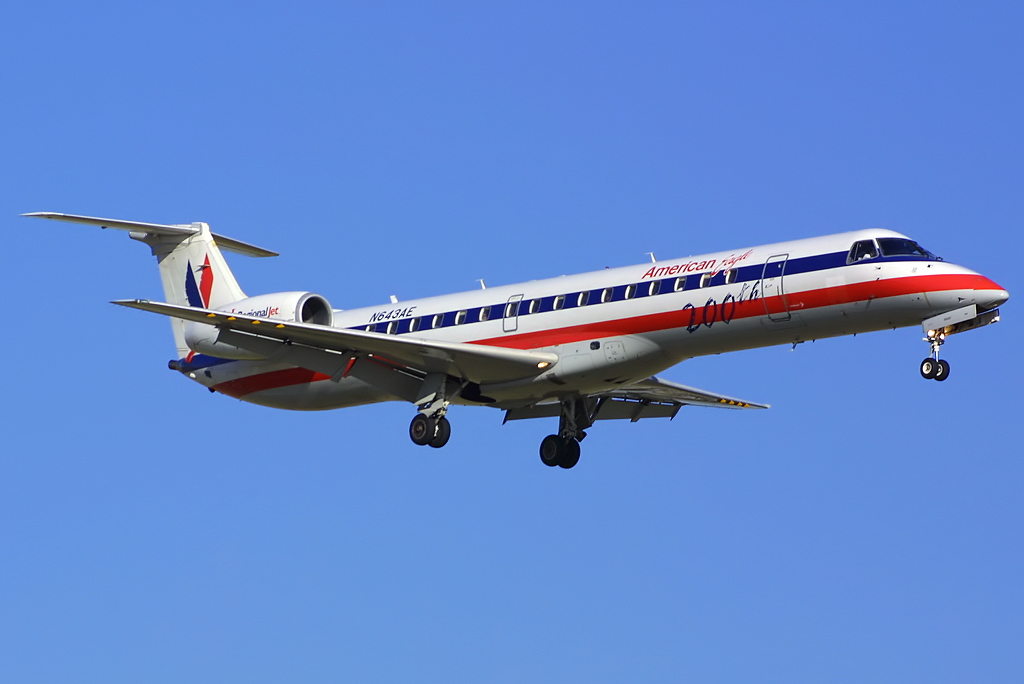
Thank God that major airline hiring is providing some light at the end of the tunnel, because the regionals are not a good place to be these days. Most of the trends that I’ve written about in the past few years have continued to play out. The consolidation of legacy airlines, permanently elevated fuel prices, maturing regional labor costs, and aging aircraft with high CASM have all made the regional airline model increasingly obsolete, particularly in the 50-seat segment. The major airlines have been aggressively retiring their 50-seat feed earlier than planned, replacing it with a smaller number of 70-76 seaters. Meanwhile, the majors have been increasingly ruthless with their erstwhile partners, forcing lower profit margins and increased risk-sharing on them if they are to get any new flying to replace their dying CRJ-200s and EMB-145s.
The case of Pinnacle is instructive. In an effort to hedge against their high exposure to the 50 seat market, Pinnacle purchased Mesaba and Colgan in 2010 to gain more access to the 76-seat jet and 70-seat turboprop markets, respectively. When they bought Mesaba from Delta, Pinnacle renegotiated their air service agreement with Delta on terms that were reportedly less favorable than their previous contract. Pinnacle bungled the merger, which came as no great surprise to anybody familiar with Pinnacle management, and began hemorrhaging money. When Pinnacle filed for bankruptcy, Delta swooped in and bought them on the cheap, which must have been horribly familiar to their ex-Mesaba employees; NWA did the exact same thing in 2007. Delta then forced already low-paid Pinnacle employees to take huge concessions (this while they made billions and paid their own employees handsome profit-sharing checks) and changed their name to Endeavor.
This, frankly, is about the best outcome that many regional airlines can hope for. Having been built up so quickly by their mainline partners in the late 1990s-2000s, having been awarded flying on the basis of low costs that could only be sustained through continued growth, the regionals have nowhere left to grow and can only get smaller, further raising their costs, making them even less attractive to the majors. It’s a vicious cycle and the case of Pinnacle shows that the ongoing regional consolidation is not really a viable solution.
Big Regulatory Changes are Ongoing
2013 was a year of sea change in the airlines’ regulatory environment. In August, the ATP rule took effect. It requires all pilots – both Captains and First Officers – at Part 121 carriers to have an ATP, while at the same creating a reduced-minimums “restricted ATP” for military- and college-trained first officers. The change was mandated by Congress, largely prompted by the Colgan crash and by many regionals hiring pilots with the bare legal minimums in 2006-08. I think 1500 hours is probably slight overkill and I would have preferred more rigorous testing rather than creating cutouts for the Riddle and UND kiddies, but the law is preferable to the ridiculous hiring practices of the last shortage. The airlines really brought this one on themselves.
Likewise the new Part 117 flight time / duty time regulations revealed this year and set to take effect on January 4. New rest regulations to combat pilot fatigue have been among the NTSB’s “most wanted” items for over 20 years; until now the industry has successfully defeated efforts to update the current outdated rules. Had the industry willingly refrained from scheduling its pilots to FAR minimums, they likely could have continued to escape the hassle and expense of completely new regulations. With freshly gutted bankruptcy contracts at the majors and increasingly desperate economic circumstances at the regionals, too many players in the industry adopted the idiotic notion that “if it’s legal, it’s safe,” and Congress called them on it. Unfortunately I think the new regs are going to cut down on pilot productivity and therefore quality of life, but at least the usual suspects will not be able to fall back on flying their pilots ragged to cut costs.
The Pilot Shortage is Nigh! Sort of….
There’s been a huge rash of articles on the impending pilot shortage this year, and I can’t help but speculate on the extent to which the A4A & RAA lobbies are behind them as they push back against the ATP and rest rules. Of course, it is absolutely true that there is a big increase in retirements coming in the latter part of this decade, and that historically low numbers of new commercial pilots are entering the US job market. That said, the shortage will be confined to rather predictable segments of the industry. The major airlines will never have a shortage of qualified applicants; the fact that the regional airlines account for about 30% of all airline pilots makes sure of that. The regional airlines, however, will have trouble replacing all the pilots that move onto the majors (or better-paid regionals), with a few carriers already feeling the effects.
Great Lakes Airlines, in particular, is cancelling a huge portions of their flights due not being able to hire enough pilots, has lost several EAS routes for the same reason, and looks increasingly likely to go out of business. Great Lakes, however, is in that position because it has refused to consider raising starting pay from its current $15,000/year. Over time, the shortage will likely creep up the food chain until it eventually impacts most regionals. I think starting pay will come up a bit at the regionals, but the long term solution will likely involve major airlines working with their regional partners to create more defined career progression. Eventually, I could see major airlines screening and hiring new commercial pilots contingent on them flying for a regional partner for a defined period. Pilots would be much more willing to sink money into training and put up with regional pay if there is a guaranteed light at the end of the tunnel. I'd personally prefer to see the regionals disappear altogether with the major airlines recapturing that flying, but there's too much money at stake for too many players for that to happen; I rather expect them to head off the shortage with solutions similar to the one I outlined above.
Another Year, another Automation Crash
The NTSB just held a public hearing on the Asiana 214 crash, but nothing groundshaking was revealed outside of the Captain’s own doubts about his ability to fly a visual approach on a clear and calm day. The meat of the case is already well known, and quite in line with the string of automation accidents in the last five years: crew finds themselves in a situation that precludes full use of automation, crew gets confused as they’re more used to flying with everything on, flying pilot bungles the transition to manual flight, gets distracted from basic stick-and-rudder skills until it’s too late, and crashes. That’s been the basic narrative for Colgan 3407, Air France 447, Turkish 1951, and now Asiana 214. The only really notable thing about this crash is just how little it took to throw this crew off their game: a glideslope being out of service on an otherwise perfect day. Increasingly, crews around the world are getting used to flying nothing but straight-in ILSes with autopilot & autothrottles coupled. Many airlines are making things worse by prohibiting manual flying under normal conditions. It makes flying easier for the 250-hour wonders, but does crews a terrible disservice when the automation fails or does things they’re not expecting. The FAA has woken up to this problem and is increasingly encourage US airlines to train and test manual flying skills in their pilots. Perhaps with this crash, the rest of the world will start to rediscover the need for stick-and-rudder skills and practice to ward off automation dependency.
The Gulf Carriers Keep on Growing
Emirates, Ethiad, Qatar, and flydubai made headlines at the recent Dubai Airshow with their blockbuster $192B, 393 airframe order of Airbus and Boeing products. If all these orders hold firm – and that’s usually a fairly big if – it will roughly double the Persian Gulf carriers’ already-large capacity, and they’ll be looking for a lot of new markets to put it in. There’s widespread speculation, verging on barely-restrained panic, that they’ll be invading US airspace in a big way, destroying all the yields of the US carriers’ oh-so-carefully-managed capacity restraint. The rhetoric has become increasingly sharp including charges and counter-charges of unfair government subsidies, and has pitting Boeing against US airlines and their labor groups.
A few points are in order. First, these carriers are doubling their capacity in the length of a few short years, at great expense, without any apparently concrete plans for where they will fly these planes other than vague noises that currently closed markets "will have to open up." Plenty of other airlines in the last 30 years have fallen victim to their own hubris, expanding without regard for economic sanity, trusting that the expansion itself will keep costs low enough to offset plummeting yields and hoping they put enough other airlines out of business to bring yields up as costs mature. Three major Gulf carriers with already-mature route networks doubling their capacity with expensive new airplanes in a matter of years smacks of "bubble" to my ears. I could be wrong: Emirates in particular has doubled in size in less time several times over, and retained profitability. But there has to be a point of diminishing returns, and I think they are approaching it.
Secondly, I think the European carriers have far more to lose here than North American carriers. The Gulf carriers' main strength is their geographic centrality between Europe, Asia, and Africa. Connections through Dubai take scarcely little more time than direct flights from Europe to Asia or Europe to south & east Africa (FRA-HKG is 17% longer distance than direct, FRA-JNB 29% greater). The Gulf hubs are too far east to be of use for flights from the US to Europe (JFK-FRA is 155% longer via DXB). Africa is fair game only insofar as the US airlines have few direct flights to Africa, preferring to route passengers through Europe. Here, JFK-DXB-JNB is only 17% longer than JFK-FRA-JNB. But where direct routings do exist, as in Delta's ATL-JNB, it is 37% shorter than connecting through DXB. And the absolute best-case scenario for most Asian destinations, JFK-HKG, is 31% longer through DXB. From the west coast, LAX-HKG is 65% longer through Dubai, LA to Shanghai 90% longer. These are all distinct cost and revenue advantages in US markets for the US carriers. The only major markets where the Gulf carriers are really well positioned are India and the Middle East itself.
Which isn't to say the Gulf Carriers can't make money in US markets. They already do - Emirates, for example, already flies to eight US destinations and seems to have no trouble filling airplanes. But I sincerely doubt they can add a great deal of additional capacity flying only to Dubai without severely impacting yields. In order to add a lot of capacity to US markets, in my opinion they would have to do one of the following:
- Offer flights that originate in the US and stop in major European markets before continuing on to the middle east hubs, as in JFK-FRA-DXB, or simply between the US and other countries (JFK-FCO) This will require negotiating fifth/seventh freedom rights with both the Americans and EU or other countries involved.
- Offer service on major markets within the US, either standalone (LAX-JFK) or continuing on to the middle east (LAX-JFK-DXB). This would require negotiating eighth/ninth freedom rights with the US government.
- Obtain greater feed from minor US markets through codeshares with smaller US airlines, perhaps even desperate regional airlines that have lost their US contracts. I could easily see one of Skywest, Inc's airlines becoming Emirates Connection, feeding Emirates heavies at IAD and JFK from destinations up and down the east coast. On the west coast, we've already seen the potential start of this scenario, as Alaska Airlines has risked provoking its codeshare parners Delta and American by inking a fairly extensive partnership with Emirates at LAX, SFO, and SEA. Suddenly the erstwhile Delta-Alaska partnership is looking rather on the rocks as Delta is adding lots of their own flights on top of Alaska routes from LA and Seattle, and Alaska has just announced plans to follow suit in Salt Lake City.
I see the third scenario as the likeliest way for Emirates to further invade U.S. markets; I don't think there's political will in the U.S. government to cede significant fifth/eighth freedom rights to the UAE. Keep in mind that the combined megacarriers all have hubs in quite a few large states and wield considerable political clout.
My last point regarding the Gulf carriers is that they are not significantly cheaper than US or European carriers; the times that I've checked their prices, they've been fairly expensive. Rather, the Gulf carriers are competing on service, which they are reknown for; the European carriers and especially US carriers, not so much. If the newly revitalized US carriers are concerned about surviving the oncoming onslaught of shiny new Boeings and Airbuses from the Gulf, they would do well to take some of those record profits and reinvest them in their product - and their people.