Saturday, April 24, 2010

South by Southeast (Part 2)

Like all my plans for this continent-crossing odyssey, the leg from Dallas to Atlanta was originally supposed to be short and simple, but soon took on a life of its own. What was once intended to be a two-day, 800 mile repositioning leg on freeways mushroomed into three months and 3400 miles of wanderings about the south (actually, it's more if you include the day that I rode my friend Sylvia's glittery pink Ducati Monster 750 miles from Dallas to eastern Alabama, a story perhaps best left for another time). The reality is that once you've committed to something as massive as a ride completely around the country, you can't help but add a plethora of destinations and roads that each add "just a few more miles." Since I was passing through Alabama, I had to visit Sylv at Fort Rucker. It was only another 70 miles from there to Florida. As long as I was visiting the Sunshine State, why not enjoy a nice warm ride down to Miami? Once I was that far south, Key West became obligatory. And so on.

Before the Vietnam trip fell through, my April was shaping up to be very busy indeed. I had only two days open to ferry the Beemer from Miami to Atlanta, where I was planning to start the next leg with my friend Brad later in the month. There would be little sightseeing along the way. Even once we flew to Miami with nine days of spring break left, I was thinking something along the lines of a week spent exploring the Keys and then a day or two of hard riding to reposition to Atlanta. However, we ended up back in Miami within three days, and were riding hard to the north a day after that. It turns out that while the Keys are nice and all, a 100-mile highway that combines few curves, hordes of geriatric RVers, and scarce passing lanes turns out to be a fairly boring ride. That's not good when a limited budget makes riding your primary form of entertainment! There were still plenty of sights to be seen in the Keys, plenty of beaches to lounge on, but my brain can't help but think in terms of opportunity-cost: Sure, five days of sunbathing sounds nice, but how many curvy roads could I ride and new cities could I explore in that time? Neither Dawn nor I had spent much time in Georgia or the Carolinas outside of airports. She was eager to head north.

The relative lack of Floridian drivers outside the state of Florida was the deal-clincher for me. They'd been driving me absolutely bonkers from the moment I crossed into the state. Never in my life have I seen such a deadly mix of aggressive, dawdling, distracted, indecisive, lawbreaking, addled, apparently lost, reckless, and inattentive drivers, united only by mind-boggling stupidity. Californians can't hold a candle to the Floridians; I've seen some really silly stuff on SoCal freeways but at least everyone's fairly uniform in their aggressiveness and inattentiveness. In Florida all the competing modes of idiocy could bring a ten-lane rural freeway to a standstill at three in the morning. The motorcycling community has a derogatory term for automobile drivers who do reckless or inexplicably mindless things, particularly those who endanger motorcyclists in the process: cagers. I have decided to personally retire that term in favor of floridians (ie "Did you see that crazy floridian roll through the red light and almost hit me back there!?"). I met some nice and seemingly intelligent people in Florida but I have to assume that handing them the keys to a motor vehicle triggers some sort of Jekyll & Hyde-like transformation.

We planned our escape from Florida to the southern charms of Georgia and the Carolinas over drinks at our Miami Beach hotel on Monday night, and were hurtling northward on I-95 by 8am on Tuesday morning. I've tried to avoid freeways on this trip when the schedule allows and I'm not passing through, say, West Texas. Riding a motorcycle on the freeway isn't much more interesting than driving on one in a car, and a fair amount less comfortable. In this case, however, I-95 made for a handy detour past the congestion of the beach communities north of Miami. At Fort Pierce we exited onto the coast-hugging Florida A1A and rode that as far as Cape Canaveral, where we veered back across the Intercoastal Waterway to pick up US-1 north to Daytona Beach.

Throughout the day, I was stopping to call motorcycle shops in Daytona, Jacksonville, and Savannah in search of new tires for my bike. The current ones had almost 10,000 miles on them, having been replaced in Minnesota before starting the trip, and the rear tire in particular was getting alarmingly bald (motorcycle tires don't last nearly as long as car tires). I wasn't having any success; nobody stocked the tall, skinny tires used by 1980s-vintage BMWs and few bikes since. A friendly Honda dealer in Daytona checked around for us, eventually leading to a BMW dealership with a ridiculously overpriced Metzeler rear tire. I passed, and we returned to Route A1A to continue north toward Jacksonville.

It was late afternoon as we approached St Augustine; I reasoned that all the motorcycle shops in Jacksonville would be closed by the time we got there, so why not stop to enjoy an evening in North America's oldest city? Both Dawn and I had visited before, but never together. The only downside was spending my fifth night of camping at a KOA since arriving in Florida. I despise KOAs but Florida State Park campgrounds are booked solid by RVers for months in advance and few other campgrounds accept lowly tent campers. This particular KOA was essentially a dirt lot behind a strip mall. We pitched our tent and headed into town for dinner and a stroll, and within a half-mile I started spying perfectly charming little motor lodges advertising rates less than I paid for our cramped slice of dirt at the KOA. Sometimes my cheap streak is entirely counterproductive.


We had a very nice dinner and walked around the old Spanish Quarter, enjoying the beautiful evening, then rode back to camp and turned in for a solid night of sleep despite markedly cooler temperatures. In the morning, the rear wall of the strip mall didn't inspire us to stick around any longer than needed to break camp, and we soon headed out of St Augustine on an especially scenic stretch of Florida A1A. It initially hugged the shore, then dropped inland and was just starting to get interestingly curvy when we hit a slew of stoplights at the outskirts of Jacksonville. No matter, I needed to find some tires before we did too much knee-dragging. The first motorcycle dealer we tried didn't have my size of tires but was able to direct me to a small shop only a few blocks away. Not only did they have both front and rear tires in stock, they had them at a very reasonable price, and were able to mount them both immediately for a small fee. We ate breakfast at a Mexican bakery while we waited for the shop to finish, and then rode out of town on new shoes much earlier in the day than I had expected.


Our goal for the day, Savannah Georgia, was but 140 miles away via I-95. Instead we detoured east on Highway 105 once we crossed the Jacksonville River, and were rewarded with a beautiful ride around Talbot and Amelia Islands before rejoining the freeway at the Georgia state line. From this point the interstate was the easternmost route to Savannah, and the only somewhat direct route, thanks to countless tidal estuaries that render the Georgian coastline impassable. This was unfortunate, for we were obliged to ride through the longest construction zone I've ever experienced, complete with lengthy grooved surfaces that tested the design of my new tires (they did quite well). We still arrived at our destination by early afternoon.


I'd always heard of Savannah's charm and beauty but had no idea just how lovely it is until now. It is the most attractive city I've seen since leaving the Pacific Northwest. Even the more derelict, run-down part of town (which I rode through in search of a library for internet access) has a certain faded grace to it. I wish we'd had more time, for other than eating lunch at the City Market and walking around Ellis Square, we were resigned to seeing most of it from the saddle of the Beemer. Mind you, cruising through tunnels of Spanish moss and bouncing around the green squares on heaving streets of ancient pavers is in itself good entertainment. After checking into a cheap-but-cheerful motel west of town - I refused to camp another night at a KOA - we met up with my old friend Steph and her husband and baby girl for dinner at the excellent Moon River brewpub. After our abbreviated visit, I'm very glad that NewCo is starting Savannah overnights in May.


The next morning's crisp air was a bracing reminder of our increasing latitude as we accelerated onto I-95. Within a few minutes we entered South Carolina, and thirty miles after that exited the freeway on US-17 to Charleston. The road was officially under construction for most of its length despite an utter lack of men and heavy equipment, the only regular sign of its status being lowered speed limits and orange "speeding fines double" signs. I've noticed this phenomenon a lot this trip, and my conspirational side wonders if it isn't a fundraising mechanism for cash-strapped localities. It was a fine, cool morning to cruise slowly and enjoy the sights, so for once I made a poor target for the local constabulary.


Charleston was scenic and interesting but somehow much different than I expected. I suppose I thought it'd be similar to Savannah, but instead seemed an odd mixture of Boston and New Orleans. Our visit was very brief, basically a ride down the length of King Street and back up Bay Street to the Cooper River bridge with a short stop at the Battery to peer out at Fort Sumter (interestingly, the Battery features a prominent neoclassical statue pointedly dedicated "to the Confederate defenders of Charleston"). The surprise highlight was a stop for lunch across the river in Mount Pleasant. I was just getting hungry when I spied a barn-shaped building that obviously used to be a Dairy Queen, except that the red DQ sign out front was painted white and hand-lettered as the "Boulevard Diner." This was too amusing, too local-yokel, too southern to miss, so I pulled over immediately. Imagine my surprise at opening the menu to find entrees like "Cashew-crusted chicken with sauteed spinach and cranberry/sweet-pepper chutney." The packed parking lot should have tipped me off that this wasn't your usual greasy spoon. The food was delicious, but not too spendy; I love roadtrip finds like this.


We departed Charleston to the northwest shortly after noon, jumping off the interstate as soon as we were out of the bulk of suburbia. Instead we took US-176, the two-lane blacktop precursor to I-26 that runs parallel about ten miles to the northeast. It's an arrow-straight road, and the scenery between Charleston and Columbia isn't that interesting, but the little towns along the way broke up the trip and provided some local flavor. My bright-red 1980s vintage BMW with Minnesota plates seems to attract attention wherever I go, but particularly out in the sticks. This is one of the bigger differences between motorcycle and automobile roadtrips: being on a bike tends to open people up, make them curious about where you're from and where you're going. Nowhere was this truer than in the South, I was very impressed by the friendliness and openness of the people. I had several conversations with curious locals who rolled down their windows to talk to me at stoplights. People from the upper Midwest tend to be much more reserved; there is a reason "Minnesota Nice" is not called "Minnesota Friendly."

Highway 176 merged back onto I-26 until we were past Columbia's sprawl, then split off again and meandered into the hills to the north. By now the skies were covered with threatening, waterlogged clouds; a gas station clerk told me that a squall line was forecast to come through later. For now, though, the rain held off, and I enjoyed the curvy, rolling road through Sumter National Forest. By 5pm, we were approaching Spartanburg and decided to stop for the night, a choice that was borne out when it started raining immediately after we pulled into the campground at Croft State Park. I very nearly dumped the bike while riding down the hill to our lakefront campsite, for the road abruptly went from pavement to very loose, dry gravel about three inches thick. We pitched the tent and rode into town through increasingly heavy rain; it was pouring by the time we parked downtown and made a dash for one of the few open eateries. Shortly thereafter, sirens went off; a tornado had been spotted just south of town, headed directly for our campground. Fortunately, our tent was still standing when we returned, although the floor was a little soggy.


The squall line that went through was the leading edge of a cold front, and this turned out to be the coldest night of camping since Jackson, MS. The good news was that the next day featured crystal clear skies, and the bright sun took the edge off of a potentially very chilly ride. Highway 9 to Lake Lure looked more interesting than the standard route from Spartanburg to Asheville, and it turned out to be a delightful road with little traffic on a Friday morning. We couldn't help but notice that the road surface improved and the properties became more stately as soon as we hit the North Carolina state line. We stopped for breakfast at the amusingly named town of Bat Cave, then continued on US-74 up and over the Blue Ridge Mountains to Asheville. The layout of the city utterly confused me and I made a few loops through the outskirts before I found the way downtown, via a tunnel through a ridge. We didn't linger long in Asheville and were soon headed westward to the foot of the Great Smoky Mountains.

My only goal for the day was to find some fun and scenic roads to ride on, while finishing the day within easy striking distance of Atlanta. In this, I succeeded beyond my wildest expectations, for every single road we took was utterly spectacular. US-19 from Lake Junaluska to Cherokee was by turns lazily pastoral and challengingly snarly, with light enough traffic to get myself in trouble if I failed to detect one of the road's personality shifts. US-441 through Great Smoky Mountain National Park was predictably congested and slow, but made up for it with spectacular views from Newfound Gap. Little River Road from Sugarlands Visitor Center to Townsend (TN) was a rollicking riot of endless hairpin turns following the improbably twisty, fast-flowing Little River. The Foothills Parkway, selected merely as a convenient means of conveyance from Point A to Point B, was an unexpected treat. Blessed with good asphalt, no development, few crossroads, little traffic, and no discernible police presence, this road made in motorcycle heaven follows a high ridgeline for 17 miles of fast sweeping turns and spectacular vistas across the valley to the Great Smoky Mountains. More than once I rounded a turn whooping at the top of my lungs for the pure joy of it, and only 1000cc's of howling German power kept Dawn from hearing and suspecting her husband had gone of the deep end. I was deeply saddened when the Parkway descended to its terminus at US-129.


I was planning on recrossing the mountains via the legendary Tail of the Dragon road at Deal's Gap, but it turned out to be closed due to a rockslide earlier in the year. I was forced to backtrack westbound on US-129, not quite sure where I should go until I stopped at a gas station and a friendly old-timer directed me to the Cherohala Skyway, which in his opinion was superior even to Deal's Gap. My route there via Highways 72 and 360 was enjoyably pastoral, but the Cherohala itself proved to be simply breathtaking from the very start. It was getting late in the day and we were racing the sunset so there was very little traffic as we climbed ever upward on the twisting road. The turns on the Tennessee side seemed to all have the same perfect, constant radius that could be taken at speed. Finally, at some 5400 feet elevation, the road flattened out to breathtaking views along several miles of ridgeline, then started the long trek downhill on the shady, North Carolina side of the ridge.

Here the road became snarly and unpredictable, with some nasty increasing-radius blind turns. Downhill turns are much more challenging on a motorcycle than uphill turns because proper entry speed is critical to avoid using your brakes during the turn, where they rob critical traction. My riding skills have improved considerably over the 14,000 miles I've owned this bike, but tight downhill turns still give me pause. Here I had a breakthrough, however: I realized that unconsciously flinching away from the bottom of the hill was causing me to not shift my weight or lean as much as I ought to be doing - exactly the thing that kept me from skiing steep hills for a long time. With this realization, I concentrated on the mechanics of my riding and it just clicked; I settled into a comfortable rhythm, no longer needing to think as I slung the bike from one tightly banked turn into the next. As the road flattened at the bottom of the ridge, I suddenly realized that Dawn had been shifting her weight and leaning aggressively right along with me. Good girl. I need to get my FZ600 fixed up so she has something to ride once she takes the MSF course this summer.


After the cold of the previous night, I had promised Dawn a nice warm hotel room in Robbinsville, our stopping point for the day. We shuttled between a few options before deciding on the cozy, quirky Phillips Motel. The similarities between its rooms and Grandma's house made sense once we met the proprietress, an authentic Grandma right down to the disapproving glare when we requested a queen bed (she became friendlier after I registered us as "Mr and Mrs Samuel W.). The BBQ plate at Carolina Kitchen just down the hill made for a delicious late dinner before turning in for the night after a 320 mile day of mostly challenging riding.

Our last day of riding dawned clear and cold, and I held off starting out for Atlanta until after 9am. By then, the sun was high enough to warm us as we wound our way south on US Highways 129, 74, and 19. This last road, in particular, was surprisingly good. I was expecting a fairly undramatic thoroughfare to Atlanta, but I hadn't counted on just how mountainous northern Georgia is. It was a Saturday morning, and hordes of motorcycles and sport cars passed us going the other way. I was having too much fun in my own blessedly traffic-free lane to wave back to many of them. The one thing that did make me slow down and stare was about twenty restored classic Ferraris racing each other up the mountain at incredible speed. Finally, we came out of the mountains, the road straightened and widened, and then it was the last hour into Atlanta through increasingly heavy traffic.


There we met an old friend, in fact the friend who introduced us ten years ago. We hadn't seen him in six years, so it was great to catch up as he showed us around town. He surprised us with the news that he is leaving his successful career with a software developer to return to his first love, aviation. I had no idea he was still even interested in flying, but as he said: "Every time I board an airliner, it kills me to turn right when I'd rather turn left." We got steaks and grilled on the his rooftop patio overlooking downtown Atlanta, drinking beers and talking flying late into the night. I could think of dozens of reasons why ditching a good job to pursue an airline career is a mistake these days, but in the face of my friend's enthusiasm all my logic melted away. Any great love is going to be at least a little irrational, and there will always be reasons not to do what you love. Heck, I could think of many good reasons not to do a 15,000 mile, eleven month trip through 32 states on a 25-year old motorcycle, but here I am, loving every mile of it. Wouldn't it be hypocritical of me to rain on others dreams when those close to me have been so supportive of mine?

Dawn and I flew back to Minneapolis on Sunday morning, concluding a very different spring break from the one we started out on when we boarded the A330 to Amsterdam. We flew over 14,000 miles and rode more than 1800. I am blessed with a wife who seems to be up for any adventure, "so long as we're together." Unfortunately, she won't be coming on the next stage of my motorcycle trip, but my very good friend Brad of Horizon Air will be. Last month, he bought an FZ1 in Tennessee for the sole purpose of doing the 2400 mile epic leg up the spine of the Appalachians to Maine and back down to Boston with me. We leave tomorrow.


View 2009-2010 Round Robin in a larger map

Tuesday, April 20, 2010

South by Southeast

At the end of my last leg from Dallas to Miami, I parked my BMW at the Miami Airport in hopes that Dawn and I would be able to make a run to Key West within a few weeks. Alas, I was unable to get a weekend free and Dawn couldn't afford to take a few days off work, given our looming spring break trip. Having been to the northwesternmost and southwesternmost towns in the Lower 48, I also wanted to make it to the southernmost point, so I decided to go on a few weekdays when Dawn was busy.

I also had a mechanical difficulty to deal with before my next major leg. Ever since I left Minneapolis, I had occasional trouble starting the bike; once every thirty starts or so, the starter would turn but not engage the engine, emitting a high-pitched whirring sound. So long as it was an uncommon occurrence, it was little more than a nuisance easily solved by rocking the bike back and forth a few inches with the gears engaged. On the last leg to Miami, however, the behavior rapidly worsened until it happened one out of three starts and rocking the bike no longer worked every time. On the late-night search for lodging in Naples, I actually had to resort to push-starting the bike, which doesn't work when the bike is cold. On my return to Minneapolis, I consulted my favorite BMW motorcycle forum, which quickly revealed that this is a very common problem for early K-bikes; the sprag clutch which serves as a connection between starter and crankshaft is of an inadequate design that tends to either wear or foul with oil sludge. If the clutch was worn, it would be a huge project for which I had neither the tools nor the facilities in Florida to accomplish myself. On the other hand, sludge might by taken care of with a fresh oil and filter change using premium synthetic oil with a half-quart of oil detergent thrown in. This being the easier solution, it was obviously the first thing to try, and furnished a further reason to visit Florida for a few days.

Therefore my only riding in March was an overnight trip to Key West. Shortly after arriving in Miami, I took the BMW to John Long's amazing shop/junkyard/motorcycle racing museum, where he actually loaned me an oil pan so I could do the change myself. The ride down the Keys was heavenly, with the warmest temps I'd experienced in a very long time. Key West was heaving with spring breakers, but its charm was nevertheless apparent, which made me disappointed that I never did get to bring Dawn. I rode back to Miami the next day; my bike started flawlessly both days. Oil sludge was indeed the problem, so I'll be running Mobil One synthetic from now on.

Originally my idea was to ferry the BMW up to Atlanta in mid-April in preparation for the epic leg up the spine of the Appalachians planned for the end of the month. When our Vietnam trip fell apart in Moscow and we were forced to beat a retreat to the States, the ride from Miami to Atlanta - in a more adventerous, winding form - became Plan B. Dawn was actually quite excited for it, perhaps even more than she'd been for Vietnam, because she's only been able to ride with me on a fairly small portion of the trip so far. Our flight from Moscow touched down in New York on Friday afternoon (2 April), we landed in Minneapolis later that night, and after a hasty repacking we were on a plane to Miami first-thing Saturday morning.

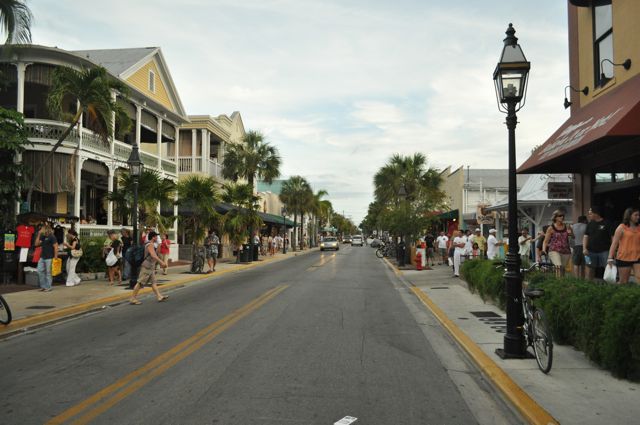
My second ride down the Keys on Highway One was downright hot, made worse by torturous Saturday traffic. Nonetheless we arrived at our campground on Sugarloaf Key by 5pm, with enough time to make camp before riding the last twenty miles to Key West. We stopped at the southernmost point buoy before riding down teeming Duval Street for the obligatory sunset watching amid the circus of Mallory Square. A thickening high overcast made it seem as though the main event might be a dud, but under-lighting in the minutes before and after sunset made for a brilliant finale. After dark, we walked around the downtown area and had dinner before returning to the BMW. We were just about to leave when a bearded guy with a leather jacket came up to us and asked "Did you really ride this from Minnesota?" I've become used to such inquiries, which have led to meeting some really interesting people, so I took my helmet off and explained that yes, I rode it here from Minnesota via Seattle, Portland, LA, Dallas, and Miami, and I was continuing around the country counterclockwise. The guy got a huge grin on his face, introduced himself as Dan, and told me that he'd just come from LA on his Harley and was in the process of his own Round-the-USA trip. We compared notes and it turns out that Dan and I have very similar routes and have been on many of the same roads already, although he is making a practice of sticking as close to the perimeter of the country as he can. I wanted to make the twenty mile trip back to camp before the Saturday night crazies hit the road so I had to cut our conversation short, but Dan gave me the address of the blog in which he is chronicling his trip. Ride the Edge is a good read, well worth checking out.


After the best night of sleep I've had in a tent in a long, long time - temps above 50 help a lot! - we headed back to Key West on Sunday morning. We rode around the old town for a while, enjoying the lush, fragrant magnolias spilling out of picket-fenced gardens into the narrow back streets. We stopped for breakfast and stayed off the bike to walk around and take some photos; we recently acquired a Nikon D5000 digital SLR camera to replace our aging 35mm N65, and love it. By now the sun was high in the sky, so we headed down to Smathers Beach to soak in the rays. Mindful of Dawn's second-degree roasting in Malaysia two years ago, we slathered on the SPF30 at regular intervals.


Later in the afternoon we stopped at a shop for some Key Lime Pie and then headed over to the harbor to board Sebago's 60 foot Catamaran for a snorkeling trip out to Key West's reef. The wind was over 20 knots with moderate swells, making for a very spirited (wet!) sail on the speedy cat even with deeply reefed sails. The snorkeling was a bit of a letdown after our experiences in Thailand and Malaysia; the reef was underwhelming, with rather little marine life around, and poor water visibility didn't help. The sail back to Key West and around the harbor as we watched the sunset, however, was quite enjoyable. Of course, we neglected to reapply sunscreen after snorkeling - our exact mistake in Malaysia! - so the setting sun was roasting our faces even as we unknowingly basked in its warmth. I spent the rest of the trip with a somewhat disfigured face, but leaving my helmet on generally kept the local kids from fleeing in terror.


After we returned at sunset, Dawn and I rode the half-mile through sidestreets to the out-of-the-way but nonetheless deservedly popular El Siboney, a Cuban restaurant, for what was likely the best meal of the trip (although most motorcycle tourers have admittedly low standards). The next morning, we rode back to Miami on a blessedly traffic-free Highway 1, made a detour out to the Everglades so Dawn could see alligators along the Tamiami Trail, and then backtracked to Miami Beach, where Dawn convinced me to spring for an actual room for the night in lieu of camping with the homeless on South Beach; it was an interesting boutique hotel in an aging Art Deco building.

Up to this point we didn't have any particular itinerary set down, but now a plan for the remaining six days of Spring Break was shaping up in my mind. It would require a few fairly long days of riding, but would take us to several areas of the Southeast we've wanted to visit for a long time but have never found the right chance. To Be Continued....


View 2009-2010 Round Robin in a larger map

Tuesday, April 13, 2010

Redirection


As long-time readers of this blog may know, every year my wife and I go overseas during her spring break from teaching. Our reasoning has always been that it's nearly impossible to nonrev anywhere domestically during spring break craziness, whereas getting across oceans has never proven to be a problem. Last year we went to Greece, we visited Singapore & Malaysia the year before that, and our 2007 destination was Thailand. This year we planned on a return to Southeast Asia with a trip to Vietnam. The trip required somewhat less flexibility than we are used to due to the relative lack of flights to the country - particularly to Hanoi, our first destination - and the need to book positive space flights within the country, as Vietnam Airlines does not yet have a ZED agreement with WidgetCo. We also had to apply to visas in advance, at $70 a pop. Still, I've been very excitedly counting down the days for months now while I spent hours poring over guidebooks and exploring Google Earth. Some last-minute complications with my work schedule nearly derailed the whole thing, but a friend stepped in and picked up the offending overnight trip with less than 24 hours to go.

Our plan was to leave the night of Wednesday 31 March, and return on Sunday 11 April. Originally I was planning on a Pacific crossing, preferably on Thai Airways from LAX to Bangkok; Cathay Pacific to Hong Kong or Korean to Seoul were alternative options. By Wednesday afternoon, all these flights or their corresponding connections to Hanoi were severely oversold. Even the flight from MSP to LAX was right at capacity. However, a flight from MSP to Amsterdam at the same time had 80+ seats available, including enough business class seats to guarantee a stylish and comfortable Atlantic crossing. Intrigued by the possibility of an easterly round-the-world routing, I checked the connections in Amsterdam. There were two 747s to Bangkok operated by China and KLM, respectively, both slightly oversold but with no listed nonrevs. Aeroflot, however, had a A320 to Moscow followed one hour later by a A330 to Hanoi that were completely open. It would get us into Hanoi at 8am on Friday, earlier than any other option. We don't have Russian visas, but a quick check of Sheremetyevo Airport's website revealed that they are not required for those staying on the airside for less than 24 hours.

The warning signs against such a plan appeared early. It took forever to contact each of Aeroflot's four offices in the United States and nobody I finally got through to spoke much English. Nobody could confirm the availability of the flights and nobody had a clue of how to list us. It took a while just to get across the point that we were employees traveling standby - the usual terms "non-revenue," "staff travel," or "ZED pass" were met with confusion. After confirming that the flights across the Pacific were still bleak unless we waited a day, and that more nonrevs had listed for the full flight to LAX, I decided to go to Amsterdam and just plan on trying China Airlines to Bangkok unless someone in Amsterdam was able to list us for the Aeroflot flights through to Hanoi.


We got business class seats together for the flight to Amsterdam, so we arrived fairly well rested at 11am CET. Before checking in with China Airlines I decided to stop by the Aeroflot transfer desk. It was staffed by a contract employee but she was able to very quickly list us and assign seats for the flight to Moscow. She was, however, unable to list us for the flight from Moscow to Hanoi. She did say the Aeroflot employees at the gate might be able to help us. Warily, we hoofed it over to the gate. Nobody was there yet, 90 minutes before the flight, although the Aeroflot A320 was parked outside. I decided to call Aeroflot's Amsterdam office. To my surprise, I got through immediately to an agent who spoke perfect english and was knowledgeable about nonrev procedures and ZED passes. She told me their reservations software did not have the ability to make nonrev listings ahead of time and that it was typically done at the airport - as has been the case with several other airlines we've flown on - and that the station manager would be at the gate shortly. Sure enough, he showed up a few minutes later. He, too, seemed to be knowledgeable; he said the flight to Hanoi was wide open and he saw no problem with a one hour connection in Moscow; although he couldn't list us or assign seats from Amsterdam, he said the transfer desk in Moscow could handle it very quickly. This, of course, still did not meet the criteria I had established for taking Aeroflot before I had departed the states. Whether out of insidious fatigue or get-there-itis or a false sense of security from the helpful Aeroflot people at AMS, I didn't stick to that criteria. I decided to go for it; we boarded the flight. Ultimately, the Aeroflot people at AMS would be the last helpful employees we would encounter. It seems as though the industriousness and competency of the Dutch has rubbed off remarkably well on their Russian immigrants.


Almost as soon as we took our seats, I started to fret. All the potential problems with our plan and likely repercussions of one thing going wrong were suddenly crystal clear to me. The boarding process seemed to take forever. Our scheduled departure time came ever close and my heart was in my throat. Even a small delay, I realized now, could disrupt our plan. Get off the plane! my gut screamed. I tried to ignore it. Departure time passed. I finally got up and went to the front of the plane and told the lead flight attendant we had a short connection in Moscow we would likely miss, and my wife and I wished to deplane. She frowned and went into the cockpit, conferred with the Captain, and emerged to announce we would still arrive on time. I had my doubts but didn't press my case, returning meekly to my seat. We sat another twenty minutes while a cartload of bags remained unloaded just outside our window. I finally rang my call button and told the flight attendant we needed to deplane. "Sorry, the front door is closed, the paperwork is complete, we will go soon," she said. My heart sank. The trap was sprung shut. Within a few minutes some rampers came and loaded the bags; we pushed nearly 30 minutes late.

The flight to Moscow was torturous. My idiocy was completely clear to me now. I wasn't hungry but nibbled at the inflight meal anyway, fully aware it could be a while before our next meal. I finally dozed off and relaxed. When I woke up, we were on the descent into Moscow. It was clear that we had made up some time and would land only a few minutes behind schedule. We gazed out at the Russian scenery, still mostly snowbound and strangely foreign even from the sky in a way most of Europe is not. The forests were broken up by strange, haphazardly shaped clearings and swaths; the terrain was pockmarked by massive pit mines with post-apocalyptic looking villages of drab high-rises around them. The sizes of the various towns seemed utterly unrelated to anything around them and had oddly sharp definition, going from apparent wilderness to concrete canyons in the space of meters. As we approached over the Moscow suburbs, the landscape became considerably less strange and more familiarly European - or was it Newark?

We pulled up to the gate at Terminal F only ten minutes late. We were at the back of the Airbus; deplaning was torturously slow. When we got out and saw the line at the transfer desk - staffed by a single harried woman - my heart sank all over again. We progressed forward at a quick rate until the passengers just before us were told they would miss their connection to Hong Kong due to the flight leaving from another terminal and they threw a massive fit. It was a half-hour prior to the Hanoi flight's departure by the time we were at the head of the line. She looked at our ZED tickets like they were radioactive. Finally I used the word "open ticket" and it was like a lightbulb went off; she made a flurry of phone calls and then directed us to the side, indicating someone would be along to help us shortly. The minutes dragged on. I could hear boarding announcements for Hanoi on the tinny loudspeaker. Suddenly a young Aeroflot agent appeared and motioned for us to follow him. He took us to the head of the security line beyond the transfer desk, waited for us to clear, then walked purposely toward the Hanoi gate. My heart soared. We were going to make it, after all!

The agent stopped not at the gate but at a mirrored Aeroflot office door, ushering us inside. Inside were four or five ladies huddled over a desk. They motioned for us to sit in an overstuffed couch to the side as they took our tickets and began speaking rapidly in Russian between themselves. Some rapid typing took place, and then a succession of phone calls. At one point our tickets were placed on the counter and I approached, only to be waved off by one of the agents. It was now departure time for the Hanoi flight, but I could still hear boarding announcements. Perhaps the flight was running late? The initial rush of activity seemed to have slowed. Ten more minutes passed. Nobody told us anything the whole time. Finally, a young redhead approached with our tickets. "OK, these tickets are fine to use for Hanoi. However, your flight has now departed. Please follow me."

We followed her out the door and to the nearby transfer desk in shock. There was much worse to come. "The next Hanoi flight does not leave until April 3rd," the transfer desk girl told us. "And it is oversold." I processed that for a moment - why did I not know that already!? - and then stepped back to scan the departures board. "OK, there's a flight to Seoul in a few hours. We would like to go there." She frowned and asked whether we had tickets from Moscow to Seoul. "Well, no, but this is a ZED ticket." Blank stare. "It's based on mileage. It's the same distance to Seoul as it is to Hanoi, it's supposed to be valid for either routing. She shook her head. "No, you must have the exact routing on your ticket. That is our policy." The implications of this hit me suddenly. This was a one-way trap. We had no way out. I had not purchased additional backup passes out of Moscow. The whole idea of ZED passes is to make such backup-ticket hoarding obsolete, no? The irony here was that we had well over $1000 in other backup passes in our backpacks, but in our situation they were all utterly useless.

The next four hours were spent shuttling between various offices, pleading our case to various levels within the Aeroflot hierarchy. All were utterly unmoved. The closest thing we got to emotion was an outburst from one of the more senior agents: "Your names were not on the telegram from Amsterdam, so it is not our fault you missed the flight to Hanoi!" I puzzled over the meaning of this. After all the trouble we had listing and all the assurances that it was not necessary, did we really miss the flight because our lack of a listing had puzzled the Moscow agents? It didn't matter now, we were in a serious situation. We got the final ruling shortly before midnight: "You cannot use your tickets for anything other than here to Hanoi. The next flight to Hanoi leaves in two days, it is oversold, and anyways you cannot remain in the airport for more than 24 hours without visas. You must purchase a full-fare ticket to somewhere outside Russia or you will be deported back to Amsterdam, at your own expense - after a detainment for processing."

Detainment in a Russian prison awaiting deportation was not how I envisioned my spring break. We used our netbook to get online and look at our flight options. Getting back to Amsterdam the next day would cost over $500 each. We could go to Berlin for only $189 each, but then had no options to continue to Vietnam. The cold, stormy weather over Northern Europe didn't make it a very enticing alternative to our Vietnam beach holiday, particularly since we've both been to Germany a number of times. There was one alternative: a Widget flight leaving Moscow for New York at 12:05pm the next day. It had 50 seats available. An ignominious retreat back to the United States was shaping up to be our best option. I reluctantly listed and conferred with the Aeroflot transfer desk, who said they would be able to help us get checked in for the Delta flight at 9am the next morning. Considering my experiences with Aeroflot, I had my doubts, but our lack of Russian visas meant I couldn't deal with the Widget check-in desk directly.

We ate a tasteless, ridiculously overpriced meal at what was by now the only open restaurant, a 24-hour cafe above the Aeroflot office, and then settled in for the night. The airport stayed brightly lit all night, but at least there were few loudspeaker announcements and some rows of chairs lacked armrests, making them passable beds. Dawn stayed up and read all night; I dozed on and off. In between naps I paced the full length of the terminal several times. I was worried about not making it onto the Widget flight, even though there were plenty of seats. I was pretty heartsick over having wrecked our spring break trip with my stupid gamble on a one-hour connection in Moscow. Dawn was very supportive, stressing that she didn't mind anything that happened "as long as we're together." I kept my thoughts on whether we'd get to share a cell awaiting deportation to myself.


The hours passed slowly. A police officer demanded our papers at 2am and initially balked at the lack of a Russian visa but was then satisfied with the explanation that we were in transit. The airport came alive again after 5am. When nine rolled around, we picked up our packs and trudged down to the hated transfer office. We were told to come back an hour later, which made the hairs on the back of my neck stand up. One fretful hour later we returned, and thankfully things went very smoothly. The agent collected our passports, disappeared through the employee security line, and returned with a Widget agent bearing standby passes minutes later. We were searched quite aggressively in secondary screening - we later learned it was because we have so many stamps from Amsterdam in our passport, which is an apparent red flag since the Nigerian underwear bomber - but then were assigned business class seats shortly thereafter.


This departure was marked by relief rather than celebration. We made it out of Russia, but our international travels were over for this spring break. We briefly considered trying to make the Amsterdam flight that departed 90 minutes after our arrival to JFK, but three Atlantic crossings in two days just to take another shot at a completely full, ten-hour China Airlines flight to Bangkok in hopes of making a rather abbreviated whirlwind tour of Vietnam seemed like madness. No, spending a restless night in Moscow's Terminal F would be the limit of our overseas adventures for this spring break. As we took off to the north, we pressed our noses against the window and strained to see the Kremlin.


Fortunately, there are many wonderful places, interesting sights, and adventurous roads to visit in the beautiful, expansive country we call home, and that is why this posting is titled "Redirection" rather than "How I completely ruined our spring break with my stupidity." We were hatching a Plan B well before it was clear that Vietnam was out of the picture, and ended up having a great adventure together we would have otherwise never experienced. Vietnam will still be there someday, but it's not often I have a comfortable touring motorcycle conveniently stashed in a sunny, pretty corner of the country that neither of us have spent much time exploring.

To be continued....

Tuesday, March 30, 2010

End of the Regionals?

In the airline industry, the last ten years could well be known as "The Decade of Regional Airlines." To be sure, they had been around for many years prior. The 1960s and 1970s saw the beginnings of the industry, the 1980s bore airline proliferation, air service agreements, and express branding, and the 1990s witnessed the introduction of the regional jet and the fee-per-departure model still prevalent today. All this was mere prelude to the decade between 2000 and 2010, when the regional airline industry underwent explosive growth that surpassed even the vaunted low-cost carriers. Regional airline traffic doubled over this period, to the point that they now account for 53% of all U.S. departures. Regional airline capacity increased even more, with larger aircraft driving a 178% increase in available seat miles (ASMs).

This expansion is all the more startling when one compares it to the retreat of the legacy carriers, who shrunk from 534 billion domestic ASMs in 2000 to 408B ASMs in 2009. Even when you add in the burgeoning LCC sector, mainline capacity has decreased slightly. Financially, the regional airlines have been consistently profitable in a period that saw the legacy carriers lose money six out of nine years, for a net loss of over $63,000,000,000. Ironically, regional airlines flush with profits have proven a ready source of lending for their cash-strapped major airline partners. This occasionally results in tail-wagging-the-dog situations, such as Republic Airways Holdings' purchase of its customer and debtor, Midwest Airlines, and subsequent replacement of all Midwest aircraft and employees with those of Republic Airlines. Republic even had enough money left over to pick up ailing Frontier Airlines thanks to tony contracts with American, Continental, Delta, United, and USAirways - all ostensibly competitors of Frontier.

By its very success, however, the regional airline industry may have sown the seeds of its destruction. Barring one exceptional contingency I'll discuss later, it is quite possible that the coming decade will see not only an end to regional airline growth but perhaps also a steep decline in regional airline capacity and a winnowing of the existing carriers.

Most of the growth in the 37-50 seat regional jet segment prior to 9/11 was replacement of existing 29-38 seat turboprop service. Most of these short-haul flights were used primarily to feed transcontinental and international service, the most profitable flying for most legacy airlines. These high-value customers strongly preferred jets to turboprops, and in the era of cheap fuel it seemed like replacing turboprop aircraft with regional jets would give a carrier a strong advantage. Most major airline pilot scope clauses allowed a only limited number of regional jets to be outsourced prior to 9/11, although there were a few exceptions: WidgetCo, for example, ordered hundreds of CRJ-100s and CRJ-200s in the mid to late 1990s.

After 9/11, the legacy airlines aggressively cut capacity in a vain attempt to boost yields (it was all for naught because expanding LCCs aggressively filled the void). These capacity cuts were achieved both by reducing frequencies between city pairs and downgauging equipment. In the case of routes flown by the smallest narrowbodies like DC-9s, B737-200s, and Fokker 100s, the next smallest equipment that could be used were CRJ-200s. All the legacies obtained much looser scope limits on 50-seat RJs as part of the post-9/11 concessions, and a number of regional airlines exploded in growth as the majors retired their aging small narrowbody fleets.

The problem was that even when fuel was cheap and yields high, 50-seat RJs were marginally profitable airplanes at best; remember, they were only intended to feed more lucrative flying. They were poorly suited to replace mainline jets twice their size on major routes, particularly as fuel became more expensive and yields stayed depressed. Bombardier and Embraer responded by developing 70-90 seat jets. The post-9/11 scope clauses allowed only limited numbers of these airplanes, but the 2003-2005 round of airline bankruptcies gutted these clauses and the airlines ordered large numbers of these big RJs. Most of these went to regional airlines; only a few 90-100 seat jets were ordered at mainline carriers (USAirways and jetBlue). It was this two-part wave of 50 seat and 70-90 seat outsourcing that allowed nearly continuous growth at the regional airlines throughout the last decade.

This growth, however, has now all but stopped, and in several cases reversed. All of the major airlines are at or near the limits on outsourced large RJs allowed under scope clauses, and few pilot groups seem inclined to make further concessions on scope (one group, the American Airlines pilots, are demanding that all jet flying be returned to mainline). Meanwhile, the 50-seat RJs are starting to get long in the tooth and are proving both overly expensive to operate and unpopular on long routes. Many airlines are aggressively cutting 50-seaters as their air service contracts expire (or, in the case of wholly-owned regional airlines, retiring 50-seaters as the leases expire). Some regional airlines have managed to replace expiring 50-seat flying with new 70-90 seat flying, making mere stagnation the best-case scenario over the last two years. Others have been unable to do so due to high costs (Air Wisconsin, Comair, ExpressJet) or a record of poor service (Mesa), resulting in significant shrinkage at those airlines.

The plight of Mesa is a good example of the challenges posed by this shrinkage. Throughout the 1990s and early 2000s, Mesa grew from a small turboprop airline flying EAS routes to an absolute giant of the industry flying everything from B1900s to 88-seat CRJ-900s for airlines including American West, USAirways, United, Delta, Midwest, and Frontier. They did this by aggressively underbidding other regional airlines whenever major airlines put out an RFP. The rapid expansion kept crew and maintenance costs low, as did the company's notorious emphasis on low overhead and minimal infrastructure. The airline got a reputation for poor service early on, but this did not slow its growth as long as it was the cheapest option. Once there were few new contracts to bid for, however, Mesa's costs rapidly grew to parity with other regional carriers, resulting in an absolute dearth of new flying and existing contracts being allowed to expire. Desperate to keep these sidelined aircraft flying, Mesa entered the cutthroat Hawaiian inter-island market by starting go! Airlines. Like ACA and ExpressJet before it, Mesa discovered than making money as an independent airline while flying regional aircraft is a very tough proposition. The venture continued to lose money even after a vicious fare war started by Mesa resulted in Aloha Airlines' demise. Ultimately, Mesa Air Group filed for bankruptcy in January of this year. They are proposing to return half from their current fleet of 136 planes to their lessors; in 2006 they had 216 airframes. Their future business plan is unclear, as there are few costs they can cut in bankruptcy aside from rejecting unused aircraft leases, and it seems unlikely there will be new major airline contracts up for bid anytime soon.

Regional airline CEOs must look upon Mesa's fate with horror. Mesa went from being the 800 lb gorilla of the industry to near extinction in four short years. All it took was a slight maturation to set off a viscous cycle of increased costs and reduced flying - and this is a prospect every regional airline faces. The only reason major airlines ever chose to outsource small jet flying rather than do it themselves was because the regionals had such a cost advantage, even after duplicating infrastructure and management and taking their guaranteed profit. That cost advantage no longer exists; not only are the regionals getting much more expensive as their fleets age and employee longevity increases, but the mainline carriers' own costs are far, far lower in the post-bankruptcy era than they were at the height of the outsourcing craze. Meanwhile, increased government and media scrutiny of regional airlines in the wake of the Colgan crash have made outsourcing less palatable than it once was.

Most current air service agreements expire between 2013 and 2018. It is seeming likelier that this will occur in a period of economic growth, when mainline carriers are upgauging service, potentially making the 50-seat contracts even less likely for renewal. As regional carriers shed 50 seaters, their 70-90 seat costs will increase significantly. As these contacts come up for renewal, existing regional airlines will not only be competing with other regionals for the flying but likely against mainline itself, as well as the possibility of mainline forming brand new wholly-owned carriers to perform the flying a la NewCo. Many airlines will face the unsavory choice between signing contracts for flying below cost and shrinking into oblivion. One suspects that this is the scenario that Republic management was thinking of when it made the otherwise inscrutable move of snapping up not one but two national airlines that directly compete with its erstwhile mainline partners.

I think the regional airline industry will always be around in some form, as there will always be some role for 50-seat RJs as well as small turboprops, and the chances of mainline pilots expending the negotiating capital necessary to recapture all currently outsourced flying seem rather remote to me. I do think, however, that the industry will look drastically different 10 years from now.

I did mention that there is one contingency that would avoid the "doomsday scenario" laid out above. That is if mainline pilots give up 100-seat scope in the next round of contract negotiations, presumably for some restoration of pay and benefits. If this happened, you would see the wholesale replacement of MD80, B737, and A320 mainline flying with outsourced next-generation aircraft like the forthcoming C-Series. This would help offset the 50-seat retirements and give many regional carriers a new lease on life. It would, however, result in the loss of thousands of mainline pilot jobs, and mainline pilots will have rendered themselves irrelevant and exposed to other schemes such as the outsourcing of widebody international flying, an early example of which is United's joint venture with Aer Lingus. I find it difficult to imagine mainline groups hoisting themselves by their own petard in such a manner, but it's happened before.

Friday, March 05, 2010

Two Letters

[address redacted]

5 March 2010

The Honorable Al Franken
320 Hart Senate Office Building
United States Senate
Washington, DC 20510

Dear Senator Franken:

I am writing to you in regard to Senate Bill S.3048, recently introduced by Senator DeMint. As an airline captain and professional pilot with 16 years of flying experience, I have very grave reservations concerning this bill's impact on aviation safety, should it become law. These concerns are hardly mine alone: much of the aviation industry is united in opposition to this bill, including airline pilots, aviation safety organizations, many airline managers, and the entirety of the airline labor movement. The only aviation organization that has spoken in favor of this bill is the Regional Airline Association, which has been fervently attempting to deflect public attention from deficiencies in the regional airline industry exposed by the tragedy of Colgan 3407 for many months now.

The introduction of S.3048 appears to be a response to a recent recommendation by the National Transportation Safety Board that Cockpit Voice Recorders (CVRs) be made accessible to and regularly reviewed by independent safety experts to ensure that airline pilots are complying with standard operating procedures and Federal Aviation Regulations, particularly those regarding sterile cockpit. This recommendation was made within the framework of the existing Flight Operations Quality Assurance (FOQA) program, which uses Flight Data Recorder (FDR) data in much the same manner. A major cornerstone of the FOQA program is the anonymity of the data derived from it; there are multiple layers of protections in place to ensure that nobody but an independent "gatekeeper" knows the identity of the crews involved. Thanks to these protections, the data can be freely shared between management, union volunteers, line pilots, and FAA overseers. The Air Line Pilots Association (ALPA) and other pilot unions were heavily involved in the development and implementation of FOQA, and have provided critical support for what would have been a very controversial program without the necessary protections for pilots.

As a result, FOQA has been a resounding success. After 90 years of reacting to crashes, the aviation community finally has a tool that allows it to proactively address negative trends before they result in tragedy. These include not only pilot errors but also unsafe procedures and inadequate systems and facilities. The main problem with expanding FOQA to include CVR data is that the very nature of a voice recording undermines the confidentiality of the program. Another is the element of ambiguity usually present in such recordings; even in the context of accident investigation, the NTSB begins all CVR transcripts with a warning that "the transcription of a cockpit voice recorder audio recording is not a precise science but is the best product possible from a Safety Board group investigative effort." These problems are not insurmountable; given the potential to enhance FOQA and increase safety, it's likely they could be overcome in time through the sort of close cooperation between management, unions, and the FAA that launched FOQA in the first place.

Senate Bill S.3048, on the other hand, does not enhance the usefulness of FOQA but completely destroys its very basis. The bill calls for both FDR and CVR data to be completely accessible to airline management and FAA personnel at any time, without any of the protections of FOQA. Indeed, the lack of such protections is the very point of the bill: it specifically calls for airlines to use the data to discipline or discharge pilots, evaluate and monitor the judgment and performance of pilots, and justify or require pilots to submit to unscheduled proficiency checks. It does nothing to address the ambiguities inherent to FDR and CVR data. This is not some small distinction from what the NTSB recommended; it is entirely against the spirit of their recommendation. In fact, S.3048 strikes at the very foundation of a safety culture that has been carefully cultivated through so much painstaking work over the last 20 years. Whether it be FOQA or the Aviation Safety Action Program (ASAP) or Line Oriented Safety Audit (LOSA), the foundation of every successful aviation safety program over the last decade has been the open participation of line pilots in a non-punitive environment. This has been a revolution in aviation safety, with results that speak for themselves; the proposed Senate bill sweeps all that away like so much detritus.

As a captain for Minnesota-based [redacted] Airlines, my performance is already evaluated on a regular basis. I am given comprehensive checkrides in a flight simulator every six months, and a check airman sits in on regular line flights at least once a year. The high level of skill and professionalism I exhibit during these events is the same that I bring to every one of my regular line flights, and the same is true of the other crew members I fly with. The one difference I notice during checkrides is that we tend to be much less vocal. I do not mean this in a chit-chat sort of way; I mean that on a regular line flight, when one of us makes a small mistake or deviation from procedures, the other is generally quite quick to point it out. This openness is the result of a painstakingly cultivated safety culture where all participants know they can speak freely without fear of repercussions. On checkrides and line checks, however, our jobs are potentially in jeopardy, and I've noticed that the result is that crew members are much less likely to point out an error on the others part, as this will highlight the error for an evaluator who may not have otherwise noticed it. The practical effect of Senate Bill S.3048 is to make every flight a checkride, with the attendant stifling of the free flow of communication. It takes aviation safety backward 30 years, when airliners regularly crashed with at least one crew member fully aware that something was not right, but was afraid to speak up.

I have been flying since I was 13 years old. Aviation is not just my career, it is my life. I take my responsibilities as a Captain with the utmost seriousness, and have a deep commitment to the safety of my passengers. As the person responsible for the lives of those entrusted to my care, safety takes precedence over my own comfort or convenience, my airline's financial interests, over my very career. I therefore cannot in good conscience continue in this role under the conditions proposed by Senate Bill S.3048. I have drafted my letter of resignation and will submit it in the event that this bill becomes law. I have talked to other pilots - true professionals all - who intend to do the same. It is my fervent hope that such measures will be rendered unnecessary. Therefore, I ask for you to stand with us in opposition to S.3048.

If there is any way I can be of assistance to you or your staff in this matter, please do not hesitate to contact me at the address above, by emailing [redacted], or by calling [redacted]. If you desire it, I would be pleased to meet with you at a time and place of your convenience. Thank you for your time and attention to this matter.

Sincerely,

Captain [redacted]
Minneapolis, MN

**********

[address redacted]

5 March 2010

Captain [redacted]
Chief Pilot, [redacted] Airlines
[address redacted]

Dear Captain [redacted]:

This letter will serve as notice that I intend to resign my position as a captain with [redacted] Airlines effective two weeks from the date of receipt. This notice will only be in effect if the bill currently known as S.3048, the "Pilot Professionalism Assurance Act," becomes the law of the United States of America. The law as currently proposed is a serious detriment to aviation safety, and I cannot in good conscience continue to serve as a captain under its provisions.

I intend to give this notice to my ALPA representative, [redacted], upon the bills passage from the Senate. He is under instructions to safeguard the letter and otherwise use it as he or his successor sees fit until S.3048 becomes law, at which point he is instructed to give it to you, thereby tendering my resignation. If S.3048 is defeated or substantially changed so that CVR and FDR data may not be used punitively against individual pilots, Mr. [redacted] or his successor are under instructions to destroy this letter.

Sincerely,

Captain [redacted]

Tuesday, February 16, 2010

Deep South

"Ladies and Gentlemen, welcome to Dallas-Fort Worth Airport, where the local time is 9:07AM and the temperature is 31 degrees Fahrenheit...."

I was already wearing long underwear, a thick sweater, and my leather riding jacket with the removable lining in place in anticipation of the cold ride ahead, but I still involuntarily shivered at the flight attendant's announcement shortly after the CRJ-900 touched down at DFW. Cold weather has followed me everywhere I've gone in this trip, which is a touch ironic since the desire to ride around the warm southern states during the long Minnesota winter was the original justification for this 12,000 mile jaunt. I've come to realize that winters down south probably aren't as warm as I've imagined all these years, they are simply less harsh than northern winters and are broken up by occasional warm spells. And really, for doing a ride around the country in wintertime, I've been blessed with remarkably good weather. I haven't seen any snow yet. I went an amazing 5000+ miles and seven months between Portland and Florida without getting rained on. Even temperatures in the low 40s are fairly comfortable on my old BMW, with its famously prodigious output of engine heat.

I write these words of gratitude to the weather gods from a cozy coffee shop, sipping a hot brew and looking out the window at a bright blue winter sky. As I accelerated onto the freeway in Dallas and felt the freezing air slicing like a knife between my jacket and helmet, my thoughts were considerably less charitable. The warmest temperature between California and Texas - indeed, between California and Florida by the time all was said and done - was 49 degrees, in El Paso, and a good part of the time it was in the 20s and 30s, which is cold riding no matter what bike or what gear you have. It's hard to enjoy riding when you're hunched down behind the fairing, shivering madly and pressing your legs hard into the engine and flexing your fingers around the handlebars trying to keep them from going completely numb. It's actually hard to think of much of anything else in the face of such discomfort. Only in retrospect is bone-numbing cold reduced to a mere abstraction, a mere detail of the story rather than its central theme, with the agreeable side effect that the ride becomes more enjoyable with every retelling. Only one week after I left Dallas, I'm not quite sure now whether I was really all that cold for all that much of the ride. Other things linger more strongly in my memory.

This leg of the trip, from Dallas to Miami, featured the least dramatic scenery of the entire trip with the exception of one day crossing the Dakotas back in July and another half-day in West Texas last month. The Montana Rockies, the Northwest, the Pacific Coast, and the Desert Southwest all offered up a feast of breathtaking views and exhilarating riding. Yet, the entire ride thus far had taken place in familiar territory. I know the western states better than any other part of the country, having criss-crossed them many times on childhood family vacations, college road trips, flight training, living in LA and Portland for six years, and flying for Horizon. I'm a west coast guy at heart, and I feel more at home out there than in my native Midwest. A few of the roads along my route were new to me, but the terrain was all familiar, and I rode from one memory to the next for over 6000 miles.

So despite the lack of dramatic mountain scenery or craggy coastlines ahead, I was excited about the coming ride as I headed east from Dallas in the frigid morning air. At last I was exploring unfamiliar territory. The entire sum of my previous travels in Louisiana, Mississippi, and Alabama was crossing all three states on I-10 over the course of one day on a spring break road trip eight years ago, with a short stop of a few hours in pre-Katrina New Orleans. I don't remember any of it other than Bourbon Street. Not wishing to repeat that experience, but under some time pressure - thanks to a huge winter storm hard on my heels - I compromised by high-tailing it to Jackson on I-20 on the first day, and then eschewing interstates the rest of the way. The plan was for Dawn to fly into Tampa or Ft. Myers on Friday night, and we'd ride down the Overseas Highway for a long weekend in Key West, where it was forecast to be a heavenly 70 degrees and sunny.

The first day, Tuesday, was accordingly unremarkable except for the aforementioned cold. I made good time after setting out from Dallas at 11am, riding 430 miles in seven frigid hours, stopping only for a good BBQ lunch in Canton TX and then for gas every 150 miles. There was little traffic, good road surface, and pleasant enough scenery along I-20. East Texas provided relief from the monotonous landscape with rolling hills and pine trees, but I was surprised to find that they ended abruptly at the border. Northern Louisiana might as well have been North Dakota, for all I could tell from the freeway. Once I crossed the Mississippi River into its namesake state, though, the scenery returned. I was surprised at how nice Mississippi was, or at least the part I went through. I'm not sure quite what I expected, but it was probably something along the lines of huge swaths of land cleared for cotton fields farmed by poor sharecroppers and abject poverty at every turn. Instead I got lush rolling hills, evergreen forests, nice roads, and fewer abandoned dilapidated houses than...well, pretty much every city in the country right now. I suspect that I might've seen another picture had I ventured further south, in the part of the state devastated by Katrina, but the little slice of Mississippi I saw from Vicksburg to Waynesboro was surprisingly nice.


It was growing dark as I rode into Jackson, and I took a few wrong turns before I found the state park I was intending to camp at. The campground turned out to be closed for flooding from heavy rains over the weekend, but a gregarious park ranger gave me directions to another campground about 15 miles away, on Barnett Reservoir. Most of the campground was full with RVs, but the tent-only portion was wide open. I pitched the tent in the dark, took off my saddlebags, and got back on the bike to go find dinner. Backing the bike down the narrow, uneven asphalt pad from my campsight by foot in near pitch black, I lost my footing and almost dropped the bike. The campground road was only ten feet to my right, across a short patch of grass. I glanced behind me again, thought screw this, turned the handlebars, accelerated into the grass...and immediately bogged down to a halt in deep, runny mud. I goosed the throttle to no avail; the back wheel spun freely, sending mud twenty feet behind. I realized that if I could only get off the bike, I could retrieve a wooden slab normally used with the sidestand from under my seat and put under the rear wheel to gain traction; but getting off the bike at this point would involve laying it in the mud, and it was doubtful whether I'd be able to stand the 600 pound beast up by myself without sure footing. You got yourself in a real pickle this time, I thought.

I stood on the footpegs and gunned the throttle again, then tried it in 2nd and 3rd gear. I jumped up and down on the pegs. I put a boot into the mud and wedged the rear wheel sideways as it spun. Finally, some traction! The bike started forward and as I eased the throttle, the rear wheel finally grabbed. I rode up the embankment to the road and shut the bike down, shaking my head. I had put some huge ruts into my campsite. I walked back and smoothed them over as best as I could, then laughed as I looked my bike over. The wheels were caked in thick mud; it flew in every direction for the first mile on the road to dinner. Given the cold temperatures, there would be no bike wash until a rainstorm in south Florida did the job for me.

I slept poorly that night in the cold; fortunately the campground had a heated restroom I was able to warm up in before setting out on Wednesday morning. I left shortly after 8am, heading southeast from Jackson on US-49. The slower speeds on the highway kept the cold manageable, and by the time I turned east on US-84 at Collins, I was feeling comfortable. I was surprised to see that US-84 was a four-lane divided highway; I was expecting more of a backroad byway. I planned on filling up my gas tank in Waynesboro, but when I saw that there weren't any gas stations close to the highway, I figured I'd continue to the next town, which had been no further than 10 miles apart at this point. Soon after, the road narrowed to two lanes and most signs of civilization vanished. Ten miles past Waynesboro, with 160 miles on a tank that has a nominal range of 175 miles, I stopped and pulled out a map. Sure enough, there were no towns for at least another 20 or 30 miles. Surely there would at least be a gas station in that time? I couldn't risk it; I reluctantly rode back to Waynesboro and found a gas station less than a mile off the highway. The station attendant looked at me like I was crazy for riding a bike and told me they were expecting a good bit of snow the very next day. I thought it was rather pleasant at 41 degrees with high thin clouds.


The Alabama state border was twenty miles past Waynesboro, and again the scenery changed. This was more like I had imagined Mississippi to be: dense, dark forests of brooding moss-covered trees, clearings thick with cotton, dilapidated post-war clapboard bungalows with rusty trucks out front, dark rivers flowing languidly southward. Further east, the forests thinned out and the undulating landscape grew more lush. It was a terrifically nice ride on US-84, which retained its curvaceous two-lane blacktop form through most of the state. Heavy truck traffic was the only downside, evidence of the lack of any other suitable east-west thoroughfare in these parts. I arrived at my destination for the day at only 2:30pm. Enterprise, Alabama, is host to Fort Rucker, home of Army Aviation. I have an old friend who is in the helicopter program there, and my early arrival gave us time to hang out, watch Blackhawks maneuver, see a movie, and go to the surprisingly good local sushi joint in Daleville AL, population 4600. My friend says Daleville boasts equally good Thai and Vietnamese restaurants. I was originally planning on camping just outside of Daleville, but the night was forecast to be cold and the campground/RV park/trailer park was deserted when I rode out there. I reluctantly pried my wallet open and sprung for a $38 room at the Boll Weevil Inn in Enterprise, which was exactly as nice as you'd expect of an establishment named for a crop-devastating beetle (as an aside, the citizens of Enterprise erected a Boll Weevil Monument in 1919, reconsidering the pest as a force of progress that diversified the local economy, no doubt putting the happiest face possible on what had to be a horribly trying situation. The statue still stands in the middle of town and is, according to local historians, the world's only monument honoring an agricultural pest).


Thursday morning I was planning on meeting up with my friend again after PT and formation, but a check of the weather showed that the storm had intensified and sped up. If I stuck to my original plan of a short ride to spend the night on the Gulf Coast just east of Panama City, I could expect a rain/snow mix very early on Friday morning. Time for a new plan. I decided to head out early and stick to my original route to Panama City and then eastward on US-98, but continue to the base of the panhandle and then south towards Tampa. I left at 9am and enjoyed the ride south over state roads. As I rode through Panama City, the temperature hit 50 for the first time since San Diego. I was in heaven even though rapidly graying skies signaled that the nice weather wouldn't be lasting long. The route along the Gulf Coast was beautiful, with thick swampy forests right up against the road on one side and white sandy beaches, calm water, and low barrier islands on the other. The road turned inland at Apalachee Bay, then at Perry it expanded to a four-lane divided highway and headed southward. Now I was making very good time. The forecast showed that the further south I got, the later it would rain the next day and the warmer it would be when it did rain. With that in mind, I rode hard without stopping until dark, then stopped for dinner at a pizza pub off US-19 in Spring Hill, where I pulled out my phone and mulled over my sleeping options for the night. I got lucky: I was less than an hour away from Tampa, they have a hostel, the hostel had a bed open, and it was $23. You can't get a campsite for $23 in Florida. I arrived shortly after 8pm and spent four hours drinking beers, chatting with travelers from various corners of the globe - all of whom seemed to ride or have ridden and were quite interested in my trip - and poring over flight loads on the computer. The snowstorm had already started to hit Atlanta, flights were being canceled by the hundreds, and rebooked passengers were filling up all the flights from Minneapolis to Florida for Friday. It wasn't looking good for Dawn.


I slept well in my funky dorm room - decorated to look like a railroad sleep car - and rose at 9am to a dark, foreboding sky that was just starting to sprinkle. The real rain, however, wasn't forecast to arrive until noon. I quietly packed - 9am made me the early riser! - and headed south on I-275. I was intending to go south of the bay and then cut over to take a look at the beaches, but I mistakenly exited too early and spent quite a bit of time transiting the beaches of St. Petersburg before I made it over the Sunshine Skyway and headed down Longboat Key. I stopped for lunch in Sarasota and used the occasion to put on my rain gear. At this point the sky was making it apparent that it was going to rain soon and rain hard. I got on I-75 and headed south towards Fort Myers. I only got 10 miles before the skies let loose. The first rain I rode through since my arrival to Portland in early July was an utter deluge. Visibility was cut down to a few hundred feet, water pooled deeply on the freeway and I was afraid I'd start hydroplaning. Worse, the wind kicked up to gale force, and I was riding sideways through the gusts. I finally rode through the front side of the squall line just in time to exit at Ft. Myers - where it caught up with me again as I rode down the surface streets in search of shelter! I was looking for a fast food joint, someplace that wouldn't mind a bedraggled biker loitering around waiting to dry out and for the rain to pass, but everything I drove past was disgustingly high-class. The rain seemed even fiercer the second time around even though I was riding much slower now. I finally spied a Burger King, parked in front, took off my right-hand saddlebag, put the bike's cover on, and dashed for the door through driving rain. What a sight I must have been! In short order I had dripping gear draped all over a booth. My rain gear did an amazing job, for my clothes were perfectly dry.


I hung out in the Burger King for several hours, watching the maelstrom blow itself out and reading a book I packed for that very purpose. As it got dark, Dawn and I called back and forth as she arrived at the airport and anxiously reported the melee surrounding the Ft. Myers gate. Long before she called to say she didn't get a seat, and Tampa and Miami went out full too, it was obvious that this was not a good weekend to nonrev to Florida. The best flight for Saturday morning was the first flight to Miami; it was only oversold by 2 seats with four nonrevs. Subsequent flights to Miami and Fort Lauderdale looked worse. I decided to find a place to sleep somewhere south of Ft. Myers for the night, and then ride to Miami in the morning.

None of the campgrounds I checked were actually campgrounds; all were RV parks that didn't allow tent campers. One of the places I phoned finally told me that the only campground that allowed tents was a state park some 15 miles south of Ft. Myers. However, there was no phone number listed. I rode down to the state park to find no rangers present, the front gate closed (but I could ride around it!) - and the few open spots ostensibly reserved for late arrivals that night. I decided against chancing a late-night confrontation. I considered just laying out my sleeping bag on a nearby golf course but the presence of nearby marshes - and presumably, gators - made me think twice of it. I rode south towards Naples, hoping to find a cheap motel of the sort that lined US-41 further north. There were none; every hotel north of Naples was an exclusive resort or upper-end chain, and even the older motels south of town were all full or wanted outrageous sums of money for rooms much like the Boll Weevil Inn's. Now I was getting desperate. I rode through Naples to the beach; there, 40-knot winds whipping sand and crazily pounding surf didn't seem to make a good night's sleep in the offing. The few public parks were too well lit. It was midnight when I realized there was a KOA southeast of town (silly me, I had been searching Google Maps for campgrounds instead of kampgrounds). I made my way out there, found the tent spots completely empty to my great relief, pitched the tent - and then walked over to self-register and found out that tent sites are $60. Yes, per night. It's the most I've ever paid for a campsite. I should have chanced the golf course.

Saturday morning, I took my time rising, cleaning up, and breaking camp. Many RVers stopped by to say hi and express amazement that I tent camped during a night that got down to (gasp) 53 degrees. I didn't tell them it was the most comfortable night of camping so far on a 7500 mile trip. I was on the road by 9am. The sun was shining, the air was crisp, and the Everglades were beautiful. There was little traffic on US-41, leaving me to go as fast or slow as I wanted. At one point I spotted a Great Blue Heron alongside the road ahead, and as I approached he took off and ended up flying directly over me, his massive six-foot wingspan flapping away mere feet from my head as I whisked under.


Halfway between Naples and Miami, I stopped at the Oasis visitor center and walked along their boardwalk, looking at several massive gators in the pond below. It had been a record-breaking cold January in South Florida, and the reptiles were taking advantage of the warm day to sun themselves. After Oasis, I started looking for gators in the ponds alongside the road and ended up seeing at least 20 or 30 of them along the way. Before I left Oasis, I called Dawn and got the disappointing news that she didn't make it onto the first Miami flight. Our Valentine's Day Weekend in the Florida Keys, the weekend I'd planned so carefully, was slipping through my grasp, exactly as the ride I had planned to Ensenada with Dawn did. By the time I got to Miami, it was confirmed: the flight to Fort Lauderdale and the second flight to Miami went out full, and subsequent flights for the day (and the rest of the weekend) were even more overbooked. I decided to cut the trip short and fly home to frigid Minnesota to at least spend Valentine's Day with Dawn.


But first, I had ridden my bike all the way across the continent, and having come from the very shores of the Pacific, it seemed only appropriate to continue to the Atlantic. I rode the last 10 miles east, through downtown Miami and over the MacArthur Causeway to Miami Beach. I cruised Ocean Drive for a few blocks, parked, and walked across the beach to the water's edge. I kicked off my riding boots, unzipped my chaps, rolled up my jeans, and waded in. I made it. It was snowing in Texas, Mississippi, Alabama, and north Florida, but I'd made it across the continent on a motorcycle in the wintertime. The sense of accomplishment took away some of the sting of disappointment in the ruined weekend. I laid back for a half-hour, closing my eyes and soaking up the sun, then returned to my bike and rode a few miles north for a hearty lunch of Cuban pork chops before heading back to the airport. I parked my bike knowing that we'll be back in a few weeks to have another go at a sun-splashed weekend in the Keys. After that? Well, I have to get the bike up to Atlanta before late April, and then my friend Brad will be joining me for the longest and most adventurous leg yet, riding up the spine of the Appalachians all the way to Maine.