Over at Freight Dog Tales, resident freight dog John is contemplating the possibility of engine failure in the single-engine Cessna Caravan he flies. It's a very serious scenario in any single-engine airplane, but the stakes go up in the Caravan: its size and landing speed make a survivable landing less probable than in, say, a C172.
The Caravan's engine, the Pratt & Whitney PT-6, is known for its relability and bulletproof design. Unfortunately, the Caravan's PT-6 installation has an Achilles' heel that has attracted FAA attention lately: fuel is supplied by a single high pressure engine driven fuel pump, with no backup. If the pump fails, the engine will quit from fuel starvation and the pilot has no alternative to attempting an emergency landing on whatever the most suitable terrain within gliding distance is.
I'm rather surprised that Cessna didn't put an auxilliary fuel pump on the Caravan. True, smaller Cessnas lack a backup pump, but in those cases gravity feed from the tanks in the high wings provides sufficient flow to the engine if the fuel pump fails. Low wing Pipers, on the hand, require a fuel pump to run, and every one of them has an electric standby pump. Seems like an oversight on Cessnas part; maybe they know something I don't.
That discussion reminded me of a similar weakness I found in the Piper Lance back when I was flying freight for AEX (that's the actual airplane I flew, N626JD). The Lance is powered by a Lycoming IO-540 that puts out 300 horsepower. Like most reciprocating aircraft engines, this engine uses magnetos to provide spark to the spark plugs. The usual arrangement is two independent magnetos with each magneto providing spark for one of the two spark plugs in each cylinder. The multiple spark plugs improve combustion within the cylinders, but the main purpose for having two magnetos is to improve the dependability of the engines.
One day I was preparing to depart for San Diego and had just called for taxi clearance when the engine abruptly quit. I figured that I just leaned it too far and tried to start it again. No good. I tried the hot and flooded start procedures. No dice. I let the starter cool for a while and tried again, and actually got the engine started. Kinda. It was firing about once every other revolution of the propeller, just enough to keep going for five or six seconds before quitting. By this time, a small army of mechanics had gathered nearby, pointing and laughing at the idiot pilot who couldn't even start the plane. I swallowed my pride and let one of them have a go at it, and then gloated when he couldn't start it either.
The mechanics pulled the cowling off, started tearing into the engine, and in short order found the culprit. Apparently, early Lances have both magnetos contained in a single component that bolts onto a single accessory pad. Both magnetos are driven by a single gear, which happens to be nylon. On my airplane, that gear had shattered into several pieces, rendering both magnetos inoperable. I still wonder how the engine fired even once. I shudder to think what would've happened if the gear failed even five minutes later, when I was in the air.
When I was in ground school at Ameriflight, I asked about the dual magneto assembly on their Lances. Apparently they had problems with it also, and had since installed a later model of the TIO-540 in all their Lances. It has a different accessory box with two truly independent magnetos. Some of their older Chieftains still had the dual magneto assembly, but at least it's a twin and a (properly managed) engine failure leaves you with some options.
Monday, January 30, 2006


Sunday, January 29, 2006
The Last Straw, Reprised
Those of you who read about and commented on my decision to remove the name of my employer from this blog might be interested to read the newest comments on that post. The pilot from my company who originally took exception to this blog posted some thoughts there, which I've responded to. He brings up some good points. I don't agree with all of them, but they're certainly worth reading and discussing.
Link to post: The Last Straw.
Link to post: The Last Straw.
Civilization...?

Today Dawn and I flew down to SoCal to visit some of our friends down there. Other than the occasional LAX turn, it's my first visit to the old stomping grounds in several months. The weather, as usual, was gorgeous. In the middle of a Northwest winter, seeing the sun and some palm trees sure felt good. I saw the ocean, and realized how much I miss it.
On the other hand, I was reminded why I really don't care to ever move back to LA. Endless sprawl, congested traffic, rude drivers, dirty concrete rivers, ugly brown hillsides... it all makes me appreciate once more what a great place to live Portland is.
We went up to the Getty Center for a while. Even with weekend crowds, the Getty is an island of tranquility amid the chaos of the LA basin. Amazingly, our friends had never been there. As an out-of-towner, it was fun to introduce native Angelenos to something cool in their own backyard.
It's good to know that if I'm in serious need of sun, LA is an easy two hour flight south. For now, though, I think I can stick out the winter. I'll just frequent the coffeehouses, occasionally grab some sunshine at FL250, and take advantage of all that snow on the mountain.





Saturday, January 28, 2006

Thursday, January 26, 2006
Slipping and Sliding, Kicking and Screaming
We had a howling crosswind out of the south when we landed at Portland today. As with most southerly wind, mechanical turbulence over the West Hills made for a wild ride on approach. I pulled a decent crosswind landing out of it, but used more rudder than I've used in a while. It reminded me of something that student pilot Aaron DeAngelis wrote in his blog earlier this week:
In most phases of flight, we correct for wind by crabbing. This means that to hold a course with any crosswind, we intentionally steer a few degrees off course into the wind, so that the wind drifts us onto our desired course. For an excellent graphic demonstrating a crab, look at the beginning of this post by Dave at FL390. See how the airplane is pointed to the left of the green line (the desired course)? There is a crosswind from the left, so Dave crabs his airliner to the left in order to keep on course. From the cockpit, it'd look like the plane is moving slightly sideways.
This works great for crosswinds until you have to land. Moving sideways is a really bad idea at the moment that the wheels touch pavement. Besides the sideways structural loads imposed on the landing gear, you'll find yourself headed for the weeds in a hurry. So we need some way to keep the airplane aligned with the runway without the wind drifting it downwind. That's where the side slip comes in.
If you're old enough, you might remember Galactic Warrior or similar arcade games where you have a spaceship moving forward at a uniform speed, and you'd use a joystick to slide it left or right. Airplanes can actually move in the same way, by banking the wings in the way you want to "slide." Most pilots don't realize this at first because they associate banking with turning. If you use the rudder to keep the airplane from turning, however, you'll simply move sideways in the direction of the bank. When landing in a crosswind, you bank in the direction that the wind is coming from, and "slip" into the wind until it's not pushing you sideways anymore. At the same time, you use the rudder pedals to keep the nose of the airplane on the same heading as the runway.
But wait! demands the grizzled airport bum. What about the "kick method?" Well, it's true that many pilots finding slipping to be an unnatural act of aviation, and prefer to stay crabbed the whole way to the ground, only to "kick" the airplane to runway heading at the last moment before touchdown (using the rudder pedals). Really, though, one of two things is going to happen in that last moment: either the wind will start to drift the airplane sideways (bad!) or you will unconsciously put in some aileron towards the wind...ie, a slip! So really, there is no "side slip method" versus "crab method." It's all the same method, with a difference of when you transition from the crab to the side slip.
So when is the best time to make the transition? To introduce a new student to slipping, I'd have them do it for a good two-mile final. While honing your slipping skills, the last 300-400 feet of altitude should be sufficient. Of course, many weekend warriors make the transition at the last moment, as mentioned above, but more than one has found out too late that they didn't have enough control authority for the crosswind present. About 100 feet above touchdown is a good compromise. Many airline pilots transition to a slip somewhat lower, because prolonged slips feel funny to passengers - but these are guys and gals who fly in some pretty gnarly conditions on a regular basis, and are well attuned to the crosswind characteristics of their aircraft.
One final note: just because you're on the ground doesn't mean you can release that aileron! Keep your correction in, and actually increase the deflection of the wheel or stick as you slow down. You'll notice that some rudder is needed to keep the airplane from weathervaning into the wind. If you find yourself making a crosswind landing on a slippery runway, you'll find that keeping these control inputs in after landing will save you some unwanted excitement.
There actually are two airplanes that I can think of that are designed to be landed in a crabbed condition. One is the classic Ercoupe, which lacked rudder pedals. It incorporated trailing-link landing gear that straightened out the airplane upon touchdown. The other is the Boeing 747. It cannot be banked very much when close to the ground, because of the risk of striking the outboard engines on the runway. Therefore, it is landed crabbed in any strong crosswind; castoring gear trucks protect the landing gear from sideload damage and keep the airplane tracking straight down the runway.
I just know some purist is going to mention the crosswind landing gear on later model C-195's. Yes, it has some castor built in, but it wasn't meant to allow the airplane to be landed in a crab - it just keeps a slight sideload from becoming an instant groundloop.
Also, I didn't use the ailerons as much when lining up on final. I would set my self up, right after turning from base, and use the rudders to keep myself in line. By not using the ailerons, I could keep my right wing down slightly, into the crosswind, so my plane wouldn't be pushed over. I found this much easier than trying to correct with the ailerons, then having to correct my correcions because the wind blew me over.What Aaron stumbed onto is essentially the proper crosswind technique: use rudder to keep the nose aligned with the runway, and aileron into the wind to compensate for drift. I suspect that his instructor has been trying to get him to do this for some time, but it wasn't until he experimented a little that it clicked; that's certainly the way it was for me. Crosswind technique is one of the harder things for a student to learn because it's something you have to work out in your own head before you can work on the mechanics of it, which are actually quite easy. There are actually quite a few private pilots out there that have a poor understanding of the proper technique, or why they're doing what they're doing. There's a lot of disinformation out there, too. Perhaps I can make things a bit more clear...
In most phases of flight, we correct for wind by crabbing. This means that to hold a course with any crosswind, we intentionally steer a few degrees off course into the wind, so that the wind drifts us onto our desired course. For an excellent graphic demonstrating a crab, look at the beginning of this post by Dave at FL390. See how the airplane is pointed to the left of the green line (the desired course)? There is a crosswind from the left, so Dave crabs his airliner to the left in order to keep on course. From the cockpit, it'd look like the plane is moving slightly sideways.
This works great for crosswinds until you have to land. Moving sideways is a really bad idea at the moment that the wheels touch pavement. Besides the sideways structural loads imposed on the landing gear, you'll find yourself headed for the weeds in a hurry. So we need some way to keep the airplane aligned with the runway without the wind drifting it downwind. That's where the side slip comes in.
If you're old enough, you might remember Galactic Warrior or similar arcade games where you have a spaceship moving forward at a uniform speed, and you'd use a joystick to slide it left or right. Airplanes can actually move in the same way, by banking the wings in the way you want to "slide." Most pilots don't realize this at first because they associate banking with turning. If you use the rudder to keep the airplane from turning, however, you'll simply move sideways in the direction of the bank. When landing in a crosswind, you bank in the direction that the wind is coming from, and "slip" into the wind until it's not pushing you sideways anymore. At the same time, you use the rudder pedals to keep the nose of the airplane on the same heading as the runway.
But wait! demands the grizzled airport bum. What about the "kick method?" Well, it's true that many pilots finding slipping to be an unnatural act of aviation, and prefer to stay crabbed the whole way to the ground, only to "kick" the airplane to runway heading at the last moment before touchdown (using the rudder pedals). Really, though, one of two things is going to happen in that last moment: either the wind will start to drift the airplane sideways (bad!) or you will unconsciously put in some aileron towards the wind...ie, a slip! So really, there is no "side slip method" versus "crab method." It's all the same method, with a difference of when you transition from the crab to the side slip.
So when is the best time to make the transition? To introduce a new student to slipping, I'd have them do it for a good two-mile final. While honing your slipping skills, the last 300-400 feet of altitude should be sufficient. Of course, many weekend warriors make the transition at the last moment, as mentioned above, but more than one has found out too late that they didn't have enough control authority for the crosswind present. About 100 feet above touchdown is a good compromise. Many airline pilots transition to a slip somewhat lower, because prolonged slips feel funny to passengers - but these are guys and gals who fly in some pretty gnarly conditions on a regular basis, and are well attuned to the crosswind characteristics of their aircraft.
One final note: just because you're on the ground doesn't mean you can release that aileron! Keep your correction in, and actually increase the deflection of the wheel or stick as you slow down. You'll notice that some rudder is needed to keep the airplane from weathervaning into the wind. If you find yourself making a crosswind landing on a slippery runway, you'll find that keeping these control inputs in after landing will save you some unwanted excitement.
There actually are two airplanes that I can think of that are designed to be landed in a crabbed condition. One is the classic Ercoupe, which lacked rudder pedals. It incorporated trailing-link landing gear that straightened out the airplane upon touchdown. The other is the Boeing 747. It cannot be banked very much when close to the ground, because of the risk of striking the outboard engines on the runway. Therefore, it is landed crabbed in any strong crosswind; castoring gear trucks protect the landing gear from sideload damage and keep the airplane tracking straight down the runway.
I just know some purist is going to mention the crosswind landing gear on later model C-195's. Yes, it has some castor built in, but it wasn't meant to allow the airplane to be landed in a crab - it just keeps a slight sideload from becoming an instant groundloop.
Wednesday, January 25, 2006
A Sunny Day...
...chases the winter blues away!
It's been raining for about a month straight, one storm after another. Nothing but clouds and rain and drearyness. The local news stations have been running a bunch of feature stories on mental health, like they're afraid the weather is gonna have depressed Northwesterners offing themselves by the dozens.
Boy, was today ever a welcome change. It was an absolutely gorgeous day across the Northwest, with clear sunny skies and unlimited visibility. If my work was anything other than flying, I would've called in sick, because it would've been an awesome day for skiing or hiking. But it was great weather for flying, too, so I went to work.
My first leg up to Seattle was deadheading, and I ended up sitting in the jumpseat so I took a few pictures.
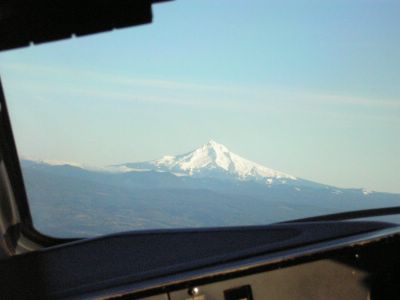
Mt. Hood on takeoff out of PDX.
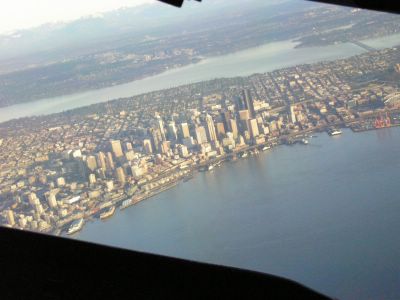
Downtown Seattle, turning base for SEA.
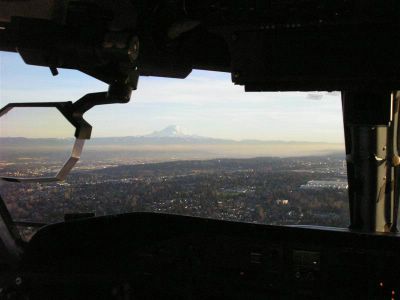
On final for 16R, clear view of Mt. Rainier.
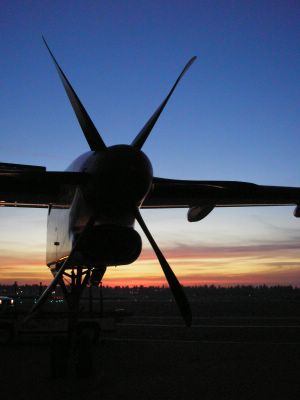
And to top it all off, a very nice sunset:
It's been raining for about a month straight, one storm after another. Nothing but clouds and rain and drearyness. The local news stations have been running a bunch of feature stories on mental health, like they're afraid the weather is gonna have depressed Northwesterners offing themselves by the dozens.
Boy, was today ever a welcome change. It was an absolutely gorgeous day across the Northwest, with clear sunny skies and unlimited visibility. If my work was anything other than flying, I would've called in sick, because it would've been an awesome day for skiing or hiking. But it was great weather for flying, too, so I went to work.
My first leg up to Seattle was deadheading, and I ended up sitting in the jumpseat so I took a few pictures.

Mt. Hood on takeoff out of PDX.
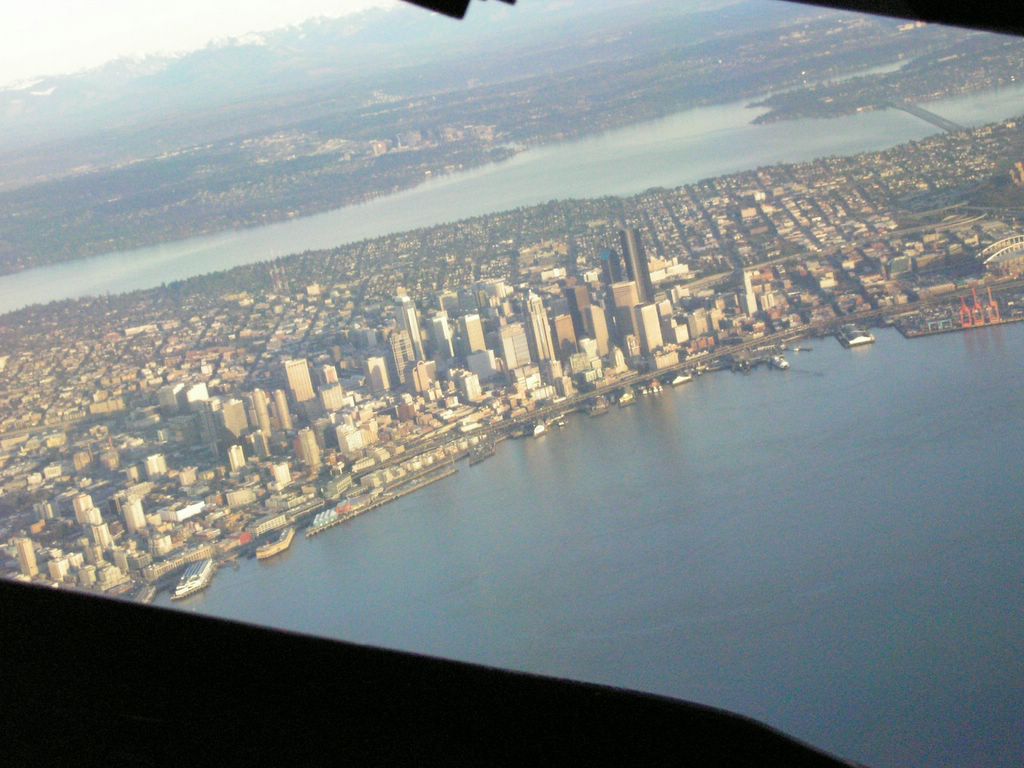
Downtown Seattle, turning base for SEA.

On final for 16R, clear view of Mt. Rainier.
And to top it all off, a very nice sunset:

Tuesday, January 24, 2006
I am the Comment Monster!
I eat all your Comments, Yum Mmm Mmmm!!!!
Hehe, apparently I accidently turned on comment moderation without realizing it a few weeks back, so I have 36 comments that did not appear. I was wondering if I really got that boring, that fast! Comment moderation is now turned OFF. Thanks Doug for alerting me via email.
Hehe, apparently I accidently turned on comment moderation without realizing it a few weeks back, so I have 36 comments that did not appear. I was wondering if I really got that boring, that fast! Comment moderation is now turned OFF. Thanks Doug for alerting me via email.
Subscribe to:
Posts (Atom)


